

Awami League is the biggest obstacle in combating the effects of climate change

Publish: 03 May 2024, 12:20 PM
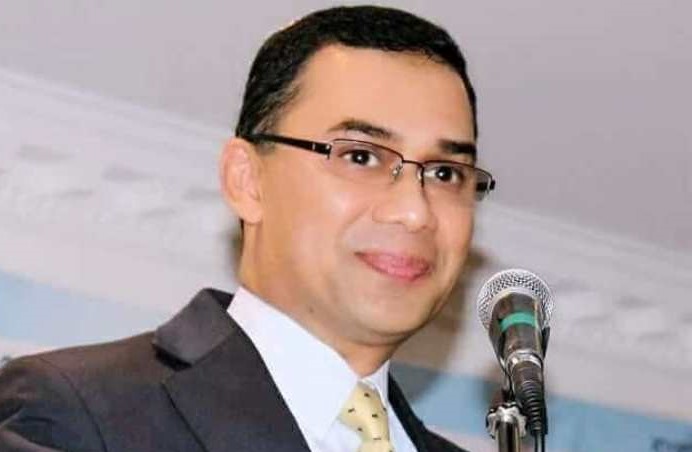
Tarique Rahman, the acting chairman of BNP, has stated that Prime Minister Sheikh Hasina and her party, the Awami League, are the biggest obstacles to combating the impact of climate change. He highlighted the severe heatwaves, intolerable load shedding, and acute water shortage throughout the country, suggesting that Bangladesh has not undertaken effective initiatives to address the impacts of climate change.
In a Facebook live broadcast on May 2, he stated, "Under the leadership of Awami League leader M.K. Alamgir, an Awami faction founded Farmers Bank in 2013. This bank, a safe haven for embezzlement and money laundering, redirected approximately 600 crore taka from the climate fund in 2015. To this day, this money has not been returned to the climate fund. Why was the climate fund's money diverted to M.K. Alamgir's bank instead of being used to combat climate change?"
Residing in London, Tarique Rahman also remarked that Bangladesh is among the countries most at risk from global climate change. While acknowledging that global climate change influences phenomena such as heatwaves, he emphasized that these conditions did not arise abruptly. Other vulnerable countries have made preparations to counter the adverse effects of global climate change, but Bangladesh, he accused, had established Farmers Bank to siphon off climate funds. After several scandals, Farmers Bank was renamed 'Padma' and is now merging with EXIM Bank. He questioned whether it would be possible to recover the hundreds of crores of taka transferred from the climate fund to Farmers Bank.
The BNP leader accused the Awami League of plundering thousands of crores of taka from the Climate Change Trust, Bangladesh Climate Change Resilience Fund, and the Green Climate Fund. He asserted that there is not a single project funded by the climate fund that has not been corrupted. The Transparency International Bangladesh (TIB) has conducted investigations into at least seven such projects and discovered corruption in every one. Despite attention being paid to these fund misappropriations, Rahman criticized the government for failing to take effective action to address climate-related challenges. He pointed out the necessity for a modern, well-equipped meteorological department to handle various weather-related issues, noting that currently, not even one radar in the country's meteorological department is operational, raising questions about the government's claims of development.
Tarique Rahman mentioned, citing environmentalists, that trees had been planted on both sides of the Airport Road in the capital. Environmentalists have stated that the species planted are not suitable for the soil and environment of Dhaka. Despite this, the Roads and Highways Department spent a significant amount of money importing these trees from abroad. He emphasized that the main goal was not really environmental conservation or tree planting, but rather corruption.
He said that there is a festival of tree cutting in the name of development in Chittagong. There are no steps taken to prevent the cutting and occupation of hills. Recently, Jahangirnagar University has decided to cut down over four hundred trees for construction purposes. Despite knowing the threats of global climate change, the so-called development activities involve cutting trees and filling lakes and ponds, turning the cities including the capital into concrete and waste-laden areas.
During heatwaves, Tarique Rahman pointed out that the rivers, haors, and canals of riverine Bangladesh could have been safe havens for the public. Due to upstream river exploitation, the rivers of Bangladesh, known as the 'land of rivers,' are nearly dry throughout the year. Taking advantage of this, the Awami grabbers are occupying these dried-up canals and rivers. He doubted whether there is a single river or canal in the country that has escaped the clutches of the Awami circle.
He stated, "I saw a report in the national media that said there were at least 52 canals in Keraniganj Upazila surrounded by the Buriganga, Dhaleshwari, and Kaliganga rivers. Due to encroachment and pollution, 40 of these canals are almost extinct, and only 12 manage to exist somehow. If Sheikh Hasina remains in power for a few more years, even these 12 canals might no longer be found."
Citing various research statistics, he mentioned that in 1971, there were over twelve hundred rivers in Bangladesh, of which over five hundred have died. The death journey of these rivers began with the construction of the Farakka Barrage in 1974. However, the rivers of Bangladesh could have played a vital role in combating climate change. For the sake of human survival, it is essential to preserve the country's rivers and canals, Tarique Rahman reminded.
Highlighting the connectivity issues between the neighboring states of Bangladesh and India, such as road and rail links, land ports, transit, and transshipment, he noted that these were critical issues for both countries. These could have been opportunities to negotiate equitable shares of water from common rivers like Teesta. However, the power-hungry Awami League has used these issues for partisan interests, resulting in unresolved agreements like the Teesta deal or the fair share of water from common rivers.
Remembering the canal digging initiatives of Ziaur Rahman, he said that the martyr President Ziaur Rahman, the proclaimer of Bangladesh's independence, took a visionary and revolutionary step in combating the negative impacts of climate change in Bangladesh. Tarique Rahman said, 'If canals are dug, floods and droughts will be mitigated' was the slogan under which martyr Zia initiated a nationwide canal digging and tree plantation program, starting a green revolution in the country. During the government of 'Mother of Democracy' Khaleda Zia, the greening programs were also advanced. If BNP comes back to power with the people's vote, the green revolution programs initiated by martyr Zia to combat climate change will be resumed in the country.