

Planned VAT hikes in the budget raise inflation worries

Abu Jakir
Publish: 05 Jun 2024, 05:16 PM
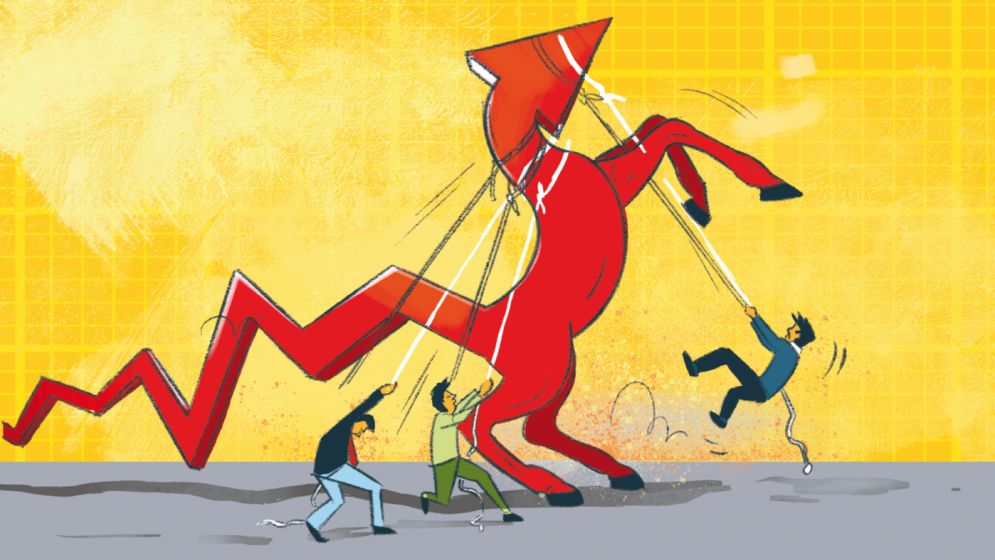
The government's plan to significantly increase revenue from VAT and supplementary duties in the upcoming fiscal year contradicts its stated goal of controlling inflation through a contractionary budget.
This move has raised concerns among stakeholders who believe it could actually worsen inflation, undermining the government's original intent.
The FY25 draft budget reveals the National Board of Revenue (NBR) aims to collect Tk4,76,500 crore in revenue, with Tk2,40,000 crore expected from VAT and supplementary duties.
Despite falling significantly short of its initial target of Tk2,24,540 crore in VAT and supplementary duties for the current fiscal year, the NBR has revised the target to Tk1,58,066 crore.
As of the end of January, collections in this sector stood at Tk1,03,283 crore.
In the fiscal year 2022-23, revenue collection from VAT and supplementary duty reached Tk1,70,757 crore, surpassing the Tk1,58,181 crore collected in the previous fiscal year.
Stakeholders predict that VAT rates could rise in various sectors and be applied to new ones to meet this ambitious target. The NBR's recent move to impose VAT on metro rail tickets and potential reduction of VAT concessions for local industries further support this prediction.
Sources reveal that the government's revenue authority is taking steps to simplify the VAT system by eliminating multiple rates and implementing a flat 15% rate to be incorporated into product prices.
If approved in the upcoming fiscal year's budget, the current system of varying VAT rates (5.0%, 7.5%, 10%, and specific taxes) will be gradually replaced with a single, flat 15% rate.
Documents obtained from the Finance Ministry so far indicate that the government is to raise VAT on over 13 items, encompassing LED lights, various juices, mango bars,rolling paper, security and auction services, refrigerators, and air conditioners.
Finance ministry officials reveal that most of the listed items may face a 15% VAT at manufacturing, while the VAT exemption for air conditioners is likely to end this fiscal year, potentially leading to a 5% VAT in FY25.
Refrigerator manufacturing could see a VAT increase from 5% to 10%. Additionally, mobile operators may face a tax hike on SIM card sales, from Tk200 to Tk300.
These changes are attributed to IMF recommendations to remove tax exemptions, prompting the National Board of Revenue (NBR) to plan their discontinuation and implement rate increases in the upcoming fiscal year.
The IMF has consistently advocated for reducing long-standing tax exemptions in Bangladesh, influencing the NBR's strategies for increased revenue collection.
The Consumer Association of Bangladesh (CAB) however has raised concerns about the Finance Ministry's plan to increase VAT amidst high inflation, stating that it would further burden low-income individuals.
CAB Senior Vice President Jamil Chowdhury told Bangla Outlook that while increasing VAT can boost revenue collection, it is a regressive tax that affects consumers across all income levels equally.
“This disproportionately burdens lower-income individuals
who spend a larger share of their earnings on essentials.,” he said adding that
consequently, VAT hikes can result in lower-income individuals paying a higher
percentage of their income in taxes compared to their wealthier counterparts.