

US trade report highlights bribery and corruption as main barriers to do business in Bangladesh

Abu Jakir
Publish: 01 Apr 2024, 05:46 AM
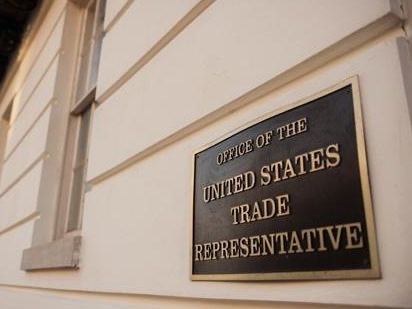
A recent report by the United States Trade Representative (USTR) identifies bribery and corruption as major hurdles for American companies seeking to do business in Bangladesh.
The "2024 National Trade Estimate Report on Foreign Trade Barriers," released on March 29, examines challenges faced by U.S. firms in Bangladesh across various sectors, including government procurement, intellectual property protection, digital trade, investment, and labor.
"The USTR's NTE Report," led by U.S. Trade Representative Katherine Tai, offers a detailed analysis of significant foreign barriers impacting U.S. exports of goods and services, foreign direct investment, and electronic commerce in key U.S. export markets, including Bangladesh.
Published annually since 1985, the report analyzes trade barriers across 59 markets. In the Bangladesh section, corruption is identified as a "pervasive and long-standing problem," with anti-corruption laws said to be inadequately enforced.
The report details various Bangladeshi laws that criminalize corruption activities, including bribery and money laundering. However, it highlights a concerning disconnect between legislation and reality: "bribery and extortion in commercial dealings are common features of business despite the illegality of facilitation payments and gifts."
According to the USTR report, efforts have even been made to weaken anti-corruption safeguards within government procurement regulations. The report cites complaints from U.S. companies experiencing delays in obtaining licenses and bids due to suspected bribe-seeking by Bangladeshi officials.
Furthermore, the report raises concerns about proposals to restrict the independence of the Anti-Corruption Commission (ACC), the primary government body tasked with tackling corruption.
The laws that hinder anti-corruption attempts
The report goes on to mention the Sarkari Chakori Ain Bill (Government Job Act) passed in October 2018. This act reportedly hinders the Anti-Corruption Commission's (ACC) ability to effectively combat corruption, particularly among higher-level government officials.
The legislation requires the ACC to obtain permission from relevant authorities before arresting any government employee. Additionally, it limits the ACC's power to investigate corruption allegations against such officials.
While the report acknowledges increased efforts by the ACC to pursue cases against government officials, it emphasizes that these cases primarily target lower-level personnel. The backlog of unresolved cases also remains a significant concern.
The USTR report dives into the complexities of government procurement in Bangladesh. While the country utilizes public tenders following the Public Procurement Act of 2006, managed by the Central Procurement Technical Unit, concerns about corruption persist.
Despite Bangladesh's adherence to international competitive bidding principles, the report highlights frequent accusations of corruption within the system. Although a national electronic government procurement portal exists, U.S. stakeholders raised concerns about outdated technical specifications, potential favoritism towards specific bidders in tender structuring, and a general lack of transparency.
The report details specific challenges faced by U.S. companies. Allegations include foreign competitors leveraging local partners to manipulate the procurement process and unfairly block U.S. bids. Additionally, U.S. companies reported instances of suspected bid rigging, bribery, anti-competitive practices, and an overall lack of transparency in the bidding process. These factors significantly disadvantage U.S. companies competing for government contracts.
The report also emphasizes that Bangladesh is neither a party to the World Trade Organization's Agreement on Government Procurement nor an observer to the relevant WTO committee, potentially hindering fair competition for international companies.
Few attempts to protect IP rights
The report acknowledges Bangladesh's recent legislative efforts to strengthen IP protection, including a new patent law in April 2022, copyright amendments in October 2023, and the enactment of an Industrial Design Act in July 2023. However, the effectiveness of these reforms remains in question.
A major concern is the prevalence of counterfeit and pirated goods throughout Bangladesh. U.S. companies have reported potential IP violations across various industries, raising concerns that the country might even be a source for counterfeit products distributed globally.
Furthermore, the report highlights challenges faced by rights holders in enforcing their IP. Limited investigative expertise within the police force and a reluctance to initiate independent investigations create hurdles. Additionally, concerns exist regarding the courts' capacity to fairly adjudicate IP cases.
The USTR report emphasizes the importance of transparent legal processes. The lack of stakeholder involvement and public comment opportunities during the recent IP reform development is a cause for concern. Bangladesh is urged to adopt a more inclusive approach to create a robust IP regime that effectively addresses current gaps and offers meaningful improvements for rights holders.
The report underscores the need for enhanced collaboration among various government entities to bolster Bangladesh's IP regime. Crucial players include Customs, the Office of the Attorney General, the Copyright Office, the Bangladesh Investment Development Authority, and the Department of Patents, Designs, and Trademarks. Improved coordination between these agencies would significantly improve enforcement efforts.
Furthermore, the USTR report recommends increased training opportunities for customs officials, police, and the judiciary. Equipping these key players with specialized IP enforcement expertise is vital for tackling the challenges identified in the report.
The report acknowledges ongoing efforts by the U.S. Department of Commerce Patent and Trademark Office and other U.S. government agencies, who provide Bangladesh with technical assistance and capacity-building programs to address these issues.
The USTR report highlights challenges faced by foreign investors regarding repatriating profits and earnings from Bangladesh. While regulations permit the repatriation of profits, revenue, and external payments, the process is reportedly marred by bureaucratic hurdles.
U.S. and other international investors meanwhile complain that procedures and requirements for outbound transfers are cumbersome and lack transparency. The report details significant delays in approval for repatriation applications, with some companies waiting over a year.
Further complicating the process, U.S. companies specifically mention difficulties obtaining timely approvals for remittances from agencies, which are necessary before seeking central bank clearance. This creates a bottleneck for foreign investors seeking to repatriate their earnings.