

Bergman’s blind spot: ‘Fascist’ is indeed a right word to describe Awami League

Dipok Chouhan
Publish: 23 May 2025, 06:40 PM

David Bergman is no stranger to the political undercurrents of Bangladesh. As a veteran journalist, his investigative reporting has helped shed light on many of the nation’s darker truths.
In his latest commentary, published in a leading English daily, Bergman takes a startling turn–questioning the use of the word “fascist” to describe the ruling Awami League (AL), and cautioning against comparisons to the Nazi regime.
His argument deserves scrutiny–not because of its tone, but because of what it omits.
Bergman dismisses the analogy to Nazism as irrational, claiming that the scale of atrocities committed by Hitler’s regime makes such a comparison historically inappropriate.
True, the Nazis industrialized death and took it across continents. But to critique a regime only by comparing it to history’s most monstrous example is to set the bar for authoritarianism dangerously high.
Fascism, after all, is not defined solely by genocide, but by a pattern of behavior–silencing dissent, consolidating power, manipulating institutions, and cultivating a climate of fear.
These hallmarks have been alarmingly visible in Bangladesh over the past fifteen years.
The Awami League’s recent rule has been marked by an assault on democratic norms: the muzzling of the media, ideological indoctrination, suppression of opposition, and the systematic erosion of academic freedom.
Human rights organizations have documented these abuses, and yet, Bergman seems to downplay the regime’s culpability by citing the mere holding of elections–as if the presence of ballot boxes alone confirms legitimacy.
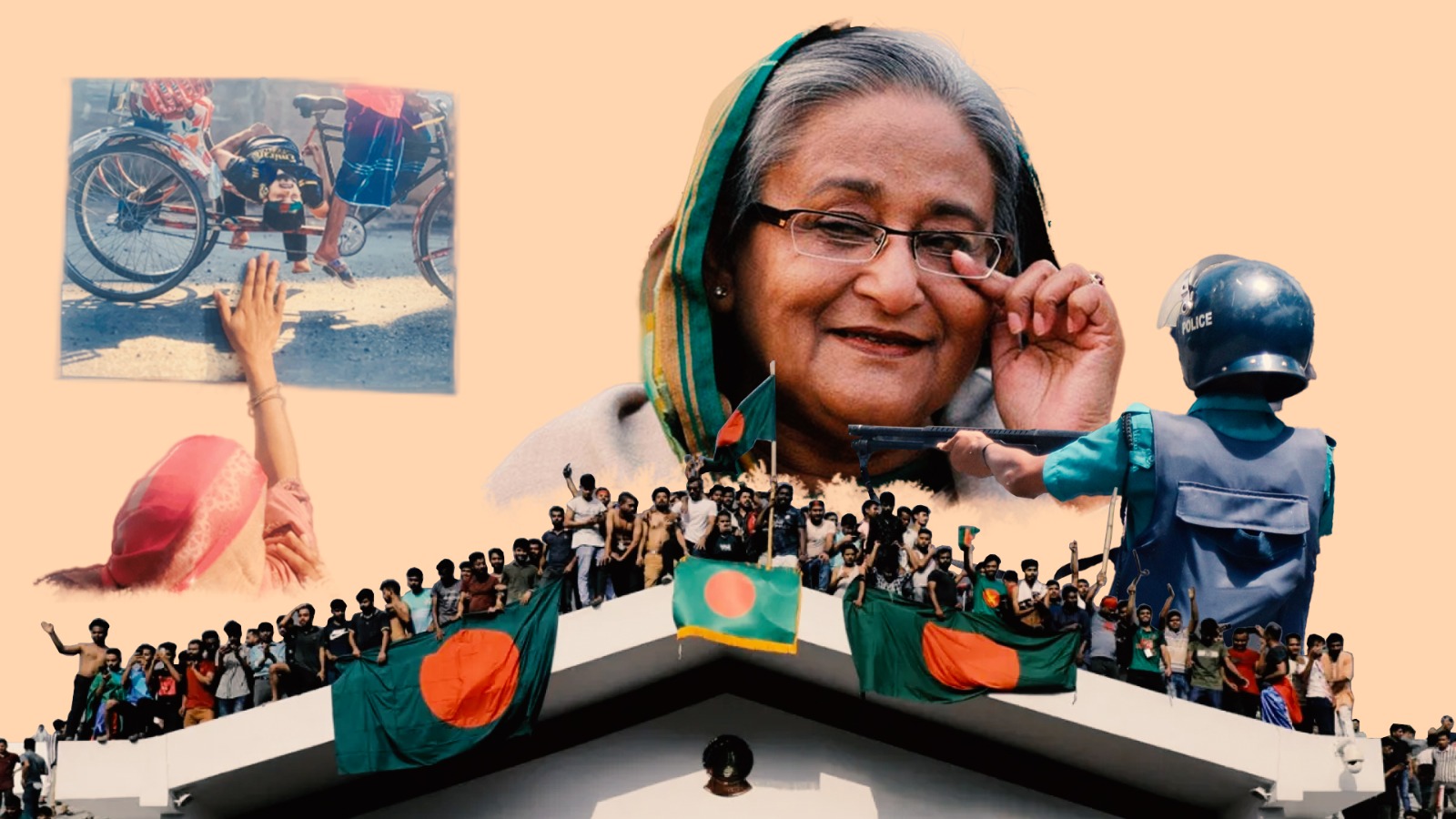
Comparisons in
essence
Anyone who watched those elections closely knows they were pantomimes, not processes. Opposition agents were routinely barred from polling stations–where they weren’t assaulted outright.
Independent campaigning was suffocated. Motorcycle convoys linked to the ruling party were a routine spectacle, serving less as celebratory processions than as intimidation drills.
Yes, parties were “given the option” to participate. But only in theory. In practice, no candidate not parroting AL-approved rhetoric–especially invocations of 1971’s liberation ethos–stood a chance of navigating the electoral maze laid before them.
Even in Dhaka, the capital itself, polling centers became fortresses manned by AL loyalists, while law enforcers stood by, mute and complicit, as opposition presence was stamped out.
These were not elections. They were stage-managed exhibitions.
To point this out is not to equate the AL with the full horror of the Third Reich. But the use of the term “fascist” in political discourse–especially in a context like Bangladesh–is meant to capture a style of governance, not to replicate its every atrocity.
In Bangla, the word shoirachar–autocrat–has deep political connotations. To suggest that calling the AL “fascist” is hyperbole is to ignore the chilling echo of history repeating not in scale, but in spirit.
Bergman’s resistance to the label raises an uncomfortable question: why now, and why this semantic defensiveness? In a country where institutions are crumbling under the weight of one-party dominance, precision in language is important–but so is moral clarity.
When a regime acts like a fascist one, we must be able to say so. And when elections are a farce, we must call them what they are. Anything less is complicity by euphemism.
To be clear, the Awami League’s brand of nationalism, though wrapped in the banner of the 1971 Liberation War, was not a unifying force–it was a weaponized narrative. Selective, self-serving, and brutally enforced, it excludes all but the most loyal adherents.
Any deviation from party orthodoxy was not just unwelcome; it is dangerous.
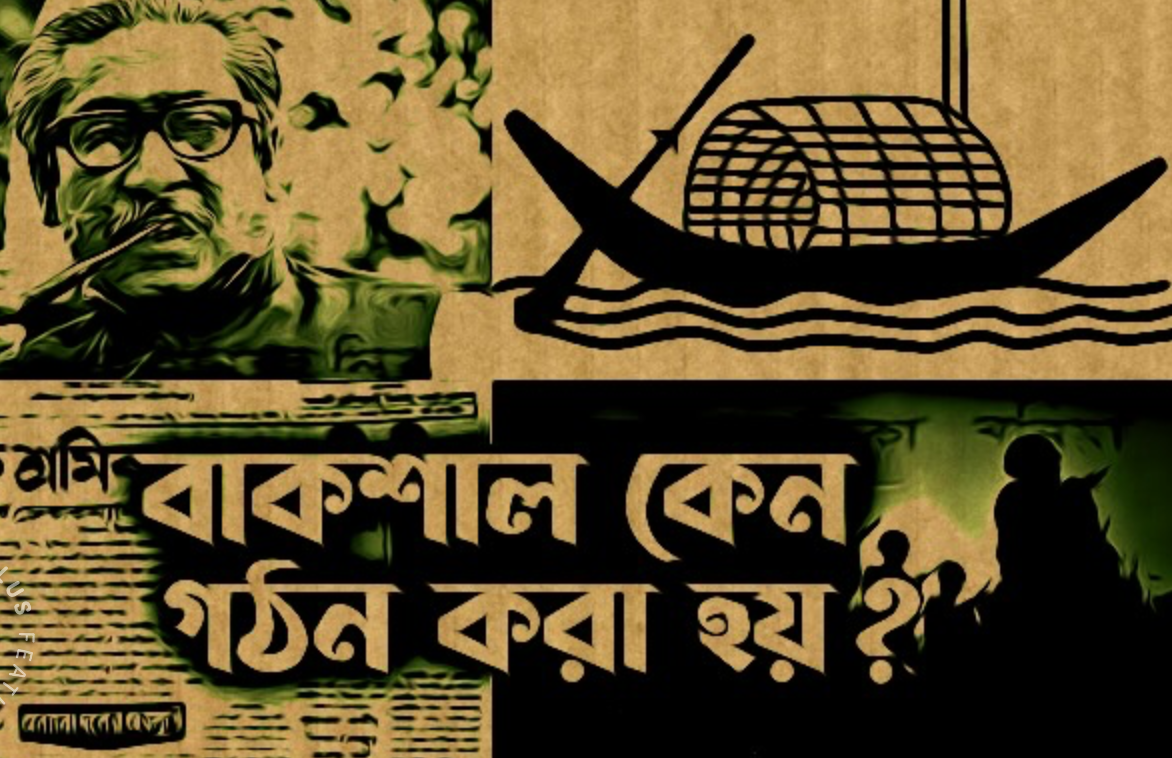
AL’s toxic
brand of nationalism
This narrow, exclusionary nationalism has had profound external consequences. While AL basked in its own mythologized legacy, it aligned the nation with foreign interests in ways that diluted Bangladesh’s sovereignty.
The glorification of specific international allies–rooted less in pragmatism and more in ideological servility–led to over a decade of foreign policy drift. Bangladesh was rarely seen asserting its own position on the world stage. Instead, it often appeared as a client state–compliant, predictable, and silent.
Bergman, in his effort to temper criticism of the AL, invokes the post-Saddam collapse of Iraq and the “Dirty War” of Latin America as cautionary tales. But these analogies are poorly applied.
The Baath Party’s ban did not plunge Iraq into chaos; centuries-old sectarian fractures and geopolitical manipulation did. Similarly, invoking the atrocities of South America’s military juntas–where tens of thousands were “disappeared” with superpower approval–is a grim deflection.
To suggest that Bangladesh’s human rights abuses are “less bad” by comparison is not only morally unserious, it’s intellectually disingenuous.
Yes, the number of documented disappearances under the AL may not reach Latin American proportions. But the measure of oppression is not body count alone–it is intent, it is method, and it is the impunity with which a state wages war on its own people.
Comparing today’s victims to yesterday’s in other nations offers no comfort to those who have lost sons, daughters, limbs, and livelihoods under a regime that has grown increasingly intolerant of dissent.
One cannot understand the current lexicon of rage–words like Fascist, Shoirachar, Butcher–without having stood amid the fire and fury of Bangladesh’s streets in July and August of 2024.
Those months were a reckoning. The air was thick with gunfire and disbelief. Protesters, many of them teenagers, collapsed in pools of blood. Children were caught in crossfire.
Men and women en route to work were maimed for being in the wrong place at the wrong time. And while the nation mourned, the state apparatus spun narratives of militancy, as if grieving parents and bullet-riddled students were insurgents.
You cannot Google that experience. You cannot feel its weight through curated video clips or secondhand accounts.
You had to be there.
On the roads of Dhaka. In the alleys of Chittagong. Among the crowds that chanted not for power, but for dignity. You had to see the bodies fall. You had to hear the screams cut through tear gas and bullets.
And I suspect David Bergman wasn’t there.
—
Dipok Chouhan is a keen social observer