

The meaning…and impact…of dictator Hasina’s death sentence for Bangladesh

Abu Jakir
Publish: 17 Nov 2025, 06:55 PM
-691b1b2b83443.jpeg)
The International Crimes Tribunal’s Monday verdict of death sentence against Bangladesh’s ousted prime minister Sheikh Hasina marks a defining moment in the legal reckoning over the deadly political unrest that engulfed the country during July and August 2024.
According to the charges presented before the tribunal, Hasina was held responsible for human rights violations, unlawful killings, and the alleged ordering or condoning of lethal force during the mass protests that ultimately led to the collapse of her government.
The ICT concluded that the ousted prime minister bore criminal responsibility for the actions of state forces during this period, with prosecutors seeking the death penalty, a sign of the gravity with which the tribunal viewed the offenses.
The accusations centre on the Hasina government’s handling of a nationwide student-led uprising that rapidly escalated into violent confrontations across major cities.
During the height of the unrest, security forces were accused of firing on protestors, detaining civilians unlawfully, engaging in extrajudicial actions, and permitting reprisals that led to the burning of homes, properties, and government installations.
The tribunal examined these incidents within the framework of international crimes, treating the events as constituting crimes against humanity under Bangladesh’s domestic legislation governing the ICT.
Although the full judgment has not been publicly released, the tribunal’s decision makes clear that it considered the evidence–ranging from communications transcripts, reports from international bodies, witness testimony, and state records–sufficient to establish that Hasina carried command responsibility.
Central to the prosecution’s case was the charge that Hasina had either directly ordered or implicitly endorsed the use of lethal force to suppress protests. The ICT reportedly considered communications cited by prosecutors as proof that the former prime minister allowed security agencies a free hand even as the death toll mounted.
According to international reporting referenced within the proceedings, more than 1,400 people were killed during the unrest, a figure that includes protestors, bystanders, members of law enforcement and even children.
The tribunal accepted this higher estimate, signalling its view that the scale of violence could not be explained as operational excess alone, but rather as a consequence of political direction from the apex of government.
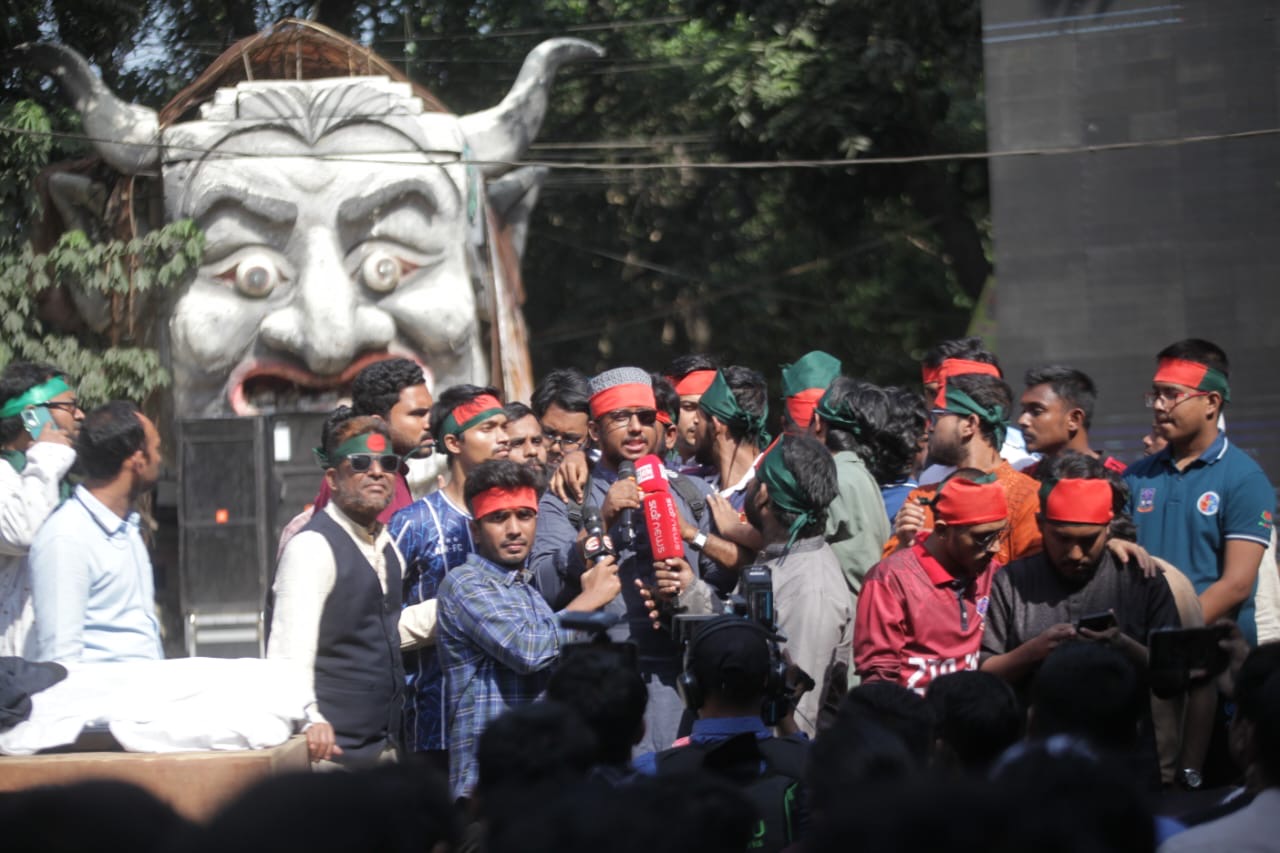
Verdict based on concrete evidence
The charges further encompassed allegations of systematic abuses by security forces acting under governmental authority. These included the firing of live ammunition at mass gatherings, enforced disappearances, torture of detainees, and the targeting of political opponents in the guise of restoring order.
The tribunal examined whether the government’s response fit the pattern of intentional state repression rather than defensive action. Prosecutors argued that the nature of the crackdown, its coordination, intensity, timing, and the uniformity of actions across multiple districts–could only have occurred with centralized authorization.
Although the tribunal’s reasoning has not yet been published in full, its decision to convict suggests it accepted these arguments.
The ICT also considered whether the destruction of public property, which the government had attributed to provocateurs and violent elements within the protest movement, was in fact instigated or exploited by state agents to justify harsher countermeasures.
International organizations had documented attacks on protestors, journalists, and minority communities during this period, and prosecutors used these findings to illustrate a broader pattern of persecution.
To the tribunal, the cumulative evidence pointed to a breakdown of the rule of law as a deliberate policy overseen–or at minimum tolerated–by the highest levels of government.
A substantial portion of the tribunal’s assessment revolved around the death toll and the nature of fatalities. International agencies placed the number of deaths at around 1,400, far higher than government-verified counts of 834 deaths.
The ICT appears to have adopted the higher figure, noting that independent investigators found evidence of widespread killings, including among those not directly involved in protests.
The tribunal viewed the volume of deaths, the presence of gunfire wounds, and the geographic spread of violence as further indication that the government’s actions crossed the threshold into criminal conduct.
The charges also extended to the question of state responsibility for attacks on religious minorities and vulnerable communities during the unrest.
Human rights organizations recorded incidents of arson, looting, and beatings targeting Hindus and other minorities, which the tribunal considered as part of a broader climate of impunity created by government policies.
While the specific attribution of each incident may not have been individually litigated, the tribunal viewed the state’s failure to prevent or punish such acts, committed during a period when security forces were deployed extensively nationwide, as evidence of deliberate negligence.
The ICT’s decision to seek the most severe sentence under its mandate reflects its conclusion that the crimes committed were of exceptional gravity.
In past trials concerning the 1971 war, the tribunal reserved the death penalty for acts involving mass killings, systematic persecution, or the targeting of civilians as part of a policy of violence.
By applying similar reasoning to the July–August 2024 unrest, the tribunal effectively placed Hasina’s alleged conduct within the same category of historically significant offenses.
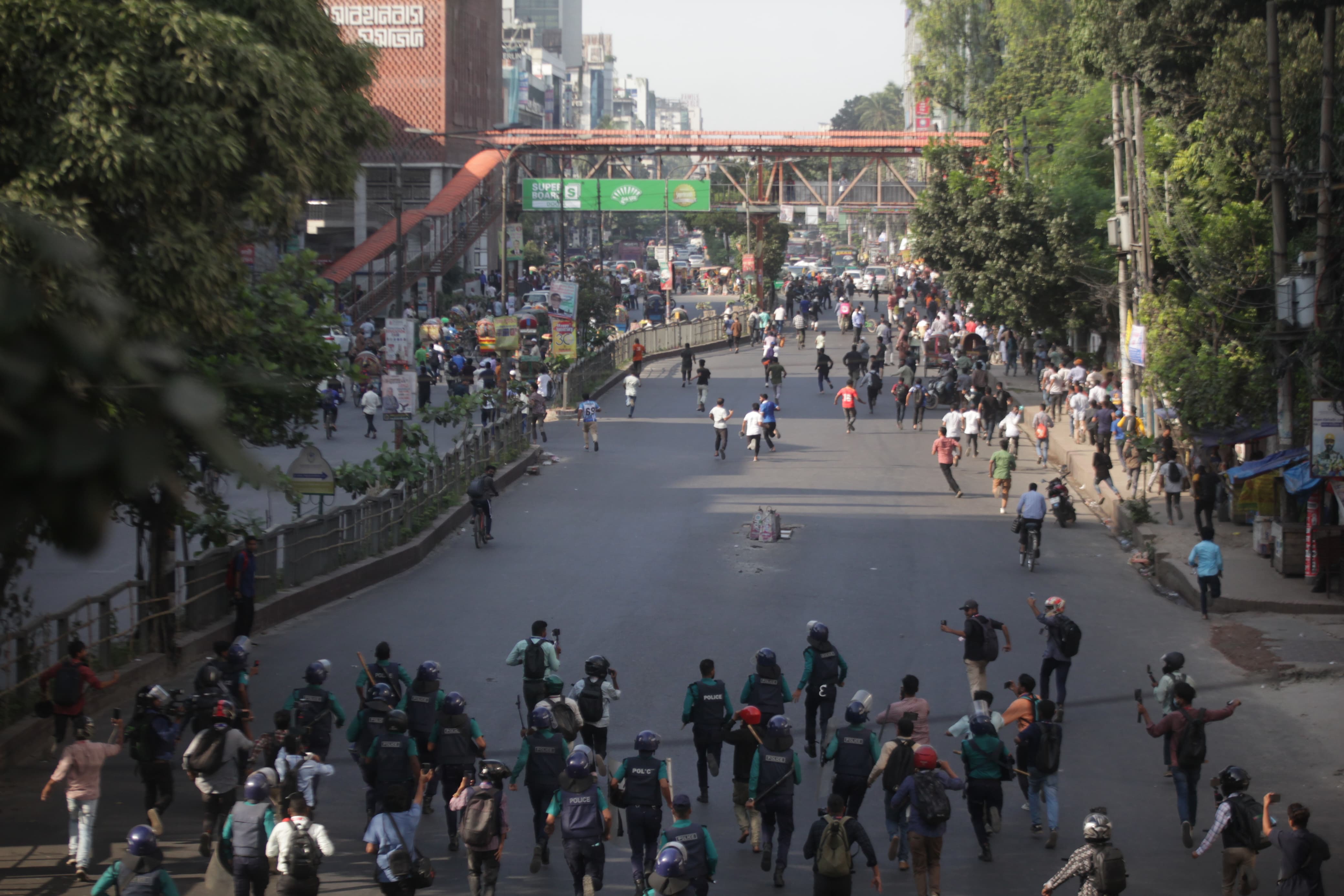
What does this judgment mean?
This judgment signals a broader shift in how Bangladesh’s legal system interprets the responsibilities of political leaders when state violence results in substantial civilian harm.
The tribunal’s reliance on international legal principle–including command responsibility–further highlights its attempt to frame the events of 2024 within an established global framework for accountability.
Under this doctrine, leaders may be held liable for crimes committed by subordinates if they knew or should have known about abuses and failed to prevent or punish them.
The tribunal’s conviction suggests it found that Hasina had sufficient knowledge of the actions carried out by security forces and either allowed them to continue or failed to intervene decisively.
Although the ousted prime minister Hasina has denied all allegations, insisting that the evidence was taken out of context and that government forces were acting under lawful protocols, the tribunal’s verdict represents a categorical rejection of this defence.
The court appears to have concluded that her government’s response went well beyond the permissible bounds of crowd control or emergency management and instead constituted criminal conduct intended to quash political dissent.
The judgment’s severity underscores the tribunal’s view that political authority cannot excuse or mitigate responsibility for widespread and avoidable loss of life.
The ICT’s verdict now stands as one of the most significant legal decisions in Bangladesh since its earlier prosecutions of 1971 war crimes. By convicting a former prime minister for crimes connected to contemporary political unrest, the tribunal has expanded its role from historical justice to present-day accountability.
The implications are profound: the decision establishes a precedent that state leaders may face criminal liability for abuses committed under their watch, regardless of political stature or the immediate context of unrest.
The full public release of the tribunal’s judgment will determine how comprehensively its reasoning can be evaluated. But the core message is already unmistakable.
The verdict signals a decisive moment in the country's evolving legal landscape—one that asserts the principle that political authority does not place leaders above the law, and that the machinery of the state, when turned against its own citizens, can become the subject of criminal prosecution.
—