


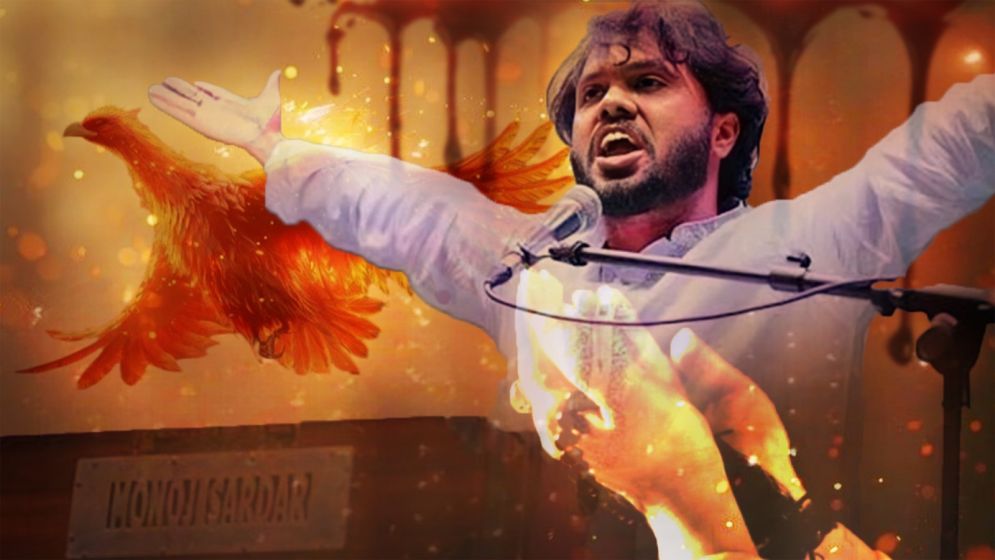
They knew exactly where the blow would land. And they struck with precision.
Sharif Osman Bin Hadi was an outlier. Even writing “was” fractures something inside me. For now, let the reason for that tense rest—perhaps for another time, or perhaps never, if Allah so wills.
Hadi’s image is etched into our collective memory—remarkably so, considering how briefly he occupied our shared consciousness.
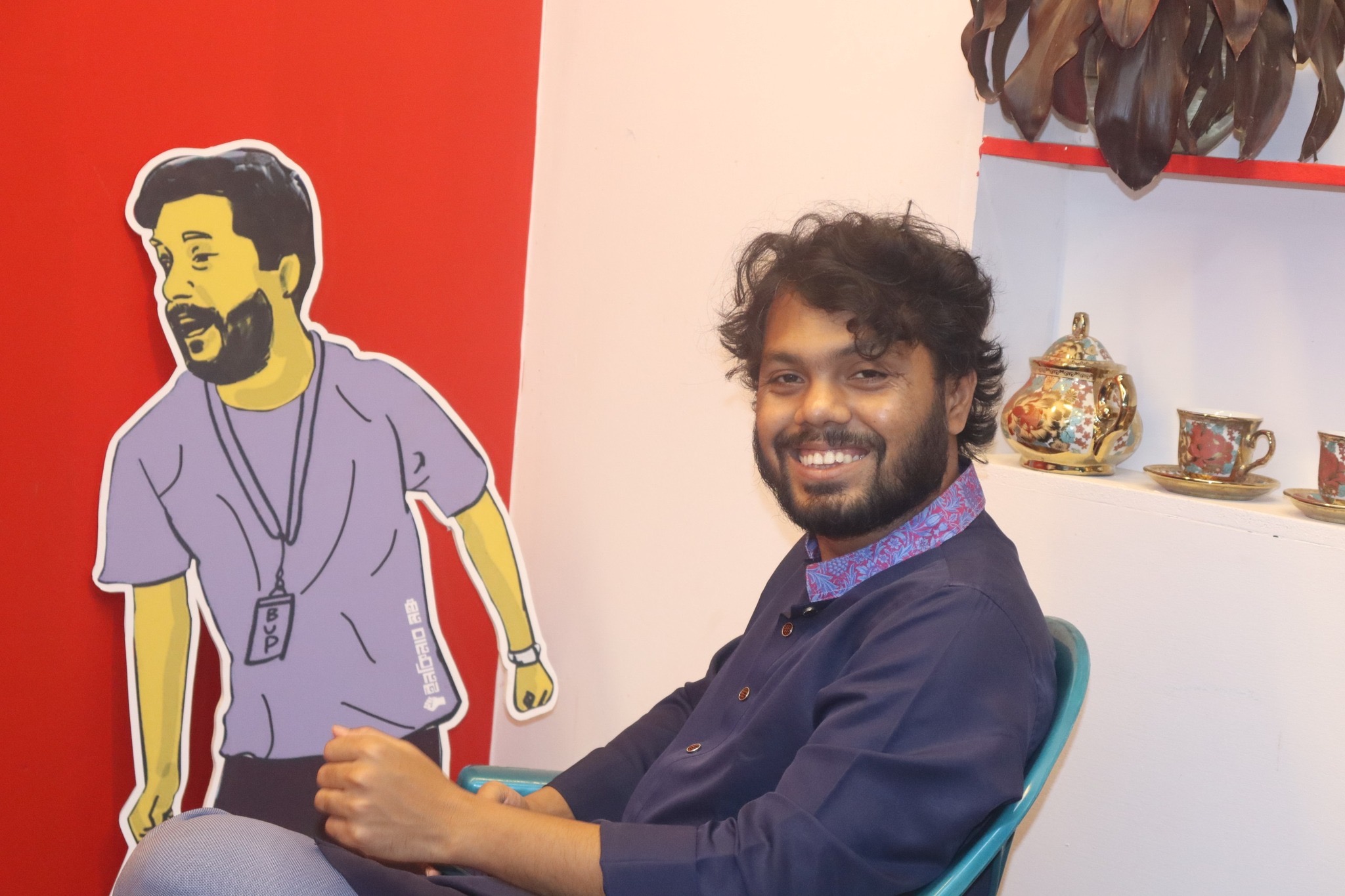
With his disheveled hair, untrimmed beard, a bit rounded face and simple clothes, he looked unremarkable. Of average height and bearing, he was the kind of man who should have disappeared into even a modest crowd, unnoticed.
Yet he never did. There was something unmistakable about him—a volatile spark, almost incendiary. When he spread his arms and recited Kazi Nazrul Islam’s rebellious verses, unblinking and unflinching, the crowd stirred.
His words awakened a raw longing to shatter decades-old shackles, to break free from the many forms of quiet slavery that have long constrained our society.
Even his use of expletives—effortless and oddly graceful—served a purpose. He wielded them to dismantle our polished narratives and puncture our carefully cultivated civility, pointing toward an older, more honest order of speaking truth to power.
Many of us resisted endorsing that bluntness, perhaps rightly so. Yet beneath our restraint grew a slow, reluctant admiration for Hadi’s audacity—his willingness to say aloud what most of us could not afford to.
That courage carried into his talk show appearances as well. Without cloaking himself in measured politeness, he argued the things many of us had long thought but never voiced. Society, age, position, and that overused yet poorly understood notion of “wisdom” had taught us silence. Hadi refused it.
Hadi did not hesitate to confront his seniors. He called out their flaws openly, unsettling many and angering more than a few. Inevitably, a familiar accusation followed: that Hadi was a torchbearer of a new “mob culture.”
The phrase, in all likelihood, served as a convenient disguise—masking a deeper, collective failure to summon the courage to call a spade a spade, and a fascist a fascist.
Yes, “rule of law” was the favored refrain of this measured vocabulary. Yet it often rang hollow, detached from the lived reality around us. When Hadi dared to lift the mask and articulate the uncomfortable, even abrasive steps that real change might require, his words struck a chord.
They resonated precisely because they acknowledged truths many preferred to theorize about rather than confront.
In that sense, many of us were quietly grateful. Hadi had taken the leap we could not. He shattered the veneer of cultivated civility and spoke aloud what lingered in our collective, unacknowledged consciousness.
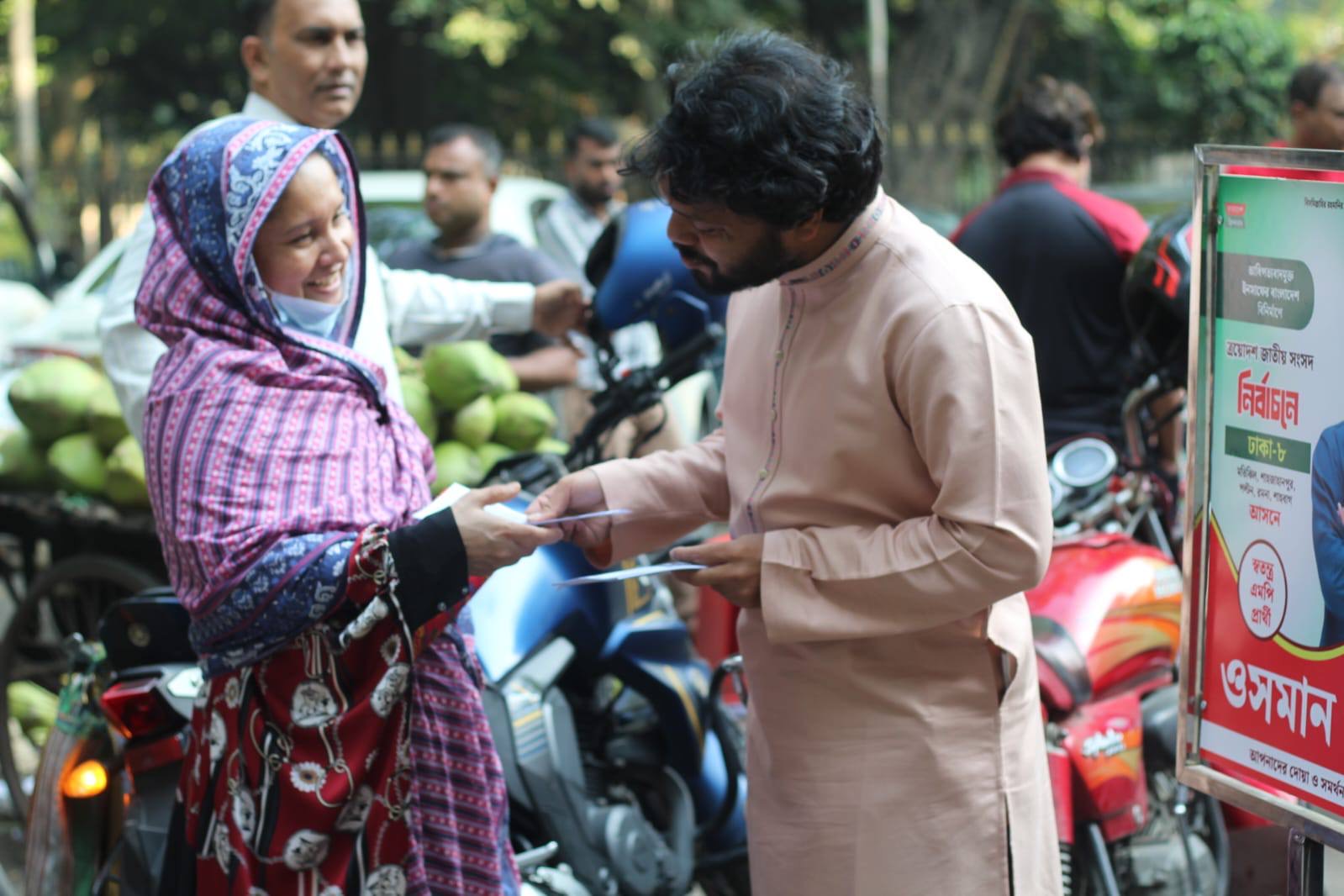
Even the Hadi of talk shows and the social media presence of his platform, Inqilab Moncho, commanded attention and earned a slow, steady admiration. But it was the Hadi of the election campaign—declaring his candidacy in the heart of the capital, directly challenging a political stalwart—who truly raised the stakes and became an everyday hero.
From Fajr prayers to late-night street corners, his campaign trail was relentless. He moved easily among people of every class and color, animated by a bright, disarming smile and that pocket-dynamite energy that stirred emotion and ignited hope.
For many, he began to look like a glimpse of a different future.
Conventional wisdom suggested he stood little chance. He aligned himself with no established political force, not even the newly ascendant ones. Yet, paradoxically, this solitude became his greatest strength.
It remains baffling how Hadi managed to imprint upon our collective consciousness the idea that he was both incorruptible and indomitable. Even those who dismissed him as a purveyor of “mob politics,” even those unsettled by his unfiltered speech, seemed unable to fully deny it.
Against the odds, Hadi did exactly that.
When videos surfaced of him casually chopping cabbage in his modest home with a Bengali boti—the way our mothers and aunts have done for generations—a visceral certainty settled in.
This man was different. He was incorruptible, yet unmistakably one of us: an ordinary figure grounded in everyday life, carrying an uncommon sense of integrity.
Hadi was a religious man. His moral compass—his understanding of justice and wisdom—was rooted in Islamic scripture. Yet even his fiercest critics could not honestly accuse him of practicing religion-based populist politics.
His was a politics of insaaf: of justice, of a corruption-free society, of dismantling the hollow narratives upheld by self-proclaimed secular elites who had long governed while muting the emotions and voices of many.
That is why he resonated. That is why he mattered.
And they knew it.
Whoever orchestrated the attempt on his life understood precisely what was at stake.
They knew that his death would do more than silence a man—it would fracture the fragile hope for genuine change that had emerged after last year’s revolutionary-scale uprising.
They also knew that an attack on Hadi could deepen the political ruptures already running through Bangladeshi society. It would invite suspicion, plant doubt, and set off a familiar cycle of accusation and counteraccusation.
Neutralizing a new, unaligned, incorruptible and rapidly popular force like Hadi would serve that purpose all too well.
This was calculated—executed with cold, mathematical precision.
Whether that calculation succeeds, however, is now up to us.
Yes, we are often a people of soaring rhetoric and overflowing emotion. But what remains to be seen is whether the small residue of true consciousness we still possess will prevail—or whether we will allow them to achieve exactly what they intended.
—
Faisal Mahmud is the Minister (Press) of Bangladesh High Commission in New Delhi