

Sharif Osman Hadi and the cost of speaking out in Bangladesh

Nayel Rahman
Publish: 13 Dec 2025, 09:30 PM
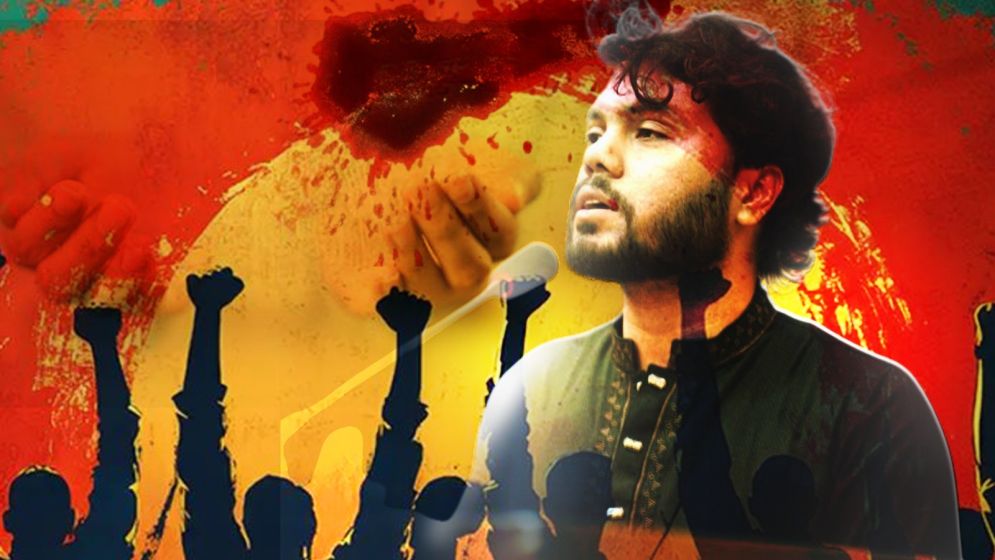
In today’s Bangladesh, Sharif Osman Hadi has emerged as one of the most unflinching and outspoken critics of what many people perceive as Indian political and strategic dominance.
Others have raised similar complaints over the years, often in bursts of fiery rhetoric or episodic outrage. What has set Hadi apart is that his politics did not end with denunciation.
He attempted to build something durable beneath the slogans–a social and cultural infrastructure meant to outlast the moment.
For Hadi, politics was in all likelihood more than just simply about registering a party, and contesting elections. Or negotiating elite alliances. Parallel to his electoral ambitions, he invested heavily in cultivating a cultural base—one that could nurture political consciousness and sustain pressure even when formal politics failed.
In that sense, Inquilab Moncho, the platform he helped build, was the foundation of his politics.
This approach matters in a country where political movements have often risen quickly and collapsed just as fast, hollowed out by patronage networks or co-optation.
Hadi appeared to understand that power in Bangladesh has never flowed solely from ballot boxes. It also flows from control over narratives and from the ability to articulate grievance in moral and cultural terms.
And, strangely, also from embedding politics in everyday life rather than confining it to rallies and television studios.
The attempt on his life—whatever its ultimate authorship—has been widely interpreted by his supporters as confirmation that he was moving in the right direction.
It also serves as a grim warning. If challenging entrenched power structures once carried risks, those risks are now multiplying.
The future Sharif Osman Hadis of Bangladesh may not share his particular mix of courage, selflessness, discipline, and political intuition. But if they dare to confront the same structures of dominance—external or internal—they are likely to face the same dangers.
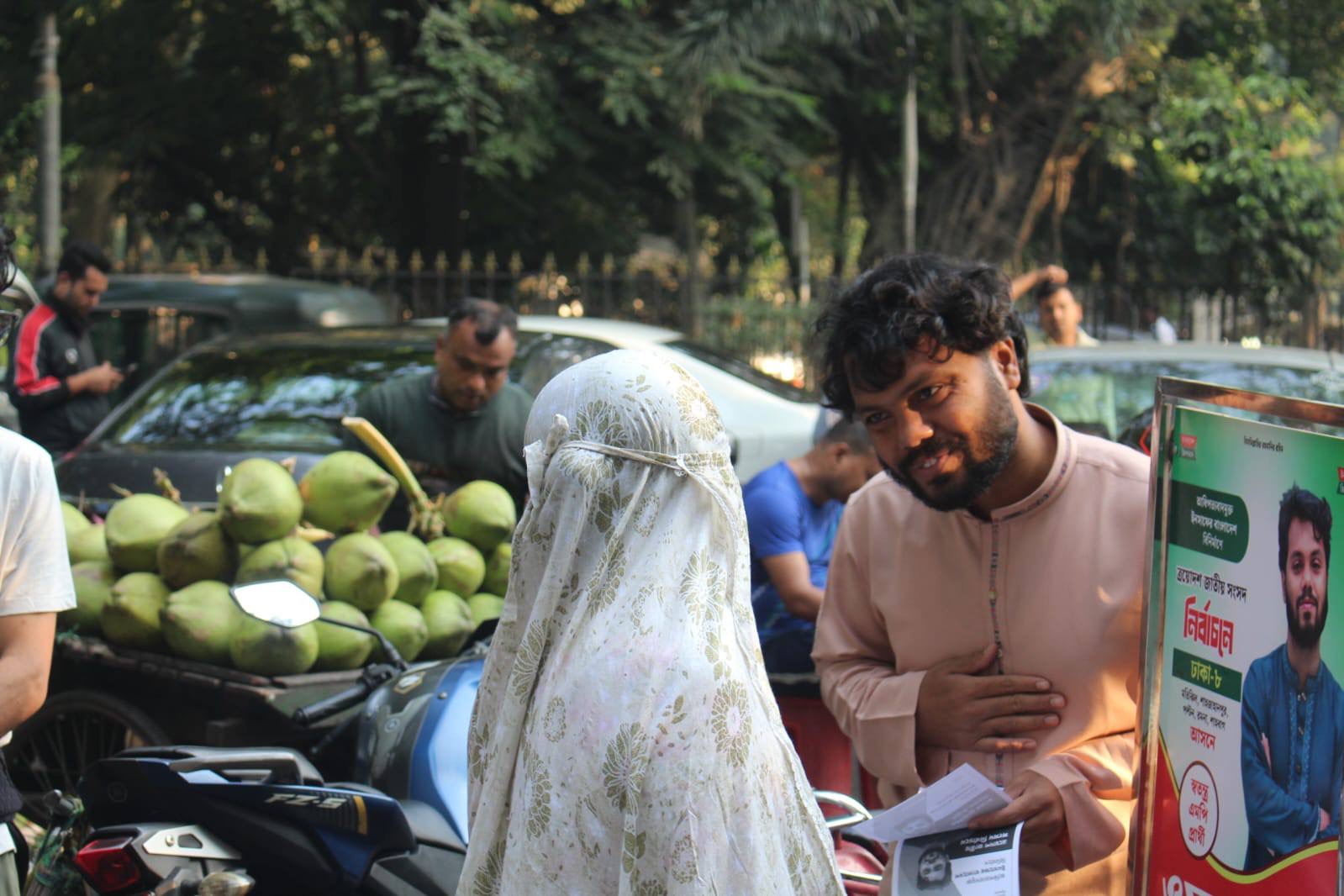
The silver linings
What has changed, however, is the method of enforcement.
During Sheikh Hasina’s long tenure, the work of intimidation and silencing was often carried out through the visible machinery of the state: an expansive security apparatus, sweeping surveillance, a cabal of heinous enablers and party-affiliated student and youth wings that functioned as enforcers on the ground.
That model is now under strain.
Increasingly, the task appears to be shifting toward deniability—toward “non-state” actors operating in the gray zones where accountability is hardest to establish.
Amid this turbulence, one reality is becoming difficult to ignore. Bangladesh’s dysfunctional political parties, trapped in cycles of opportunism and inertia, are ill-equipped to confront this moment.
So, too, are sections of the country’s self-appointed intelligentsia and civil society, whose interventions often stop at abstraction, rhetorics, seminars, and carefully hedged statements.
In a struggle that demands clarity, risk, righteousness and moral conviction, those habits offer little resistance.
Hadi’s rise—and the violence surrounding it—suggests that the contours of political contestation in Bangladesh are shifting.
Whether the country can produce figures willing to meet that shift, and survive it, however remains an open and unsettling question.
This is because for Bangladesh’s political parties, internal competition has long been treated as a zero-sum game. In that logic, restraint is a liability, and escalation becomes a reflex—even when it places the country itself at risk.

Why are people like Hadi rare?
Party operatives and their unofficial mouthpieces routinely raise the temperature, issuing statements that are reckless, inflammatory, and often divorced from national interest.
Foreign policy, in particular, has suffered from this cynicism. Having repeatedly demonstrated their incapacity to defend Bangladesh’s strategic autonomy, these actors have shown little hesitation in trading away the rhetoric of “jonogoner mandate”—the people’s will—when doing so secures short-term political survival.
With a few notable exceptions, the country’s civil society and intellectual class has offered little resistance to this drift.
Long defined by insecurity and proximity to power, they have rarely summoned the courage to confront how national interests were subordinated in exchange for political protection during the Awami League’s long dominance. There is scant reason to believe that a class so habituated to caution and alignment will suddenly rediscover its voice.
The more uncomfortable truth is that the violence surrounding figures like Sharif Osman Hadi will not be imported from abroad. The trigger, quite literally, will be pulled by a Bangladeshi.
It is the self-styled guardians of freedom—academics, social influencers, commentators, and cultural arbiters—who have already labeled Hadi’s anti-hegemonic politics as “far-right” or “right-wing,” thereby rendering him, and those who may follow him, legitimate targets in the public imagination.
When the time comes, it will likely be Bangladeshi intellectuals who supply the justifications, who explain away violence as inevitability, excess, or unfortunate necessity—and in doing so, help normalize the next attack.
As matters stand, this struggle can no longer be understood as merely electoral or partisan. It is unfolding across cultural and intellectual terrain, where narratives are shaped and legitimacy is conferred—or withdrawn.
If Hadi’s project demonstrated anything, it is that political change in Bangladesh cannot survive without a parallel transformation in these deeper domains.
Whether anyone is prepared to take up that gauntlet remains uncertain. But if Hadi’s work is not continued beyond ballots and banners—if it is not carried forward in cultural spaces and public debate—then the forces arrayed against him will not need to silence another voice.
The silence will already have been secured.
—
Nayel Rahman is a political analyst