

Tarique Rahman has a tough task on his hand: Rebuilding Bangladesh’s broken social contract

Kazi Jesin
Publish: 27 Dec 2025, 05:12 PM
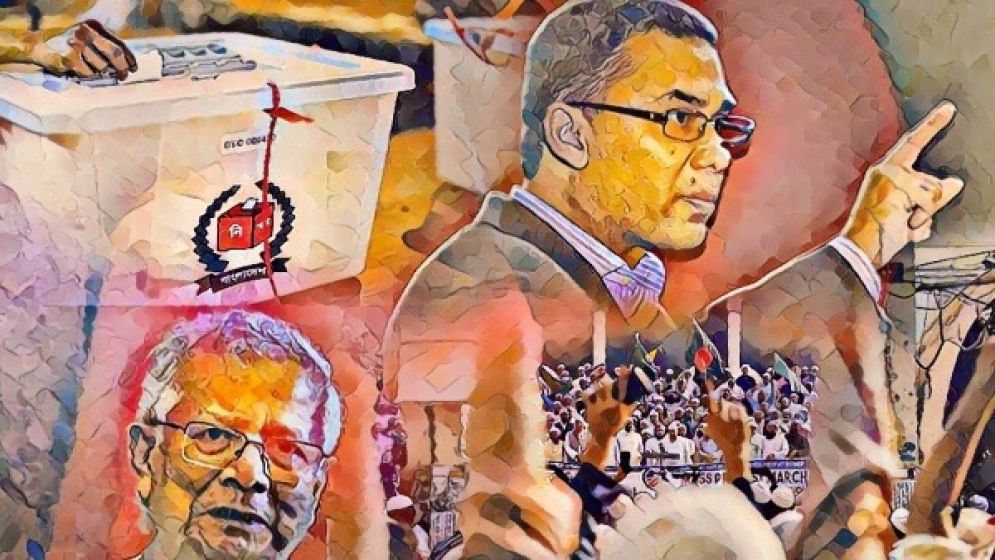
After seventeen years in exile, Tarique Rahman has come home. His return has drawn a level of public attention—domestic and international—that recalls another charged moment in Bangladesh’s recent history: September 11, 2008, the day he was effectively forced out of the country.
Then, a combination of domestic power brokers and foreign interests sought to erase him from politics altogether. Few imagined that he would one day return not diminished, but reinvigorated—welcomed by vast crowds and an unmistakable surge of popular emotion.
Tarique Rahman left Bangladesh as a senior BNP figure. He has returned as something larger: a national political presence.
The country was watching. It waited. He arrived. And what followed confounded both supporters and critics.
The caricature of Tarique Rahman as a political “prince” dissolved quickly. He declined the elevated chair prepared for him and chose instead to sit on an ordinary one. When party activists erupted into personalized slogans, he stopped them. “I don’t like it at all,” he said.
In a political culture where leaders often cultivate applause—and sometimes manufacture it—this refusal was deliberate. He was signaling that authority, in his view, does not flow from chants or choreography but from proximity to ordinary people.
Tarique Rahman is attempting to recast himself not above the public, but within it. He appears to understand a basic truth of Bangladeshi politics: that enduring power does not come from inner circles or patronage networks alone, but from the everyday citizens who feel seen, respected and included.
Those who have sustained his political relevance during his long absence are the millions who believe he speaks to their frustrations and aspirations.
Yet symbolism, however striking, is only the opening act. The harder question is what comes next. Tarique Rahman insists that he has a plan. Those familiar with BNP’s long-term policy thinking know that it centers on economic opportunity and restoring a sense of fairness to governance.
If the party returns to power, these promises will be tested immediately. The real challenge will be internal as much as external: whether he can prevent reformist intentions from being diluted by factional interests, personal gain or the habits of old politics.

Why does his return matter?
His return matters not only to the BNP but to Bangladesh itself. In a country hungry for credible leadership and genuine change, expectations are high—and unforgiving.
Tarique Rahman now faces the defining test of his political life: whether he can convert popular goodwill into durable reform, restraint into results, and symbolism into substance.
How he navigates that test will shape not just his legacy, but the country’s political future.
After fifteen years of suffocating misrule, Bangladesh briefly tasted something it had almost forgotten: hope. Liberation arrived not through negotiation or reform but through a bloody mass uprising, led by students and ordinary citizens who believed they were closing the door on misgovernance and state-sponsored terror.
For a moment, it seemed that a brutal chapter had ended.
That moment has not lasted. State terror may no longer operate in its familiar, centralized form, but over the past year and a half it has mutated. Mob violence—often tolerated, sometimes quietly enabled—has begun to replace the old machinery of repression.
One incident follows another. The pattern is unmistakable. What remains unclear is whether the government is unwilling to act or has consciously chosen not to.
This reality has prompted a new and unsettling label: a “right-wing government.” But the uprising that dismantled the old order was not right-wing at all. It was a mass movement, rooted in student activism and popular anger, driven less by ideology than by exhaustion with fear and abuse.
So how did a people’s revolt harden into something narrower and more exclusionary? Who consumed the unity that made victory possible? Who now seeks to convert a collective triumph into partisan dominance?
These questions are no longer whispered. They are being asked openly, and urgently.
It is against this backdrop that Tarique Rahman has returned. A significant segment of the current power structure appears preoccupied with maneuvers that hollow out democracy while preserving its outward rituals. Elections alone will not resolve this crisis if outcomes are engineered elsewhere.
The deeper challenge lies in confronting the forces that benefit from chaos, intimidation and polarized street power.
The most immediate danger is the normalization of mob rule. Tarique Rahman has repeatedly emphasized a single word in his speeches: peace. That emphasis reflects an understanding that no democratic transition can survive if violence is outsourced to crowds and grievance becomes a license to punish.
As a national leader, he faces the task of pushing back against this culture—working with the state and its institutions, even when their cooperation is uncertain.
The BNP, for its part, has signaled a deliberate return to the center.
Through alliances and seat-sharing arrangements, it has brought together religious-based parties and left-leaning groups under a broadly national framework. In a fractured political landscape, that centrism may be the only viable bridge between Bangladesh’s ideological extremes.
Durable unity will not be built through force or fear, but through dialogue and restraint.
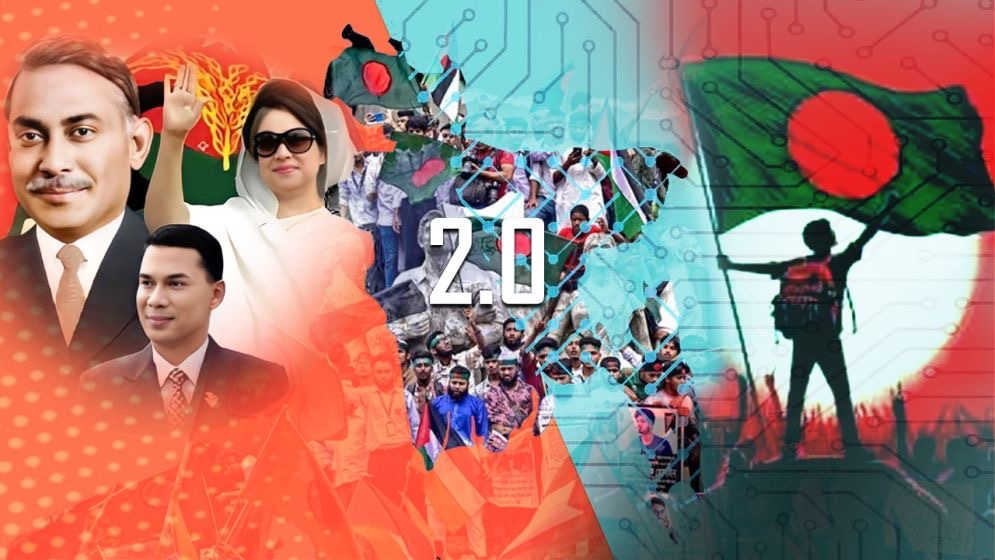
BNP’s switch to center from center-right
There is a darker irony at work. Because Sheikh Hasina ruled through oppression, some now justify oppression of their own. The oppressed risk becoming oppressors. Not everyone can be united; plural societies never erase disagreement.
People carry anger, memory and pain. But the purpose of the democratic state is precisely to prevent those emotions from spilling into violence. Citizens surrender a portion of their absolute freedom so that disputes are resolved by law, not by mobs.
Today, the social contract that once anchored peace and order in Bangladesh lies shattered. Justice is increasingly pursued not in courts but in the streets. Shadowy forces—unaccountable, unnamed, yet deeply influential—are shaping events from behind the scenes, corroding public trust in governance.
In this climate of fear and confusion, Tarique Rahman’s return carries a responsibility that extends beyond party leadership. As a pro-democracy figure, he must engage directly with the interim government to dispel uncertainty, confront rumor with clarity and reassure a public that no longer feels protected.
Free and fair elections are not a procedural demand; they are the minimum condition for restoring peace.
Freedom, after all, has limits. No society survives on absolute liberty. To live together, citizens must relinquish certain freedoms—not to rulers or factions, but to their own conscience. Conscience, not coercion, is the true governor of a democratic state.
A nation cannot be ruled by weapons, just as individuals cannot secure their lives through arms alone. At a moment when violence is casually justified, the call for restraint—for self-limitation in the name of collective peace—has never been more urgent.
Reconciliation across Bangladesh’s fractured society is now unavoidable. At this critical juncture, Tarique Rahman has correctly placed unity at the center of his message. But unity cannot survive if people abandon their humanity and retreat behind slogans and masks. The public will expect him to confront the dark forces that continue to haunt the country even after the fall of authoritarian rule—and to do so with resolve, not accommodation. Lasting peace will require moral clarity as much as political strategy.
What appears to be resonating most is a simple but powerful message: that the country matters more than party, and citizens more than calculations of power. That message has created expectations—of restraint, inclusion and a renewed commitment to the state as a neutral guarantor of rights. With those expectations comes a burden. Tarique Rahman must remain vigilant, ensuring that no party leader, activist or opportunist undermines the trust now being placed in him.
At this moment, many Bangladeshis no longer see him solely through the lens of partisan politics. They see a figure who could help steady a wounded nation. That hope is fragile, but real. Whether it endures will depend on whether peace is defended not just in speeches, but in action.
Welcome home—to a Bangladesh that is proud, resilient and still reaching for a future worthy of its sacrifices.
—
Kazi Jesin is Dhaka-based journalist and a top-rated talk-show host