

How Tarique Rahman’s 4T model can move Bangladesh beyond political rhetoric

Rezaul Karim Rony
Publish: 06 Feb 2026, 08:23 PM
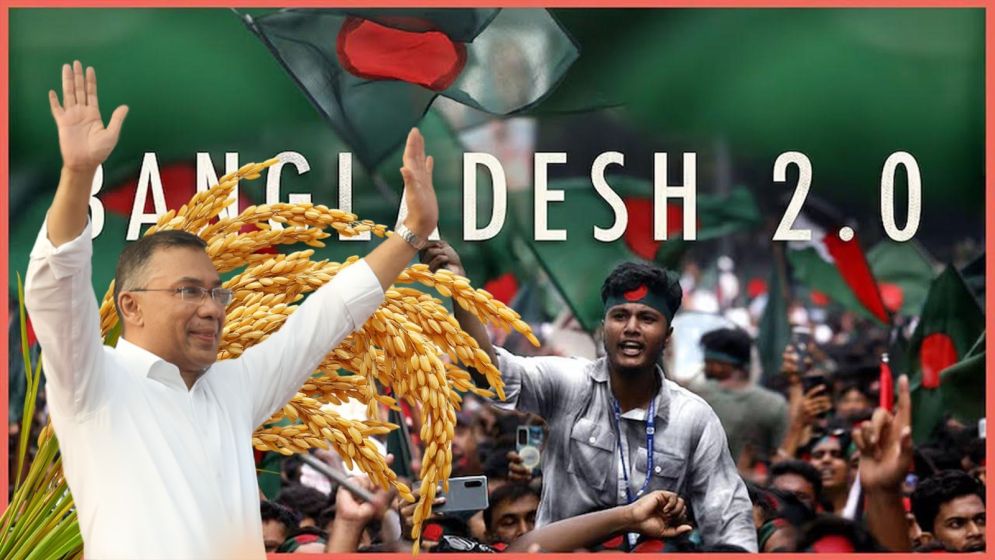
The failure of centrist nationalism to become Bangladesh’s cultural and philosophical mainstream has exacted a cost far greater than the electoral fortunes of the Bangladesh Nationalist Party.
It has weakened the country’s entire political architecture.
Ideological polarization has hollowed out public life. Politics has become a contest of camps, rather than a debate over values. The Left and the Right define themselves primarily in opposition to one another, and in doing so, both actively undermine the possibility of a democratic center.
Bangladesh’s political discourse has never seriously attempted to make values—pluralism and restraint—the organizing principle of the state. Instead, it has allowed society to fracture into rival ideological blocs, each claiming moral superiority while eroding democratic norms.
The result is predictable. A steady erosion of value-based politics and the normalization of ideological absolutism.
This is why, in the aftermath of the August 5 uprising, I argued repeatedly that while ideologies will always exist in society, the state itself must be grounded in values.
A democratic state requires ideological plurality. When a single ideology captures the state, the outcome is not stability but authoritarianism—often with a populist face. The mass uprising was, at its core, a revolt against that concentration of ideological power.
Yet even after August 5 or the July uprising, the lesson has gone unlearned.
An undemocratic, ideology-driven politics—now centered around the symbolism of July—is expanding through a new kind of populism built on spectacle, slogans and manufactured outrage.
This trend is openly hostile to the spirit of the uprising, even as it claims to be its guardian. The pattern is familiar. Just as the Awami League once monopolized the language of the Liberation War, this new political formation speaks the loudest about popular resistance while reproducing the same exclusionary logic—only in a more aggressive and volatile form.
This is not classical right-wing politics. It is something more dangerous. A hype-driven fanaticism. Its power does not come from ideas or policy but from viral narratives, moral vilification and the systematic production of hatred.
Here truth is secondary; mobilization is everything.

The last bastion of pluralism
Caught in this environment is the BNP, Bangladesh’s principal liberal-democratic party, now increasingly trapped by the very narrative politics perfected by the previous regime.
Its core strengths are being deliberately inverted and weaponized against it.
Three of those strengths are well established: respect for religious values, resistance to hegemonic power and a historical record of maintaining law and order.
Among politically attentive citizens, the first two are no longer seriously disputed. The third, however, has become the focus of a sustained campaign of delegitimization.
Since August 5, a narrative has been aggressively promoted that equates the BNP with extortion and criminality. This accusation is not unique—nearly every major political party faces similar charges, and arrests have been widespread.
But there is a critical difference. The BNP has expelled more than 8,000 leaders and activists in response to allegations of wrongdoing. When figures linked to other parties are accused—or even proven guilty—the offenses are routinely dismissed as personal failings, and organizational accountability is conspicuously absent.
This asymmetry is not accidental. It is the product of a political culture that rewards spectacle over standards and narratives over norms.
Bangladesh does not suffer from a surplus of ideology. It suffers from a vacuum of values. Until democratic principles—not ideological loyalty—become the state’s organizing foundation, every uprising will risk being followed by a new version of the same old politics, louder, harsher and more hollow than before.
The failure of centrist nationalism to become Bangladesh’s cultural and philosophical mainstream has exacted a cost far greater than the electoral fortunes of the Bangladesh Nationalist Party.
It has weakened the country’s entire political architecture.
Caught in this environment is the BNP, Bangladesh’s principal liberal-democratic party, now increasingly trapped by the very narrative politics perfected by the previous regime. Its core strengths are being deliberately inverted and weaponized against it.
Three of those strengths are well established: respect for religious values, resistance to hegemonic power and a historical record of maintaining law and order. Among politically attentive citizens, the first two are no longer seriously disputed. The third, however, has become the focus of a sustained campaign of delegitimization.
Since Aug. 5, a narrative has been aggressively promoted that equates the BNP with extortion and criminality. This accusation is not unique—nearly every major political party faces similar charges, and arrests have been widespread. But there is a critical difference.
The BNP has expelled more than 8,000 leaders and activists in response to allegations of wrongdoing. When figures linked to other parties are accused—or even proven guilty—the offenses are routinely dismissed as personal failings, and organizational accountability is conspicuously absent.
This asymmetry is not accidental. It is the product of a political culture that rewards spectacle over standards and narratives over norms.
Bangladesh does not suffer from a surplus of ideology. It suffers from a vacuum of values. Until democratic principles—not ideological loyalty—become the state’s organizing foundation, every uprising will risk being followed by a new version of the same old politics, louder, harsher and more hollow than before.
A dangerous political vacuum
What is striking in Bangladesh’s current political moment is the ease with which parties that excuse—or outright protect—the crimes of their own leaders now attempt to brand the BNP as synonymous with extortion.
The accusation is repeated so often that it has begun to substitute for evidence.
Curious about how the BNP itself views this campaign, I raised the issue directly in a recent conversation with Tarique Rahman. I asked why he had not been more publicly combative, why he had not rushed to counter the narrative head-on.
His response was telling and pointedly unspectacular.
The BNP’s priority, he said, is not narrative warfare but governance. Job creation, particularly for young people, is central to the party’s agenda, but that goal is inseparable from restoring law and order and ensuring public safety.
Fix those, he argued, and a majority of problems associated with extortion and illegal occupation diminish on their own. These are not merely partisan crimes; they are systemic failures. And systemic failures cannot be resolved through accusation politics.
Extortion thrives in unregulated spaces. Sidewalk shops, markets on public land, informal trade networks—these exist in every country. The difference elsewhere is that they operate within formal regulatory frameworks.
In Bangladesh, those who shout the loudest about extortion, Rahman suggested, are often the least interested in formalizing these sectors. Chaos offers control; regulation removes it. The aim, therefore, is not elimination of the problem but ownership of it.
For that reason, the BNP has little interest in dirty politics. Rahman was explicit: extortionists do not represent the BNP of Ziaur Rahman or Khaleda Zia.
The party’s approach is incremental and institutional—addressing disorder as part of a broader nation-building project. A “New Bangladesh,” he said, cannot be built overnight, but it cannot be built without confronting these issues seriously and structurally.
This stands in sharp contrast to the politics Bangladesh knows too well. For years, accusation has functioned as both a weapon and cover. When opponents are accused of a crime, the charge is amplified into a moral spectacle.
When the accusers commit the same offense, it is rebranded as necessity, exception or patriotism. Justification follows power.
That logic has not disappeared. Some political actors continue to invest heavily in social media hype, outrage cycles and narrative dominance—anything that distracts from the slow, unglamorous work of governance. But spectacle has diminishing returns.
Ultimately, the public is less interested in who shouts “extortionist” the loudest than in who offers a credible plan to end extortion altogether. Constructive politics, not performative morality, is the benchmark that matters.
And when voters decide whom to stand with, they are likely to choose the party that focuses less on accusations—and more on fixing what has been broken.
On a crossroad
Bangladesh now stands at a point where reconstruction, not repair, is required. The mass uprising exposed failures too deep for cosmetic reform.
What is needed is a reordering of political priorities—one that places citizens, not parties, at the center of the state.
Such a project requires a democratic political force with both organizational depth and a vision for inclusive development. It cannot be delivered by cadre-based, ideologically rigid movements whose primary instinct is control rather than consent.
In this landscape, the BNP inevitably enters the conversation—not because it is flawless, but because it remains the country’s largest and most electorally tested democratic organization.
The BNP’s record is mixed, and its shortcomings are real. Yet its role in defending voting rights and democratic process, particularly during moments of national crisis, cannot be dismissed.
Under the current leadership of Tarique Rahman, the party has made a deliberate effort to reconnect with ordinary citizens, not as a commanding force but as a participant in public life.
That shift has generated cautious optimism. Whether it can be translated into durable political reform remains the central question.
Meeting that challenge requires redefining politics itself. Power cannot be treated as the objective; it must be understood as a responsibility conferred by democratic legitimacy. In this regard, the BNP’s decision after August 5 to prioritize the restoration of voting rights over immediate power-sharing was consequential.
Rejecting the temptation of a so-called “national government” in favor of electoral legitimacy marked a rare commitment to democratic principle in a political culture accustomed to shortcuts.
Despite persistent attempts to portray Tarique Rahman as indifferent—or even hostile—to the events of July, the evidence suggests otherwise.
While many political actors have competed to claim ownership of the uprising, few have accepted responsibility for its human cost. The families of those killed and injured remain largely invisible, their demands unresolved.
Rahman has at least articulated a concrete institutional response, proposing a dedicated mechanism within the Ministry of Liberation War Affairs to address their needs.
He has spoken less about July’s symbolism and more about its substance: the demand for a safe, citizen-centered, democratic state.

The true power of restraint
History, however, does not reward restraint automatically. Responsibility, once assumed, must be carried through. If this moment is to lead to genuine transformation, Rahman’s leadership will have to be measured by method instead of rhetoric.
The framework he now faces can be reduced to five imperatives: transparency, truthfulness, trust, transformation—and leadership that is accountable to the public.
Of these, trust is the most fragile—and the most urgent. Years of opaque governance have hollowed out public confidence. Without transparency, accountability is performative; without accountability, democracy is procedural at best.
Restoring trust therefore requires opening the political process itself to scrutiny, something Rahman has repeatedly emphasized.
But transparency begins with a basic democratic guarantee: the right to vote. Without it, every promise of reform remains provisional. Securing that right is not merely an electoral demand. It is the foundation upon which any credible reconstruction of Bangladesh must rest.
The next and perhaps most urgent test is truthfulness.
Bangladesh’s political crisis has long been sustained by the manufacture of “political truth”—a blend of half-facts, selective memory and outright distortion. In the past, this practice was normalized across the spectrum, from the highest offices of the state to sections of the media and intelligentsia.
Alarmingly, some political actors continue to rely on the same tactics even after the mass uprising that was meant to end them.
There is a critical distinction between error and deception. Mistakes are inevitable in politics; deliberate falsification is corrosive. When leaders consciously twist statements, fabricate narratives or present partisan fiction as moral fact, they poison political tolerance itself.
What we are witnessing now is not constructive criticism of the BNP or of Tarique Rahman, but the persistence of narrative warfare—an inheritance from the previous regime that is ultimately more dangerous than an obvious lie because it masquerades as truth.
The phenomenon is most visible on social media, where doctored photocards and selectively edited quotes attributed to Tarique Rahman and senior BNP leaders circulate daily, designed not to inform but to mislead.
The response to this cannot be symmetrical retaliation. If the BNP mirrors these tactics, it will only deepen public cynicism.
The alternative—harder but essential—is radical truthfulness.
The uniqueness of Tarique Rahman
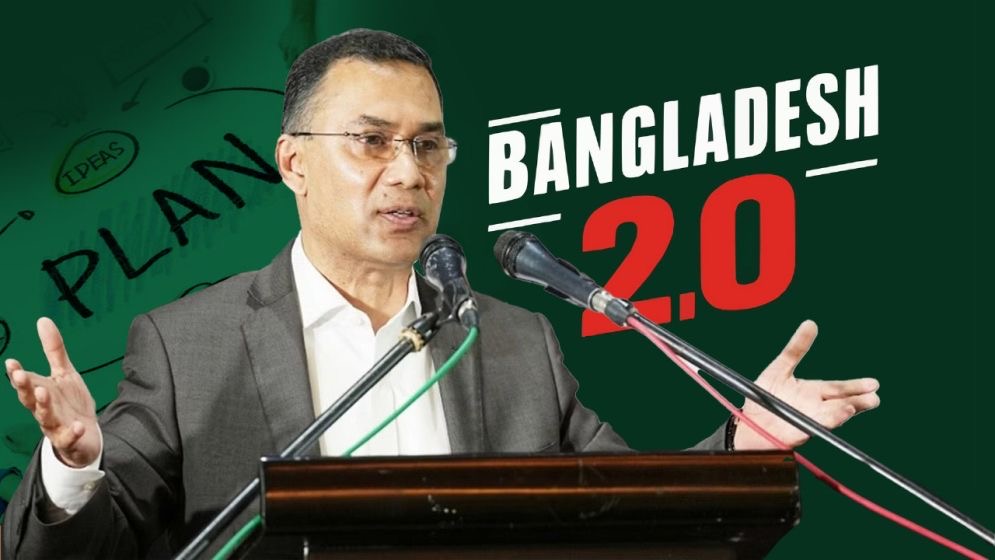
Here, Tarique Rahman’s conduct offers a revealing contrast.
He has been notably restrained in what he promises, refusing to pledge outcomes he cannot deliver. His position on the proposed “July Charter” reflects this approach: he has openly questioned provisions that are unworkable in the current context, even at the cost of being labeled “anti-July.”
Yet he has paired that caution with concrete policy directions—initiatives the BNP believes can tangibly improve daily life. This is slower politics, but it is also more credible politics.
The uprising of July was, at its core, a revolt against deception—against character assassination, institutional lies and manufactured consent. Those who continue to operate through falsehood and distortion are not advancing that legacy; they are eroding their own legitimacy.
This brings us to the question most often raised by critics: Is the BNP simply power-hungry? If that were the case, history offers inconvenient counterevidence.
Why did the party reject Sheikh Hasina’s offer of power-sharing in 2014? Why did Tarique Rahman refuse to assume authority without an election after Aug. 5, when the opportunity clearly existed?
The answer is straightforward. The BNP seeks power, but only through popular mandate. Any other route would undermine the party’s long-standing claim to democratic legitimacy.
That position—maintained at considerable political cost—has already forged a measure of trust between the BNP and the public.
Trust has also been reinforced by the party’s “Bangladesh First” doctrine, which rejects subordination to any external power, whether Delhi, Pindi or elsewhere.
In a region defined by geopolitical dependency, that insistence on civic sovereignty has resonated deeply.
The challenge now is not to invoke trust, but to institutionalize it. That requires moving beyond party identity toward a shared civic identity—one rooted in equal rights, human dignity and constitutional accountability.
Only when truth replaces narrative, and citizenship takes precedence over faction, can Bangladesh begin to recover the democratic promise that the uprising demanded.
Transformation meanwhile is not optional. It is the logic of time itself. The only real question is how change is managed—and in whose interest.
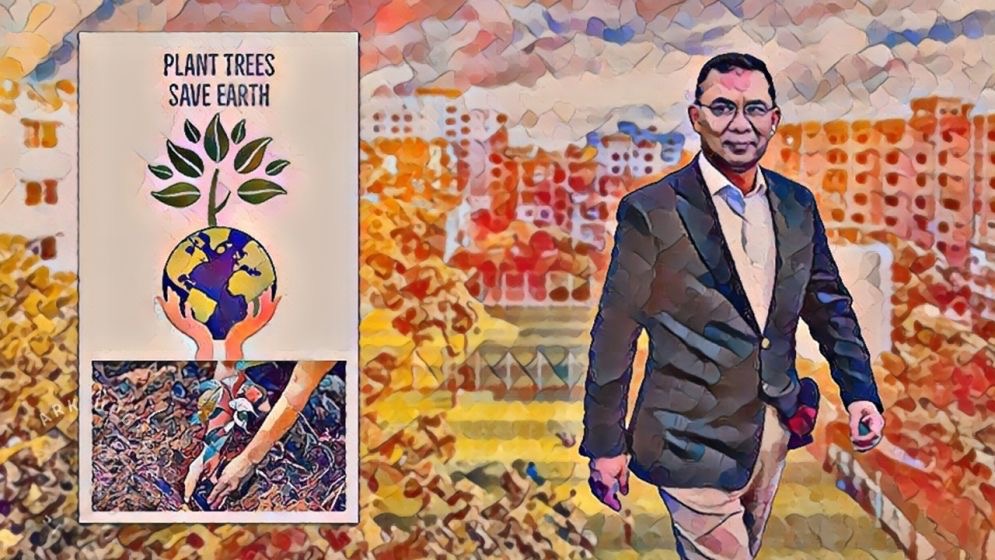
Translating the real benefit
Bangladesh cannot afford another cycle of cosmetic reform. What lies ahead is national reconstruction, not administrative adjustment.
That process must be anchored in the principles already outlined: transparency, truthfulness, trust and democratic accountability. Any transformation that reproduces the habits of the previous regime—centralization, exclusion, elite-driven decision-making—will fail, regardless of the slogans attached to it.
History offers a useful guide. The model associated with Ziaur Rahman did not treat politics as a closed system run by cadres and intermediaries. It sought legitimacy through direct engagement with citizens.
Reconstruction, in that tradition, begins not with party machinery but with public participation. Change imposed through intellectual consensus or bureaucratic decree, while sidelining ordinary people, rarely earns credibility.
The present government’s struggles are evidence enough of that disconnect.
Such a project requires a particular kind of leadership. Not a cult figure, not a paternal authority, and certainly not a political monarch—but a leader who appears recognizably human, grounded and accountable.
Someone the public can regard as one of their own rather than as a distant symbol of power.
Stripped of propaganda, Tarique Rahman has made a deliberate effort to project himself in precisely those terms. He has avoided the theatrics of “destined leadership,” positioning himself instead as a political worker seeking to act alongside citizens, not above them.
In conversation, he invoked a telling historical parallel: Ziaur Rahman formed the BNP not to capture power—he already held it—but to institutionalize nation-building.
The party was conceived not as a ladder to authority but as a vehicle through which the people could exercise it.
That distinction matters now more than ever. If politics is reduced to personal elevation, democratic reconstruction becomes impossible. Parties exist to serve the public will, not to substitute for it.
But this vision cannot survive on intention alone. If Tarique Rahman is to become a genuinely public leader, he must be subjected to sustained, constructive scrutiny rather than unconditional loyalty.
Internal reform within the BNP is unavoidable. Closed inner circles must be dismantled. Advancement must be based on integrity and competence, not proximity or patronage. Patriotic and capable individuals need to be integrated at every level of the organization.
Leadership, in this moment, is not about being praised—it is about being tested.
If that test is met—if democratic discipline replaces personality, and participation replaces hierarchy—Bangladesh could emerge with a political model distinct from the stagnation visible elsewhere in South Asia.
In a region where democracy is increasingly fragile, such an outcome would not merely be a national achievement. It would mark a rare and consequential exception.
—
Rezaul Karim Rony is a writer and thinker. He is the editor of Joban magazine
(Translated from Bangla by Faisal Mahmud)