

Why the US–Bangladesh SOE clause is standard trade text….and why Dhaka should stop subsidizing failure anyway

Faisal Mahmud
Publish: 12 Feb 2026, 07:13 AM
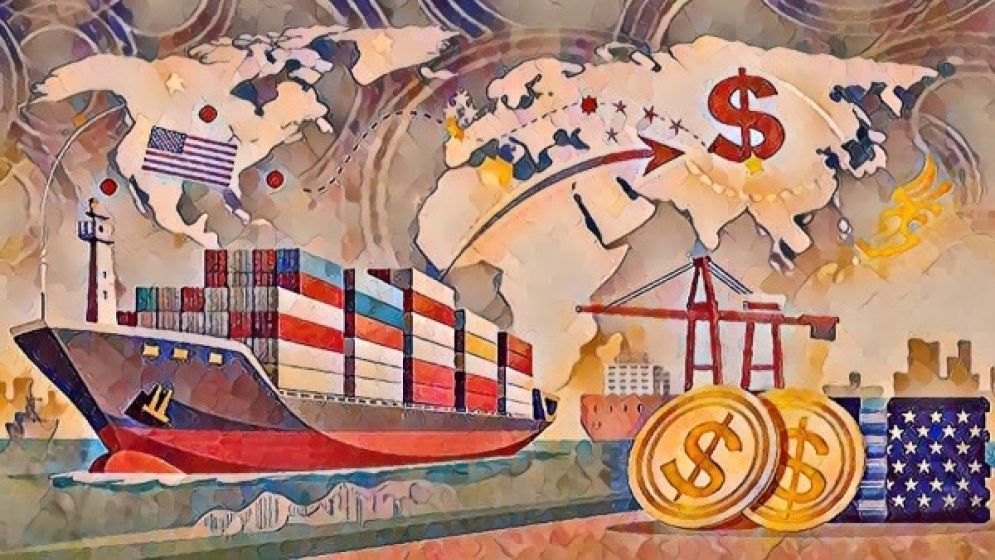
The latest US–Bangladesh trade deal has sparked concerns over its provision on State Owned Enterprises (SOE)s. Critics argue that compliance could compel Dhaka to close textile mills, jute factories, sugar mills and even key industrial units like refineries—citing this as evidence either of undue external pressure or of failings at home.
But these claims misread the moment. The SOE language in the Bangladesh deal is not a bespoke cudgel aimed at Dhaka. It is standard boilerplate—near-identical to provisions Washington has extended to a range of small and mid-sized economies in the wake of its tariff wave.
And if Bangladesh ultimately curtails subsidies to chronically loss-making SOEs, that will be less an act of capitulation to US pressure than a long-overdue correction of domestic economic distortions.
A glance at recent US trade understandings with countries such as Malaysia, Cambodia and El Salvador reveals the pattern. Barring heavyweight negotiations with China, the European Union or Canada, most post-tariff agreements are catch-all frameworks that embed template language on transparency, non-discrimination and market-based behavior for state-owned entities.
The SOE provisions are not essentially tailored indictments of individual national champions. They are prophylactic clauses meant to signal that public enterprises should not receive opaque advantages that distort bilateral trade.
One need not take this on faith. The texts are publicly available through the Office of the United States Trade Representative (OSTR). The repetition is striking. The message is consistent: if an SOE competes in goods or services trade, it should do so on commercial terms and without subsidies that disadvantage US firms.
That is of course not a Bangladesh-specific reprimand; it is Washington’s default setting.
Critics counter that, irrespective of what others have signed, compliance would force Bangladesh to close goods-producing SOEs such as the factories under the Bangladesh Textile Mills Corporation, Eastern Refinery, the jute mills under the Bangladesh Jute Mills Corporation (BJMC), and state sugar mills.
They argue that unlike El Salvador—whose agreement reportedly restricts certain obligations to sectors affecting US bilateral trade—Bangladesh would have to cease subsidizing enterprises even where US trade is marginal.
That reading exaggerates both the scope and the consequences.
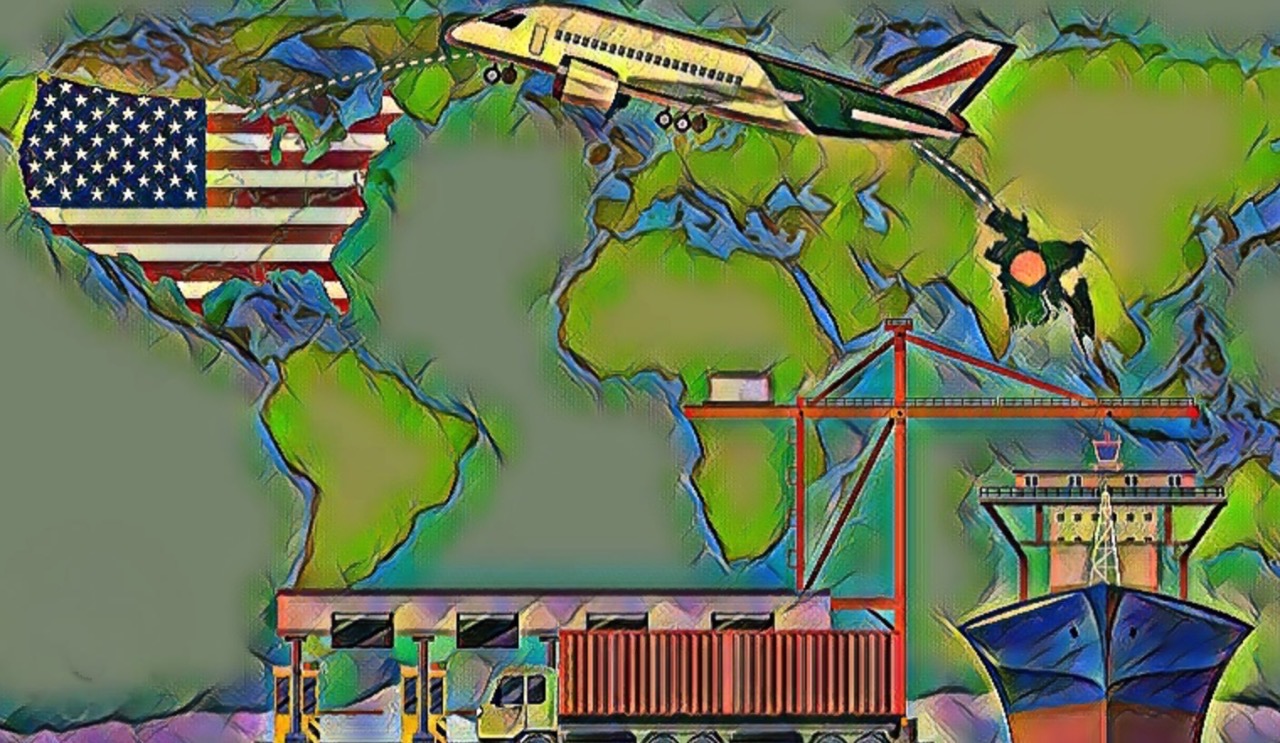
Understanding standard template
First, US SOE clauses typically discipline conduct that affects bilateral trade, not the entirety of a country’s public sector.
The operative concern is distortion in markets where American firms compete. If a Bangladeshi SOE produces for purely domestic consumption with no bearing on US trade, it is difficult to see Washington mounting a case.
The United States is unlikely to expend diplomatic capital policing every subsidy in every small or medium-sized economy; it has neither the bandwidth nor the incentive.
Second, even if the clause nudges Dhaka toward reducing subsidies across the board, that is hardly a catastrophe. It is, in fact, the direction many Bangladeshi economists have urged for years.
The country’s record with loss-making SOEs is well documented and sobering. Analyses by local policy institutes and financial dailies have repeatedly highlighted how chronic losses at state enterprises drain the exchequer, crowd out productive investment and perpetuate inefficiency.
The jute sector offers a telling case study. Prior to the closure of state-run mills in 2020, the Bangladesh Jute Mills Corporation (BJMC) had accumulated losses exceeding Tk 100 billion—roughly $1.1–1.2 billion at prevailing exchange rates—over the preceding decade.
Annual losses frequently ranged between Tk 8–10 billion (about $90–120 million), even as the government continued periodic bailouts and recapitalizations. At one stage, BJMC’s outstanding liabilities reportedly crossed Tk 50 billion (approximately $600 million).
All this unfolded while private jute mills—leaner and more export-oriented—accounted for more than 80 percent of Bangladesh’s jute export earnings, highlighting a stark productivity gap between state-run and private operators.
A similar pattern characterizes the state-owned sugar mills under the Bangladesh Sugar and Food Industries Corporation. Many have operated at just 15–25 percent of installed capacity, burdened by obsolete machinery and production costs well above market prices.
The cumulative losses of these mills have run into tens of billions of taka—equivalent to several hundred million US dollars—requiring recurring fiscal injections to keep them afloat.
In several years, the cost of producing a kilogram of sugar at state mills significantly exceeded the price of imported sugar, effectively turning budgetary support into a structural subsidy for inefficiency.
The Bangladesh Textile Mills Corporation (BTMC) reflects the same structural weaknesses.
While Bangladesh’s privately owned ready-made garment sector generates over $40 billion annually in export revenue and employs around four million workers, BTMC’s state-run units have struggled with low capacity utilization, aging equipment and sustained financial losses—necessitating periodic government support amounting to billions of taka.
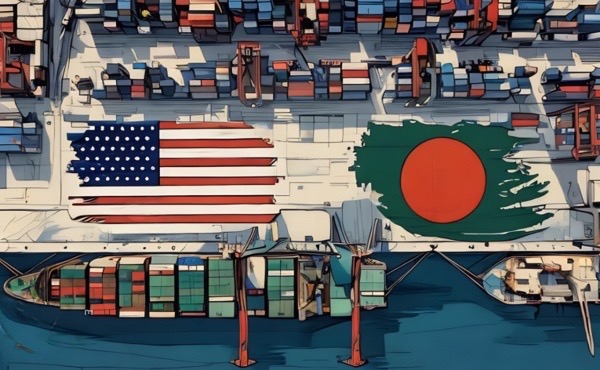
Putting a cap
This fiscal burden is not abstract. Subsidies and recapitalizations for SOEs translate into higher public borrowing or foregone spending on infrastructure, health and education.
They can exacerbate banking sector stress when state-owned banks are directed to extend credit to failing enterprises.
Over time, this misallocation of capital erodes productivity growth—the very engine Bangladesh needs to sustain its development trajectory as it graduates from least-developed-country status.
Critics frame the SOE clause as an existential threat to workers in these industries. That concern deserves respect; restructuring is never painless. But indefinite subsidization is not social policy—it is avoidance.
Funds poured into perpetually loss-making factories could finance targeted social safety nets, retraining programs or regional development initiatives with far higher returns. Protecting workers does not require preserving inefficient corporate shells.
There is also a competitiveness argument. Bangladesh’s export success—most notably in ready-made garments—has been driven by private initiative, integration into global value chains and relentless cost discipline.
Shielded SOEs run counter to that model. They can distort input markets, raise costs for downstream producers and entrench vested interests resistant to reform.
Phasing out subsidies would level the playing field and signal to investors that Bangladesh is serious about market-based governance.
What of the charge that agreeing to such terms reflects incompetence by the interim government? That, too, overstates Bangladesh’s leverage. Smaller economies do not “negotiate” with Washington in the way great powers do.
They calibrate. They ensure they do not make avoidable mistakes, they preserve core interests where possible, and they accept that template provisions will be part of the package. To personalize structural realities is to indulge sentiment rather than analysis.
Moreover, Bangladesh will not be alone in grappling with these clauses. As more countries sign similar frameworks, a de facto norm emerges. Washington cannot—and will not—single out each signatory for punitive action.
Enforcement, where it occurs, is likely to be selective and focused on high-profile distortions in sectors with meaningful U.S. stakes. The specter of blanket sanctions against every small and medium-sized partner is implausible.

Pragmatic positioning
This does not mean Dhaka should sign blindly.
It should, as always, scrutinize definitions, ensure that commitments are aligned with existing reform plans, and seek clarifications where necessary—particularly regarding the scope of application to bilateral trade.
But unreservedly criticizing the deal on the grounds that the SOE clause is uniquely punitive would be a strategic misstep.
Indeed, there is a case for taking what Washington is offering now and assessing costs later. Trade access, even incremental, matters in a world of fragmenting supply chains.
Bangladesh’s economy remains export-dependent and sensitive to external shocks. Preserving stable trade relations with its largest single-country export market is not trivial.
The deeper truth is that the debate over SOEs should not be outsourced to Washington. It is a domestic reform question that Bangladesh has postponed for too long.
Whether prompted by a US clause or by its own fiscal arithmetic, the country will eventually have to decide whether to continue underwriting enterprises that fail to compete.
Seen in that light, the SOE provision is less a foreign imposition than a mirror. It reflects a global expectation that state enterprises operate transparently and commercially when they enter international markets.
For Bangladesh, embracing that expectation would not signify surrender.
It would signal confidence—confidence that its private sector can thrive without distortion, and that its public finances deserve better than perpetual bailouts.
—