

ICT prosecutors clash after dismissal letter and corruption claims

David Bergman
Publish: 25 Feb 2026, 04:56 PM
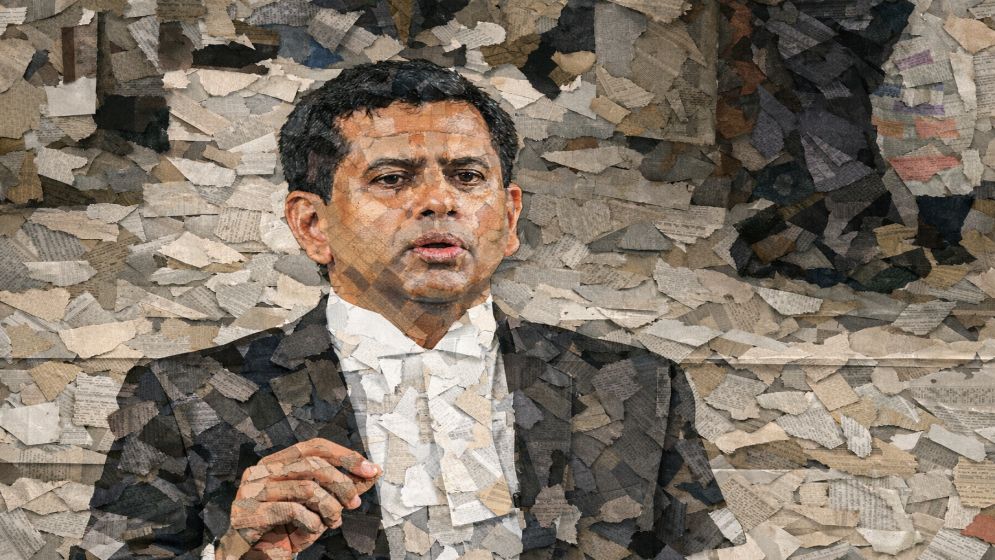
A month before he was removed as Chief Prosecutor of the International Crimes Tribunal (ICT), Tajul Islam formally asked the Law Ministry to dismiss one of his own prosecutors, Sultan Mahmud, alleging serious professional misconduct, breaches of confidentiality, and violent behaviour toward security staff.
The letter, dated 11 January 2026, sought Mahmud’s removal “due to breach of trust, discipline and conduct, and serious professional misconduct.”
Six weeks later, on 23 February 2026—the same day Islam himself was replaced as Chief Prosecutor—Mahmud publicly accused Islam and his close associate in the prosecution office, Gazi Monawar Hossain Tamim, of corruption.
In a series of social media posts, Mahmud questioned several prosecutorial decisions, including the failure to charge certain police officers, a meeting between Tamim and the wife of an accused, and the decision to allow former Inspector General of Police Chowdhury Abdullah Al-Mamun to become an “approver.”
He claimed that the “Chief Prosecutor’s office had turned into a money-making tool.”
Islam rejects the allegations, describing them as baseless and retaliatory. In an interview, he suggested Mahmud may have learned of the January letter through the Law Ministry and seized the opportunity to make his allegations once Islam was removed from office.
“I understand that he possibly came to know about the letter through the Law Ministry,” Islam said. “He took a chance to make these allegations when I was replaced at the tribunal.”
The letter to the ministry
In his January letter, Islam alleged that Mahmud had provided confidential information to outsiders without authorisation.
“Without the approval of the Chief Prosecutor of the Tribunal, Mr Sultan Mahmud, as a Prosecutor, has provided important and confidential information to outsiders in violation of the law,” the letter states, describing this as an illegal act posing “a serious security risk to the investigation and cases under trial.”
The letter further claimed that Mahmud had, on several occasions, “summoned witnesses and victims to his residence and provided them with misleading advice and fabricated narratives intended to disrupt judicial proceedings.”
It also summarised an allegation by Main Uddin, a High Court security guard, who accused Mahmud of physically assaulting him, causing injuries to his jaw, hands and head, and “threatening to kill him”.
Uddins’s original complaint in October 2025, annexed to the letter, alleged that the altercation occurred after the guard’s foot accidentally brushed against Mahmud’s, despite an apology.
The letter further stated that four armed security personnel assigned to Mahmud had “voluntarily expressed their unwillingness to continue serving with him” after he allegedly instructed them to “shoot at will over trivial matters.”
It also referred to a complaint submitted by Mahmud’s wife, alleging that she had been subjected to “physical, mental and social abuse, including domestic violence.”
Attached to the letter was a separate written statement from his wife, dated November 2025, detailing specific incidents in which she alleged that Mahmud had been violent toward her.
Mahmud’s Response
“The allegation brought against me is totally false,” he stated in an exchange of texts on Wednesday, adding that he had not previously received any formal notice or opportunity to respond and that he had only learned of the complaint “today”.
He said that he remains married and “There is no allegation against me from the side of my wife”
He claimed Islam is only now making these allegations as he is “aggrieved [with] me”
Mahmud acknowledged that prior to his social media post he had not made “any written allegation against Mr Tajul [Islam].”
Mahmud continued to assert that Tajul took money for the decisions he set out in his social media post, but did not respond to questions about whether he possesses “evidence” to support those claims or whether these claims were “speculative”
In an interview with Prothom Alo, Mahmud also suggested that the ICT letter to the ministry had been organised in advance to discredit him if he were ever to make public his allegations.
“They conspired against me out of fear that I might expose their corruption. As part of that deep conspiracy, they had prepared these matters in advance so that they could use them against me at the appropriate time. Because if I had actually committed any wrongdoing, they would have issued me a show-cause notice or given me formal notice — but they did none of that.”
Islam’s response
Islam firmly denies the corruption allegations. “They are utterly false. There is no minimum truth to the allegation. My life is an open book. He has no iota of evidence,” he said.
Responding to claims of selective prosecution, Islam maintained that decisions on who to charge were “evidence-based” and taken “collectively” by both the prosecution and investigative authorities.
“The prosecution has submitted formal charges against every person whom the investigation agency proposed for prosecution,” he said.
Islam added that he had discussed his concerns about Mahmud with then Law Minister Asif Nazrul and the former Attorney General, now Law Minister, Md. Assaduzzaman, before sending the letter.
“I shared everything with Asif Nazrul and Assaduzzaman. They know everything about Sultan [Mahmod],” he said.
Islam said the Law Ministry did not however have sufficient time to act on his request before the interim government’s term ended. Asif Nazrul declined to comment.
“I am mentally very much disturbed as the people of Bangladesh don’t know the truth. When someone says something on social media, people start talking about it, and say, ‘Oh since one of the prosecutors is saying something, maybe there is some kind of truth to it.’ So this is very disturbing to me mentally.”
Gazi Monowar Hossain Tamim, prosecutor (admin) of the ICT has strongly protested against recent media reports linking him to certain investigation and prosecution matters, describing them as false and defamatory.
He said the statements attributed to him are completely “untrue and do not reflect his views”, alleging that such reports were published with “malicious intent to damage his professional reputation and mislead the public.”
Tamim called on the tribunal and relevant authorities to take appropriate legal action against those responsible and to ensure accountability to prevent the spread of misinformation in the future.
He also urged greater vigilance to stop similar false reporting from recurring.
—
David Bergman is a journalist based in the UK and Bangladesh. He has long been covering Bangladesh affairs. He can be followed on X @TheDavidBergman