

Press access curtailed in Bangladesh’s top courts over ‘security’

David Bergman
Publish: 26 Feb 2026, 07:00 PM
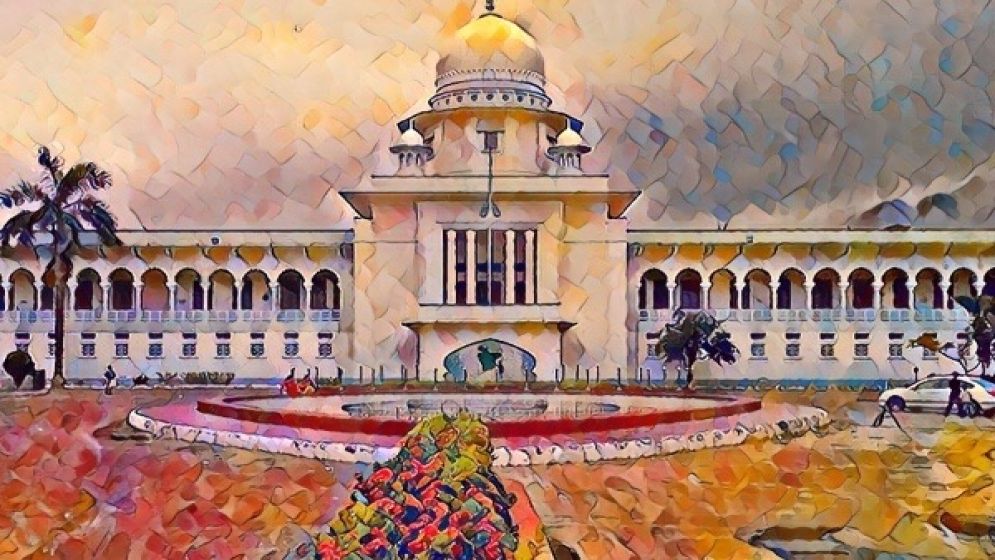
Bangladesh’s Chief Justice has recently issued a rather troubling notice only allowing lawyers - along with their assistants, and individuals related to the filing of affidavits - from entering the Supreme Court premises. The restriction applies not only to the Appellate Division, where the Chief Justice sits, but also to all High Court benches.
If implemented as intended, the notice would effectively prevent journalists from attending and reporting on proceedings in both the Appellate Division and the High Court.
In practice, the current impact is uneven, but significant.
Journalists are no longer permitted to enter the Appellate Division courtroom, and some High Court benches have followed suit. Other benches appear either unaware of the directive or have chosen not to enforce it.
The notice, formally issued on 20 January 2026 (after being informally given on 7 January), cites “security” as its justification. (see at end)
Enhancing court security is, of course, a legitimate objective. But excluding journalists from courtrooms is neither a necessary nor a proportionate response. If security is the concern, a straightforward system of accreditation or press passes - as already implemented by the International Crimes Tribunal - would address it without undermining transparency.
The principle at stake is fundamental: justice must not only be done - it must be seen to be done. Courts derive their authority from public confidence. Media reporting enables the public to observe judicial proceedings indirectly, to understand the reasoning behind decisions, and to hold the judiciary accountable. When journalists are excluded, that transparency disappears.
There is also a serious constitutional question. Article 39(2) of the Constitution guarantees freedom of the press, subject to “reasonable restrictions imposed by law” in the interests of state security, public order, decency, morality, contempt of court, defamation or incitement to an offence. However, none of these grounds has ever been interpreted in Bangladesh as permitting a blanket exclusion of journalists from court proceedings. Open courts are the norm; restrictions are the exception.
The Law Reporters Forum has written twice to the Chief Justice - on 19 and 29 January - urging him to rescind the notice. So far, there has been no resolution.
It is worth noting that within the High Court there is speculation that “security” may not be the true rationale behind the notice, and that the move was prompted instead by concerns over inaccurate or poorly reported media coverage.
If that is indeed the case - and no specific reports have been publicly identified - a blanket ban on journalists is neither a proportionate nor legitimate response.
If the court has concerns about accuracy, it has other remedies available. It can issue guidance reminding reporters of their professional responsibilities, seek corrections, or, in serious cases, summon journalists to explain alleged misreporting. Excluding the press altogether simply means there is no reporting at all.
We are familiar with the ancient question: "Quis custodiet ipsos custodes?" - Who guards the guards themselves?
There is a related question that may now be more pertinent: "Quis judicabit ipsos judices?" - Who will judge the judges themselves?
-----------
Subject: Regarding the restriction of access for litigants or any unexpected persons to the Supreme Court building due to security reasons.
In light of the above subject, all concerned are hereby informed that the Supreme Court of Bangladesh is regarded as the highest seat of the country’s judiciary and a highly significant establishment. The Honorable Chief Justice of Bangladesh and the Honorable Judges of both divisions of the Supreme Court conduct judicial proceedings in courtrooms located in various buildings of the Supreme Court. Consequently, it is essential to ensure the security of the Supreme Court for the Honorable Chief Justice of Bangladesh, the Honorable Judges of both divisions, and the lawyers appointed as vital components of the case management process.
It has been observed that recently, unexpected persons have been entering the court premises, corridors, and courtrooms, creating obstacles to security, the peaceful environment, and the conduct of judicial proceedings. As a result, the security of the Honorable Judges of both divisions of the Supreme Court of Bangladesh, learned lawyers, and officers and staff is being compromised.
Under these circumstances, to ensure the overall security of the Supreme Court, the entry of any unexpected persons—other than learned lawyers of various divisions of the Supreme Court, lawyer assistants (clerks), and individuals related to the filing of affidavits for specific cases—is hereby restricted. This order shall take effect from Wednesday, 21/01/2026, and shall remain in force until further notice.
By order of the Honorable Chief Justice of Bangladesh,
(Signed)
(Muhammad Habibur Rahman Siddiqui)