

Former CFO under fire over procurement scandals and financial irregularities at Biman Bangladesh Airlines

Zulkarnain Saer
Publish: 25 Mar 2026, 04:20 AM
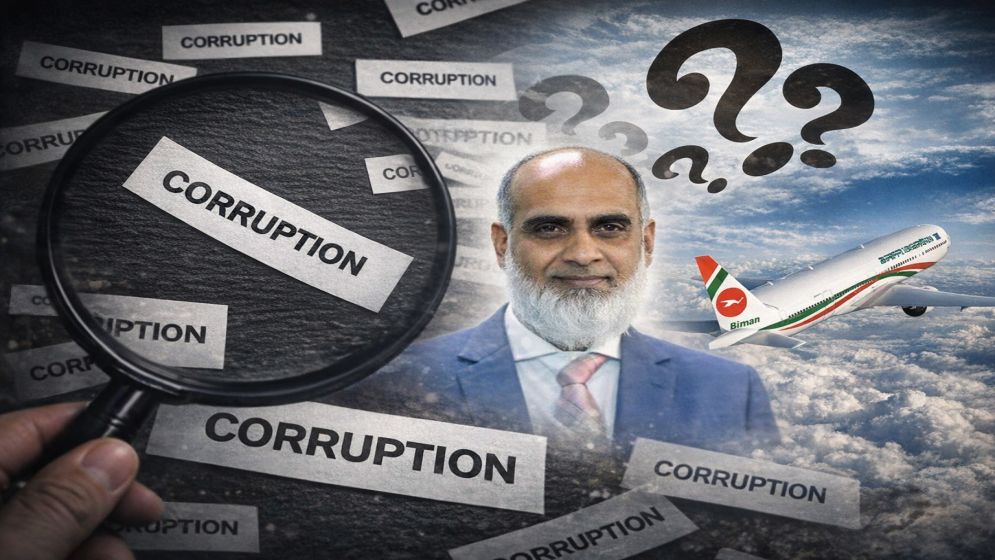
For decades, Bangladesh’s national flag carrier, Biman Bangladesh Airlines, has struggled with persistent governance problems that include financial instability and political interference.
Massive procurement controversies have also periodically shaken confidence in the airline’s management. Analysts of the aviation sector have long argued that the airline’s structural challenges stem from a combination of state control and weak financial oversight.
Bangla Outlook has reviewed a series of internal documents, whistleblower complaints, and media reports and have found out that one senior official Md. Nawshad Hossain, the erstwhile Chief Financial Officer of Biman Bangladesh Airlines was involved in some of the massive corruption involving the carrier. .
The controversy surrounding Hossain can be traced back to his appointment in September 2021 as Director of Finance, a role that effectively serves as the airline’s Chief Financial Officer.
Internal documents and recruitment notices show that the CFO position at Biman is intended for a highly qualified financial specialist, requiring professional credentials such as FCA or FCMA along with extensive senior-level experience in financial management.
However, internal reports suggest that Hossain did not meet these criteria at the time of his appointment.
His academic background is reportedly in zoology, and he was serving as a government civil servant with the rank of deputy secretary rather than a finance professional with specialized training in corporate financial management.
Within Biman, the appointment was viewed by many employees as an example of political patronage overriding professional criteria. The airline has historically been overseen by the Ministry of Civil Aviation and Tourism, and senior posts have frequently been filled through government appointments.
Critics inside the airline argue that such arrangements often prioritize political loyalty over technical competence.
According to the internal report of Biman, corroborated by intelligence agencies, Hossain’s appointment was widely perceived by employees as the product of influence within the political establishment rather than a merit-based recruitment process.
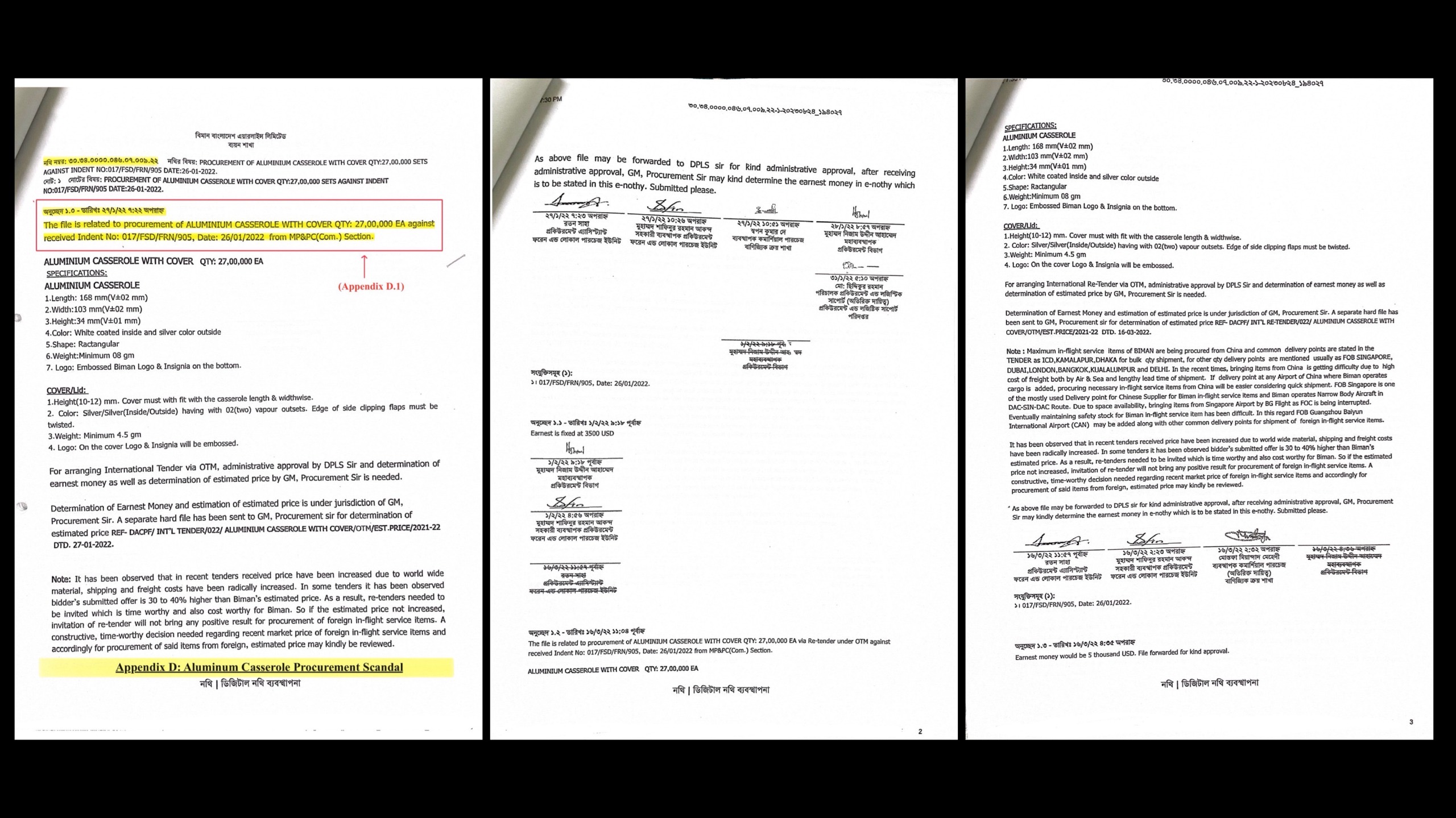
Whether or not those allegations can be substantiated, they created an atmosphere of suspicion from the outset of his tenure.
Concerns about the finance department intensified over the following years as internal staff began to question financial management practices and procurement decisions.
According to internal memos seen by Bangla Outlook, several employees believed that financial decision-making had become increasingly centralized around the CFO’s office. The report claims that under Hossain’s leadership, the department became vulnerable to irregularities in procurement and financial oversight.
While some of these allegations remain disputed, they laid the groundwork for a series of controversies that later emerged into the public domain.
One of the most serious incidents involved an international remittance transaction worth $500,000 that triggered compliance issues within the global banking system.
Internal correspondence contained in the documents shows that on February 26, 2023, Biman’s finance department authorized an outward remittance from the airline’s foreign currency account held with Sonali Bank.
The payment was intended for operational expenses at Biman’s London station. However, the documentation attached to the remittance included invoices issued by Iran Airport Air Navigation Company. That entity is subject to sanctions administered by the United States Office of Foreign Assets Control (OFAC).
Because the international payment was routed through the United States banking system, the presence of a sanctioned entity triggered an automatic compliance alert.
Standard Chartered Bank’s New York branch, acting as an intermediary bank, froze the transaction. Internal correspondence later revealed that the sanctions violation effectively halted the transfer and initiated a complicated sequence of attempts to reverse the transaction.
Biman officials requested cancellation of the payment and attempted to reissue it using different invoices from Western aviation suppliers, including GE Engine and Boeing. Yet the financial complications did not end there.
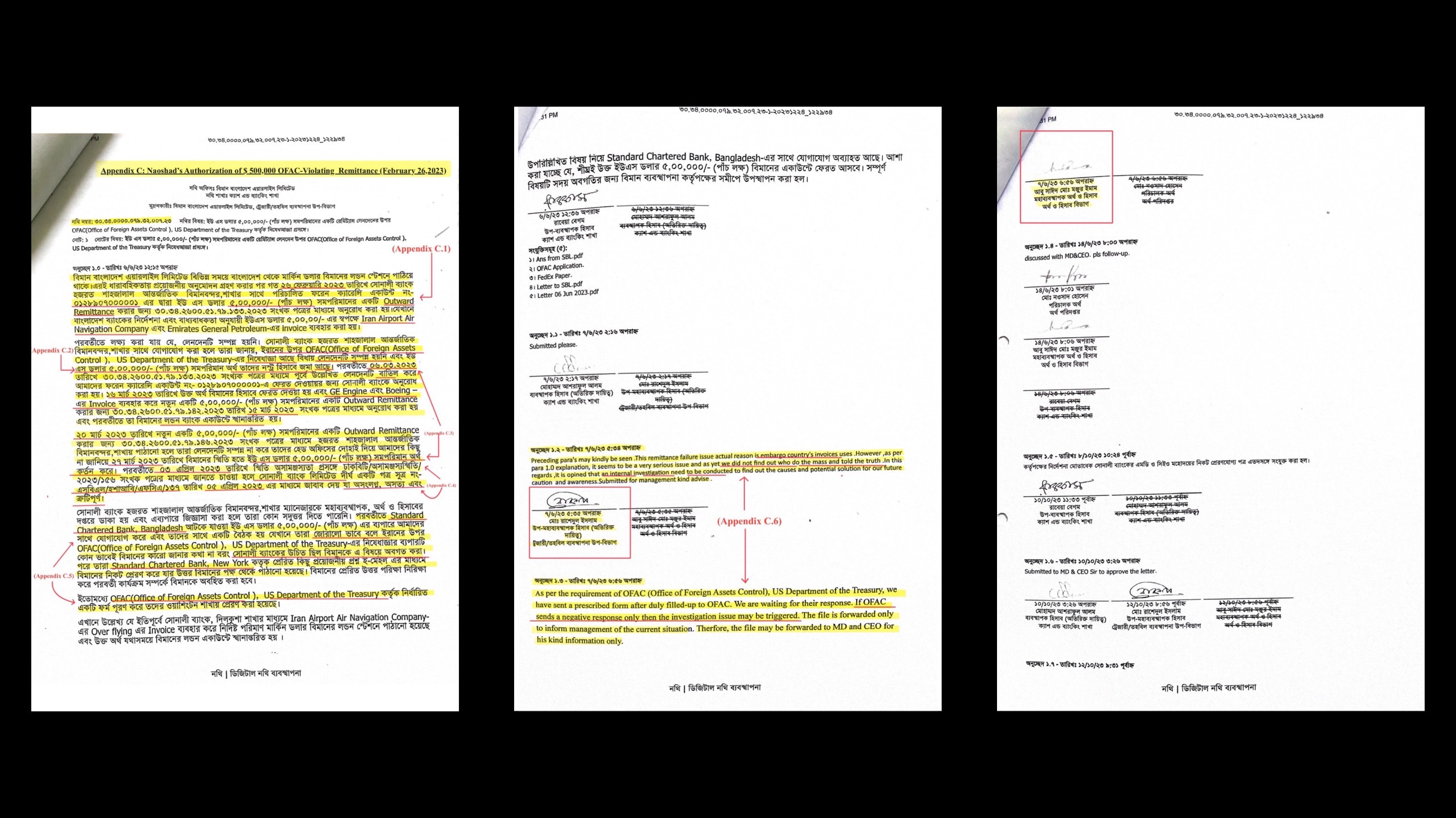
According to the internal documents, Sonali Bank eventually debited the full $500,000 from Biman’s account, leaving the airline unable to recover the funds.
An internal officer reviewing the case wrote that the underlying cause of the failure was the use of invoices from an embargoed country. The officer recommended that an internal investigation be conducted to determine who had approved the documents attached to the remittance.
The documents suggest that such an investigation was never formally completed. Instead, critics say, the matter gradually faded without any clear resolution or disciplinary action.
The incident became emblematic of what critics describe as a lack of accountability within Biman’s financial management structure.
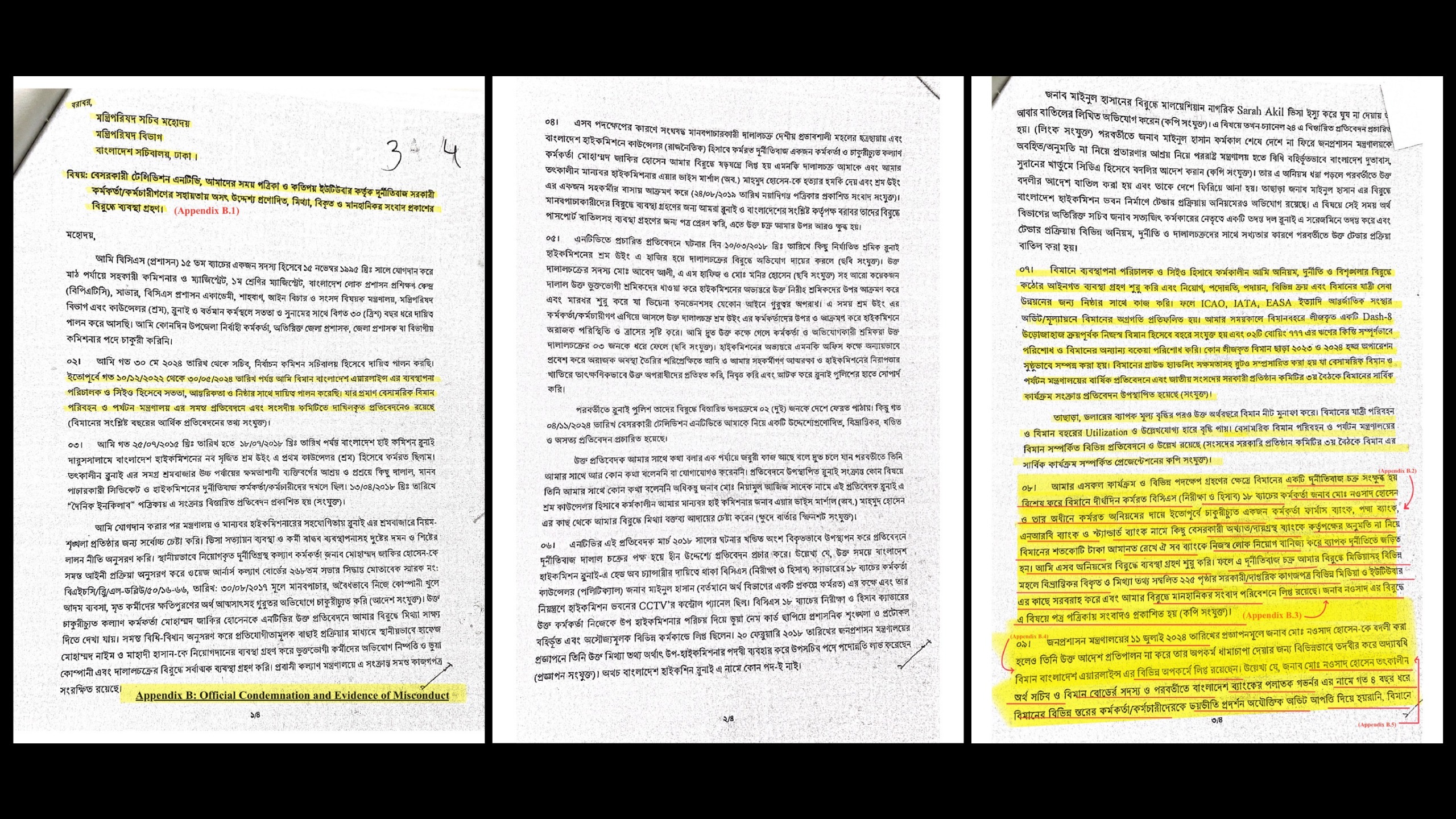
A separate controversy involved procurement practices within the airline’s catering supply chain. Procurement records indicate that Biman initiated a tender in 2022 to purchase approximately 2.7 million aluminum casserole sets used for airline meal service.
Multiple suppliers submitted bids for the contract, including companies offering significantly lower prices than the eventual winning bidder.
Internal procurement comparisons indicated that some qualified suppliers had offered prices as low as $0.0763 per unit, while another proposed $0.088803 per unit. According to the internal report, the contract was ultimately awarded to Henan Dingyu Aluminium Industry Co. Ltd. at a price of $0.09695 per unit.
Investigators reviewing the procurement documentation estimated that this decision resulted in an overpayment of more than $55,000 compared with the lowest available bid.
The issue became more controversial when internal procurement officers reportedly raised concerns about delivery delays and quality problems involving the supplier.
According to the documents, staff recommended that the company be blacklisted after failing to meet contractual obligations. Those recommendations were ultimately not implemented.
Critics within the airline argue that the structure of authority surrounding the procurement process created a potential conflict of interest.
According to the internal report, Hossain simultaneously exercised influence over both the finance department and procurement oversight, enabling him to participate in supplier selection decisions while also authorizing payments.
In corporate governance terms, such overlapping authority can weaken internal safeguards because the same official controls multiple stages of a financial transaction.
While these controversies were unfolding internally, discontent among employees grew increasingly visible. By mid-2024, protests erupted among Biman workers who accused senior officials of corruption and mismanagement.
In a dramatic incident widely reported in local media, employees placed a notice outside the CFO’s office door declaring that individuals associated with corruption should not enter the premises.
Demonstrators alleged that financial irregularities and political favoritism had damaged the airline’s professional culture. They demanded the removal of certain senior officials and called for reforms in how appointments were made within the organization.
The protests represented a rare moment of open dissent within the state-owned airline.
According to media accounts, some employees even blocked access to the CFO’s office and forced senior officials to leave the building during the demonstrations.
External media reports have echoed some of these concerns. Articles published in Bangladeshi outlets have alleged that the CFO was involved in financial irregularities and questionable administrative decisions during his tenure.
While the airline has not publicly confirmed many of these allegations, the reports have contributed to growing scrutiny of Biman’s financial operations.
—