

The convoys keep coming….but home stays distant for the Rohingya

Faisal Mahmud
Publish: 01 May 2026, 04:06 PM
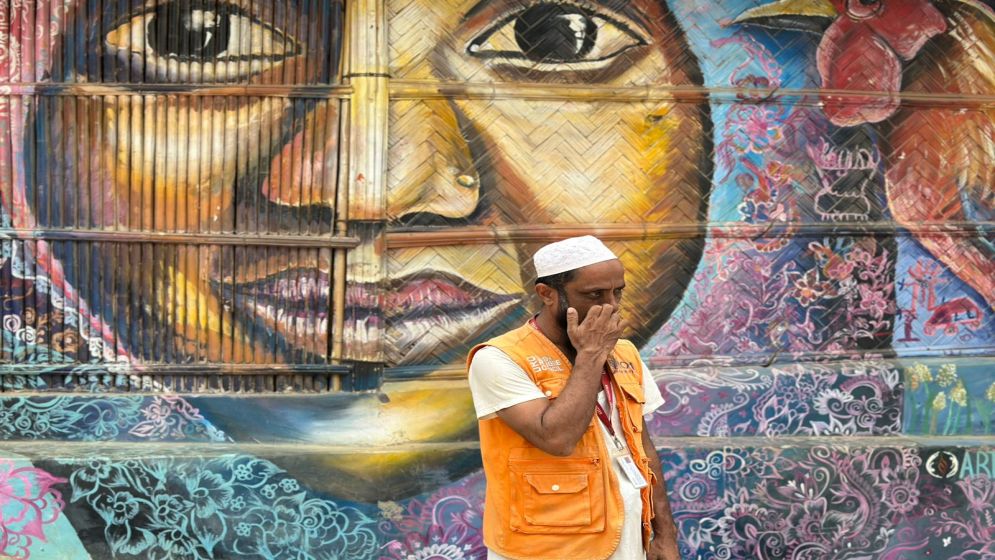
Photo Credit: Faisal Mahmud
Under a low, overcast sky in Camp 10, where the hills of Ukhiya are shaved into terraces of tarpaulin and bamboo, the convoy arrived right on cue.
Three vehicles, one tinted and dust-streaked, pulled up before a structure of thatch, bamboo, and painted panels. For the Rohingya, more than a million of whom have made these hills the largest refugee settlement on earth, the choreography was familiar.
The cars come and the doors open. The visitors step out. The script rarely changes.
This time it was Charlotte Slente, the secretary general of the Danish Refugee Council, arriving on her first visit to the camps since taking office in 2019.
She stepped onto the packed earth in a crisp, composed manner, flanked by a procession of staff in crimson vests stamped with three white letters—DRC—moving with the quiet urgency of people who know both the terrain and the expectations that come with a visit like this.
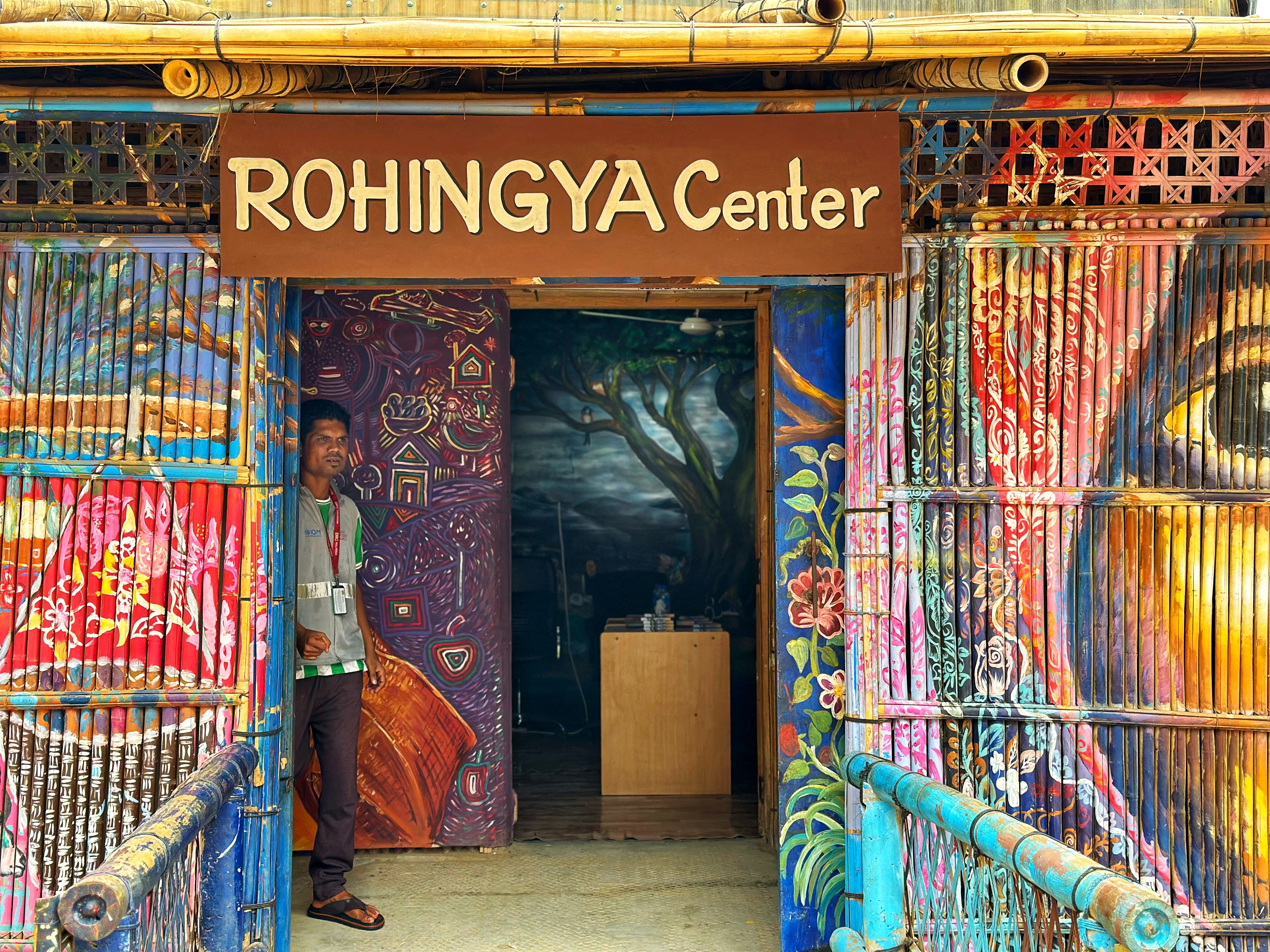
They guided her into what a sign outside called the “Rohingya Center.” On its bamboo walls were painted figures—one, a dark-skinned girl with full lips, rendered in a style that felt borrowed, ambiguous, perhaps unintentionally out of place.
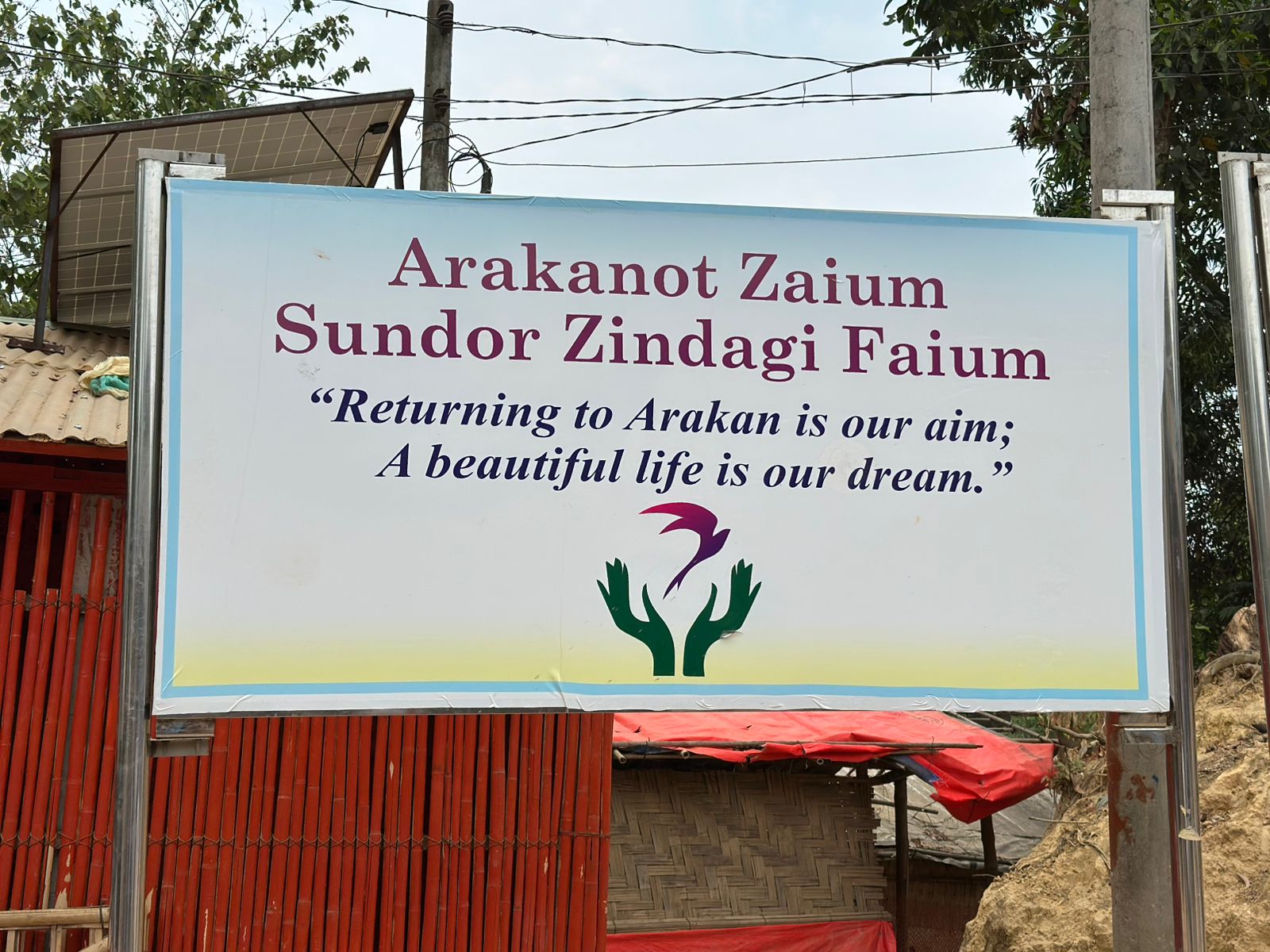
Near the entrance, a slogan stretched across a white board: “Arakanot Zaium, Sundor Zindagi Faium.” Returning to Arakan is our aim; a beautiful life is our dream.
The center itself, built under the authority of the Bangladeshi government’s refugee administration and funded in part by the DRC, was carefully arranged.
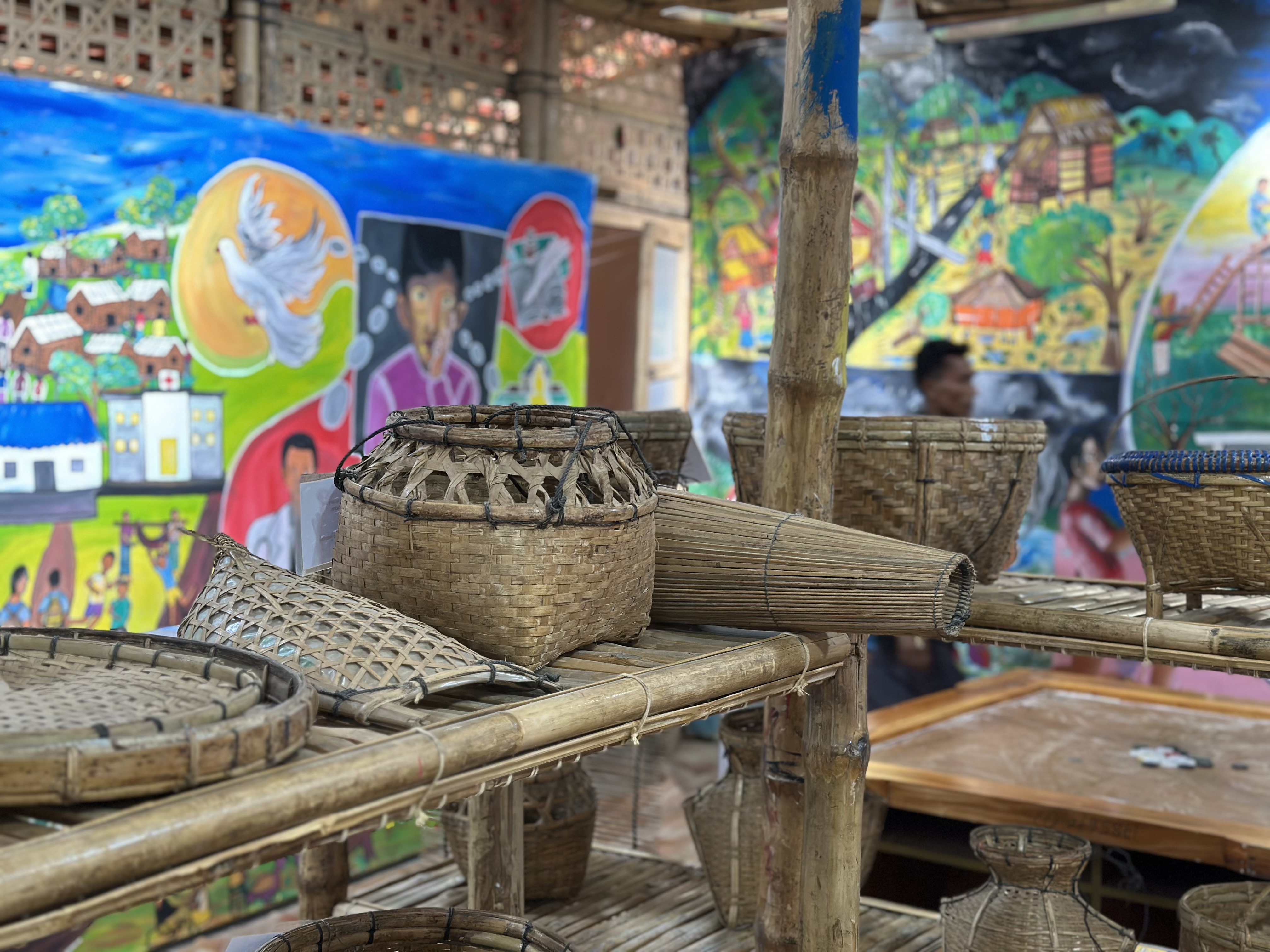
Bamboo crafts lined the interior—baskets and decorative pieces—objects that suggested both livelihood and nostalgia.
Rows of thin, metal-framed chairs had been set up in advance, filled now with men in white-shirts and sandals and women in black burqas and niqabs, their faces mostly hidden, their attention uneven.
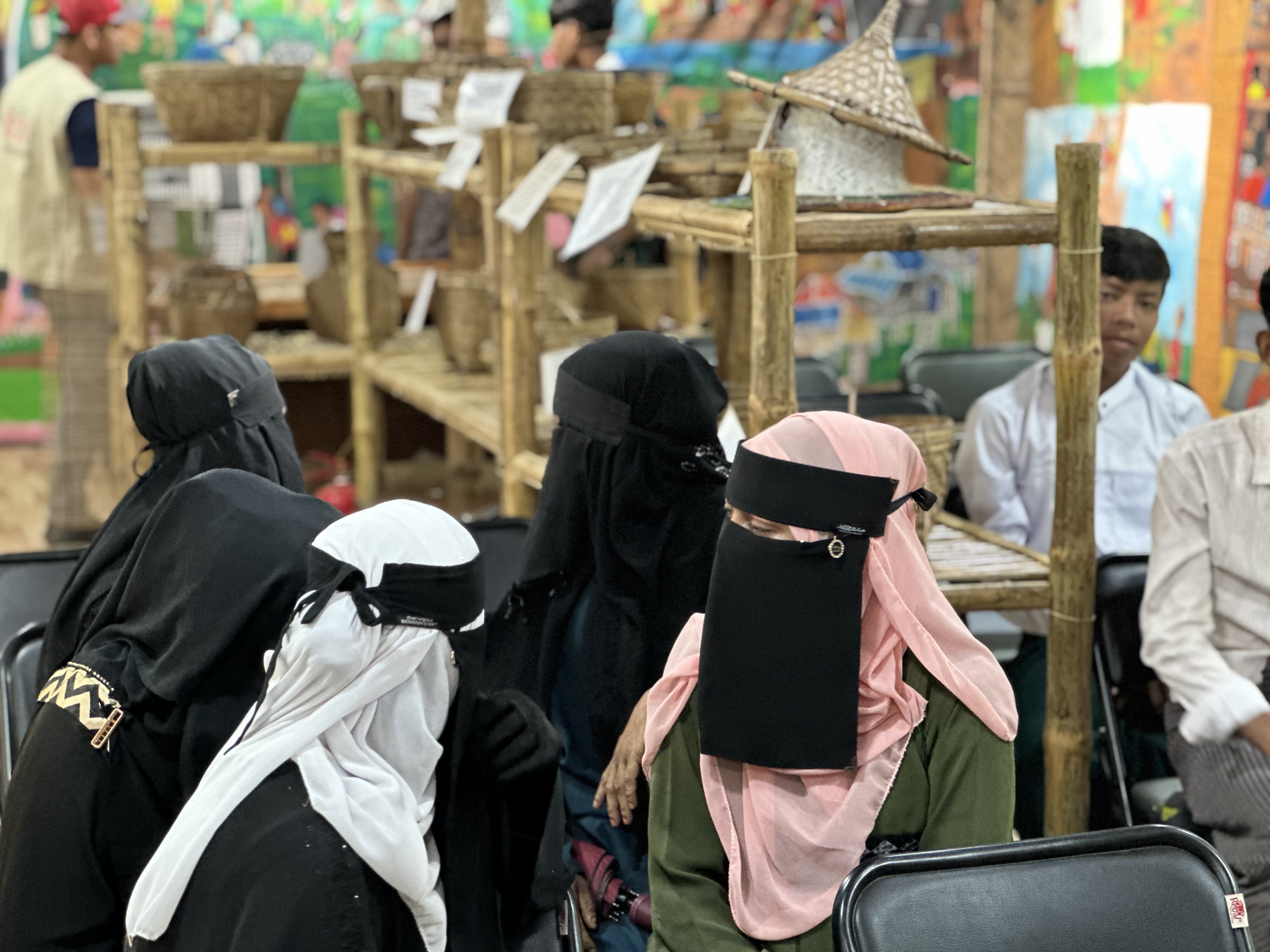
At the front sat Slente, alongside officials including Mizanur Rahman, the government’s Refugee Relief and Repatriation Commissioner (RRRC). The program began as these programs often do: with gratitude.
A handful of refugees rose to speak in halting English. They thanked the government. They thanked the DRC. They thanked them for shelter, for support, for the center itself—one man said it reminded him of home.
The phrasing was practiced, almost interchangeable. There were no specifics, no edges. Just thanks.
Rahman seized on the line about home and stretched it into something larger, speaking at length about memory and the symbolic value of such spaces. Heads nodded in the audience; a few men shifted in their seats. One or two yawned, discreetly.
Slente followed with remarks that carried the polish of long experience—she had spent years shaping humanitarian policy within Denmark’s foreign affairs system—and spoke of resilience and the importance of places like this one.
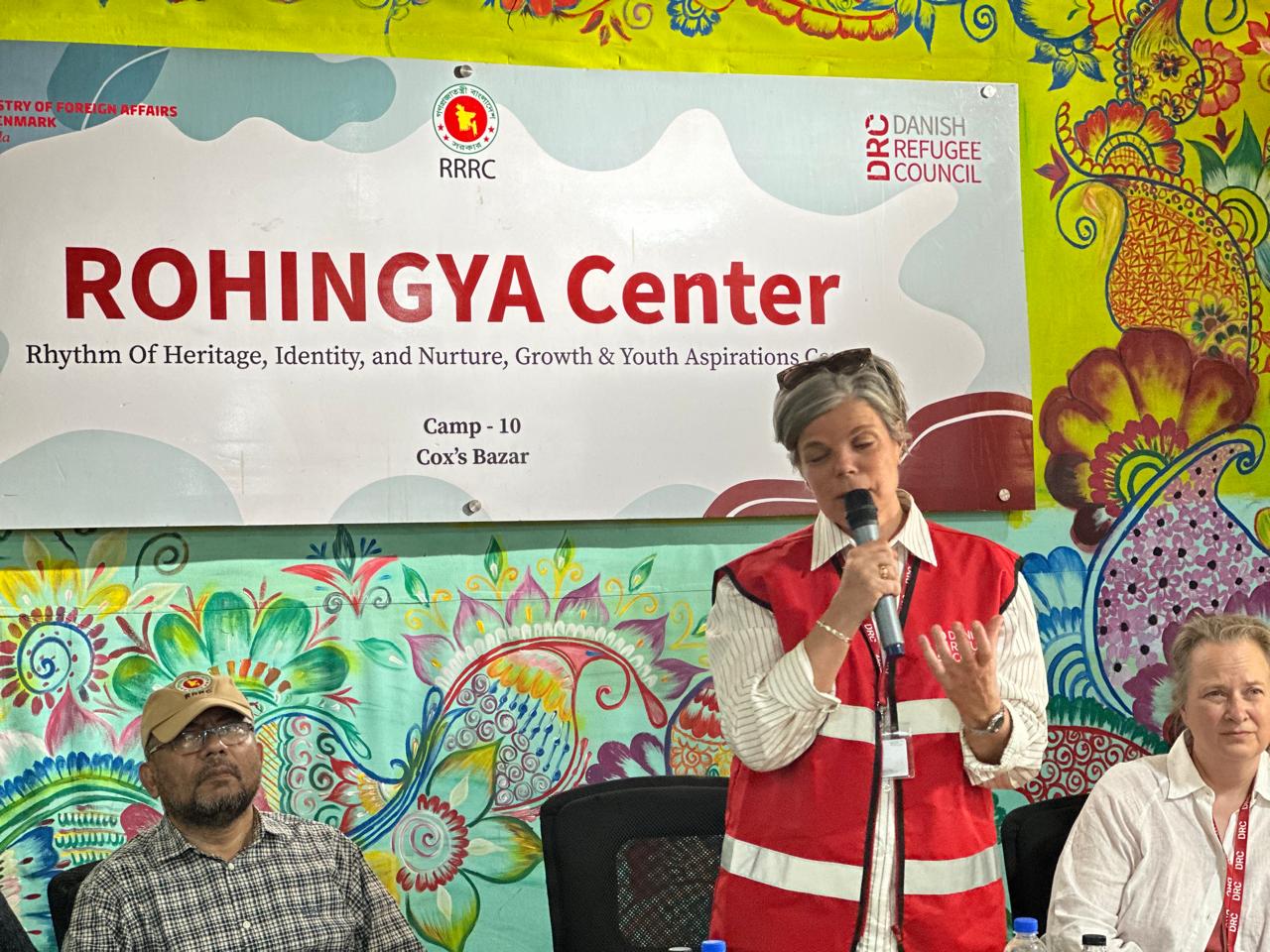
The tone was warm and unmistakably measured. It landed as intended. It always does.
Outside, the camp moved on with its own, less curated urgency. Just beyond the center, a line had formed at a clinic run by UNHCR, where parents waited with their children for measles vaccinations.
The campaign, launched in late April, was a response to a familiar fear—how quickly disease can move through a place like this, where density is measured not just in numbers but in proximity, in shared air and water and space.
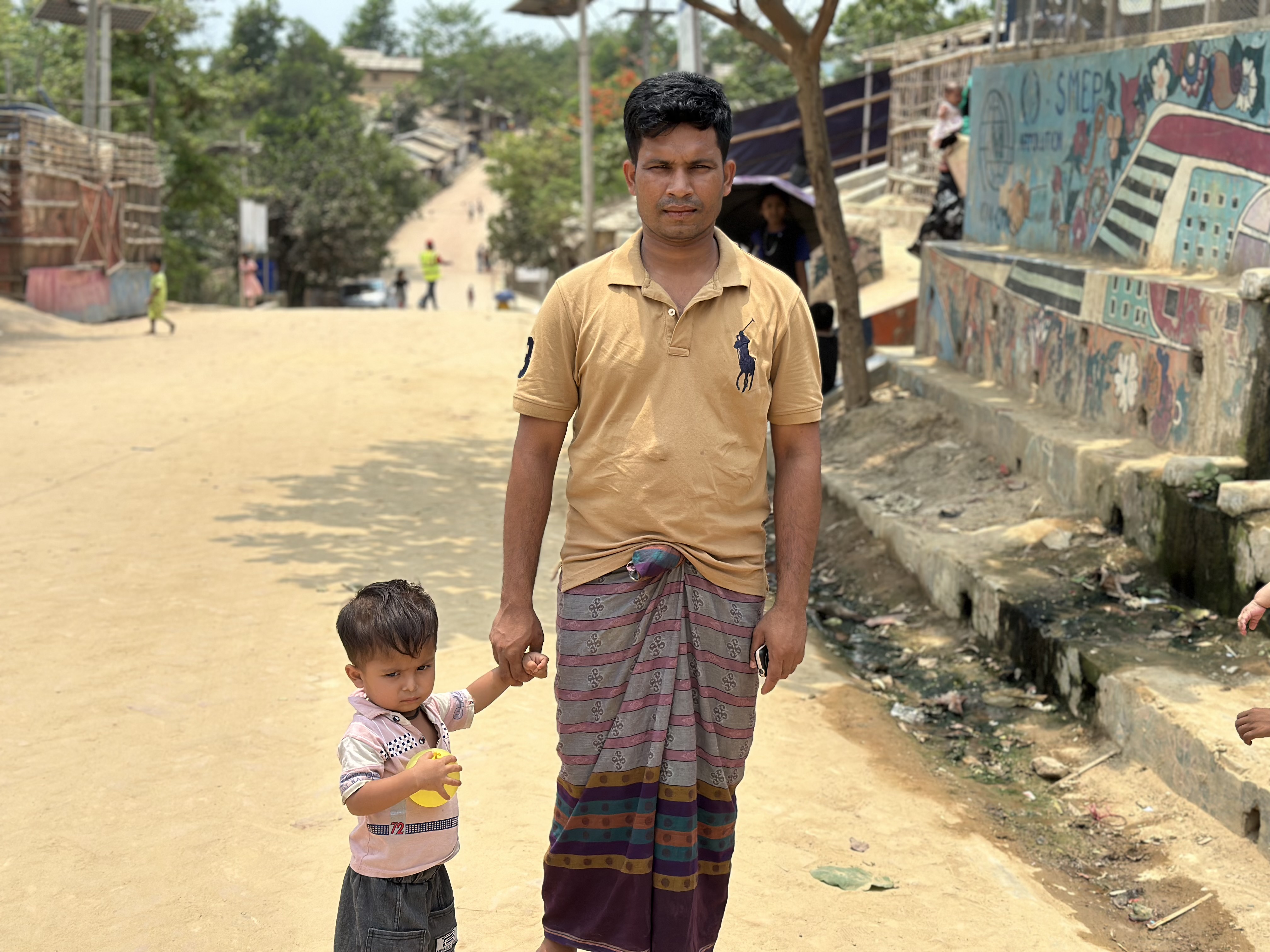
Among those leaving was a man named Mohammad Ibrahim, carrying his three-year-old son, Zeeshan. The boy clutched a yellow ball, his face tight with the effort not to cry after the injection. He did not look at the convoy.
The delegation moved on. There was another stop, another structure, this one housing two improvised firefighting vehicles—a modified autorickshaw painted in bright reds and yellows, fitted with a siren and a water tank bolted onto its frame.
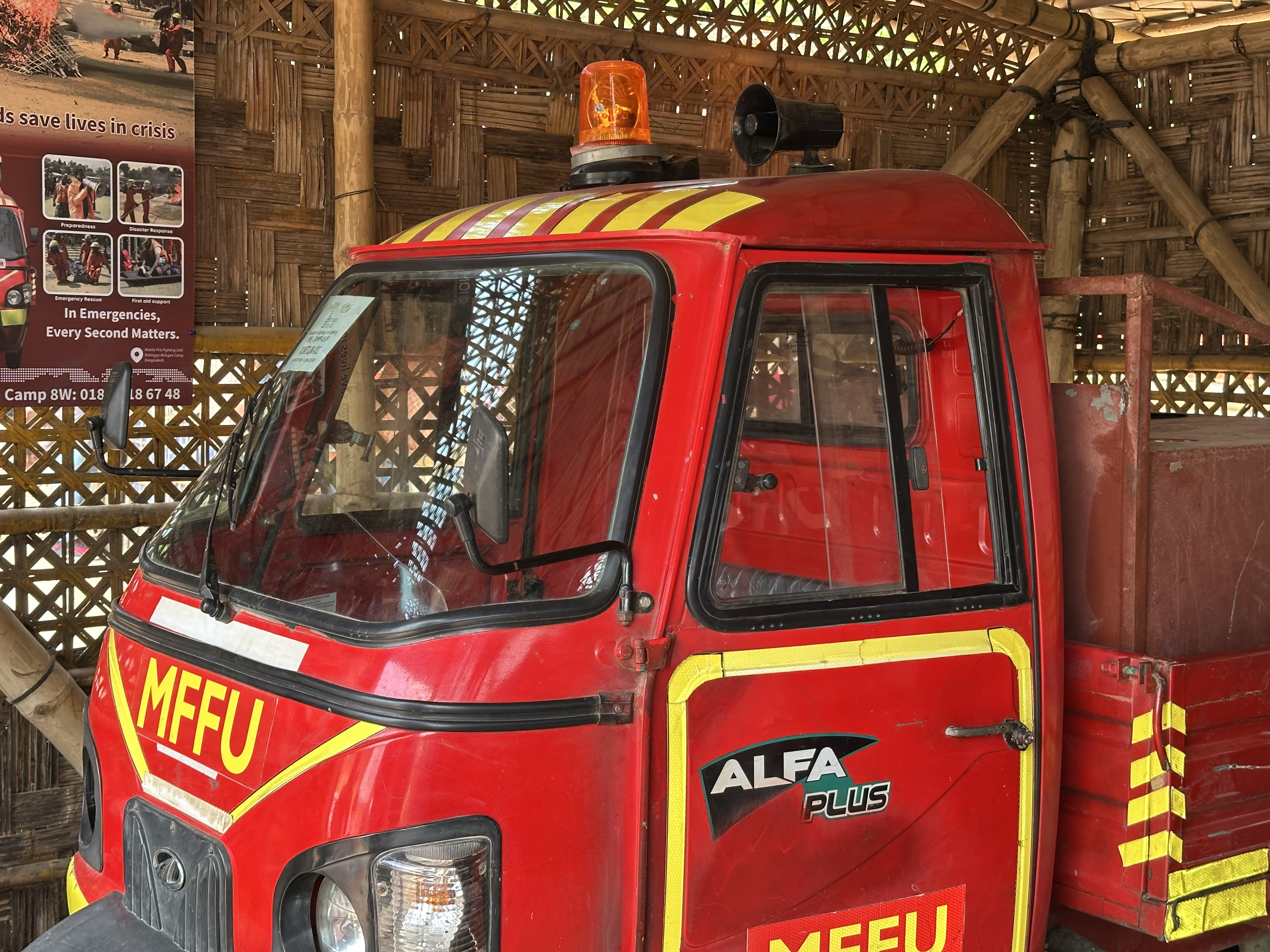
Fires are a constant threat here, especially in the dry months, when bamboo and plastic ignite easily and spread quickly. The initiative, supported by the DRC, was described with enthusiasm by a staff member who walked Slente through its mechanics.
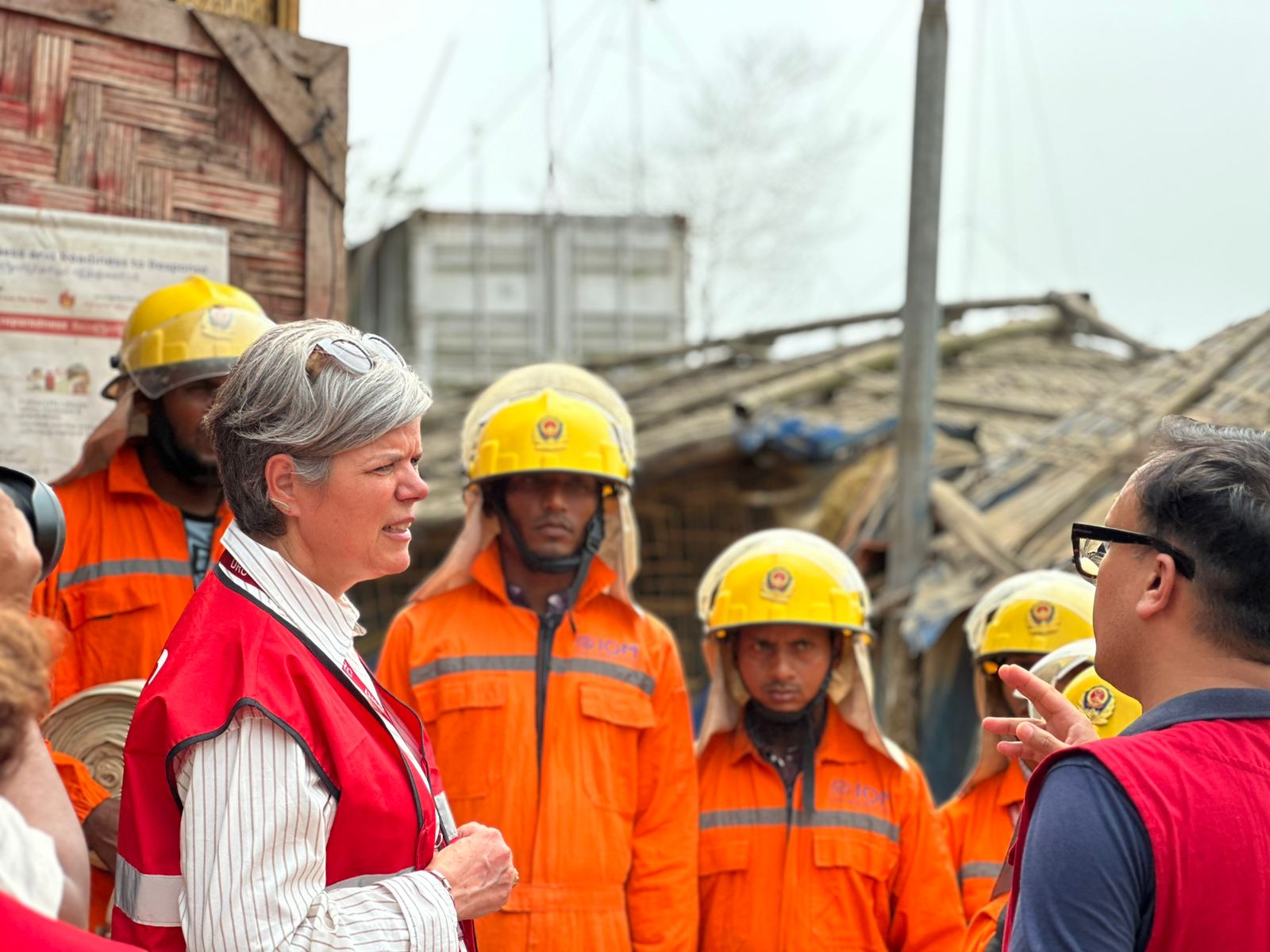
A small group of Rohingya volunteers stood nearby in uniforms and helmets, waiting to demonstrate readiness. When asked whether he had used the vehicle in an actual fire, one of them, a young man named Shamin, struggled to give a clear answer.
Moments earlier, a burst of water—accidental or not—had sprayed lightly across a few officials, breaking the formality for a second.
“Don’t splash water on me,” Slente joked as she posed for photographs. The group laughed. The moment passed.
And then, as it always does, the convoy moved again—toward Camp 8 West, toward another carefully arranged stop, another set of prepared remarks, another round of images that would travel far beyond these hills.
For the Rohingya, the pattern is unmistakable. The visits arrive with frequency, bearing the language of concern and commitment, the optics of attention. They leave behind impressions—of structures inaugurated and photos taken.
What they rarely leave behind is movement on the question that matters most to the people who watch them come and go: when, and whether, they will return home.
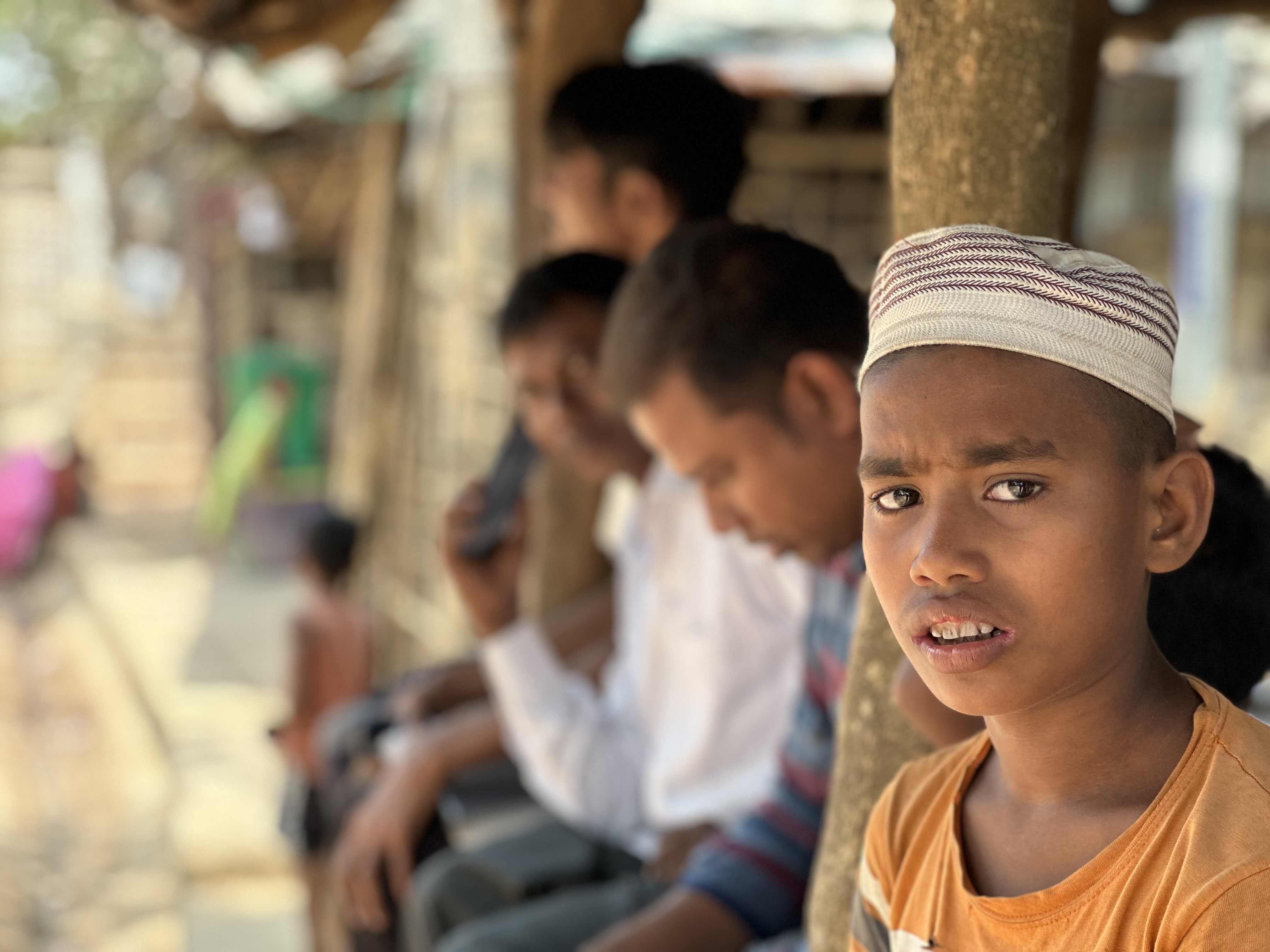
The slogan on the board promises a future in Arakan, a beautiful life restored. Inside the camps, that promise has been repeated so often it has taken on a different quality—not quite belief, not quite disbelief, but something closer to recognition.
—