

How Bangladesh lost a President… and never got the full story

Abu Jakir
Publish: 30 May 2026, 09:08 PM
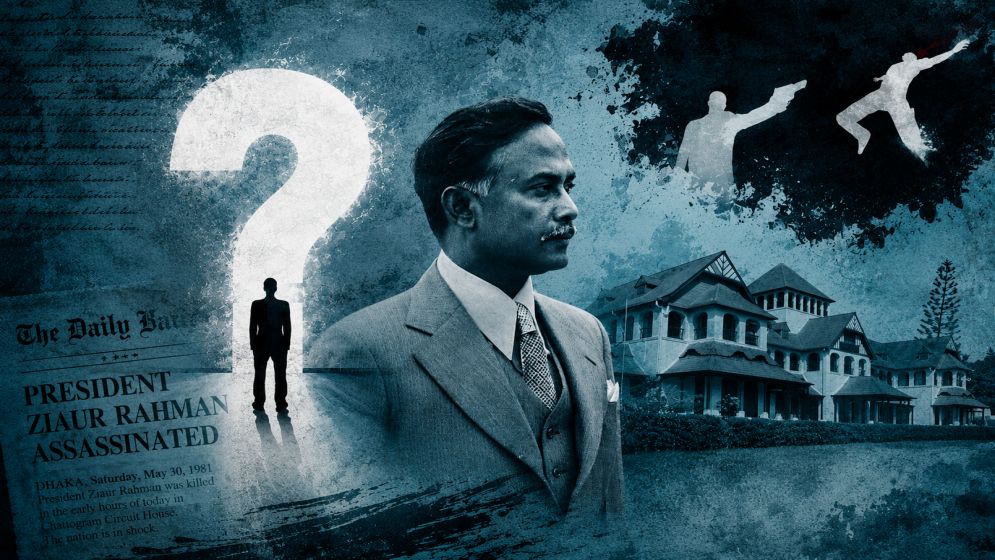
At around four in the morning on May 30, 1981, the silence of Chattogram’s Circuit House broke under a burst of automatic gunfire. Within minutes, the then Bangladesh’s president, Ziaur Rahman lay dead on the floor outside his room.
Forty-five years later, the assassination remains one of Bangladesh’s most enduring political mysteries, a crime that reshaped the nation while leaving behind questions no government has fully answered.
Zia had arrived in the port city only a day earlier. The trip was not intended to be historic. Bangladesh was struggling with political tensions, factional rivalries and economic uncertainty, and the president had come to mediate disputes within his own party.
Instead, the visit ended in bloodshed and a constitutional crisis that would alter the course of the republic.
The most vivid account of that night came from Ziauddin M Chowdhury, then the district commissioner of Chattogram. In his memoir, Two Generals’ Assassination: The Failed Military Coup of 1981, he described being awakened by gunfire coming from the direction of the Circuit House.
Soon afterward, an assistant protocol officer called him from a hiding place beneath a dining table. Military vehicles, the officer reported, had entered the compound while firing. Heavy boots thundered through the corridors. More shots followed upstairs.
When Chowdhury finally reached the building, the scene appeared almost surreal. The gate stood open. Security personnel had vanished. The president’s body lay beneath a white sheet near the entrance to his room.
The attack had lasted only moments, but it would echo through Bangladeshi politics for decades.
Officially, the killing was presented as part of a failed military uprising led by Major General Muhammad Abul Manzur, a decorated freedom fighter and former sector commander during the Liberation War.
Yet from the beginning, the story contained gaps large enough to invite suspicion.

Within days, the military moved swiftly. Then-Army Chief Hussain Muhammad Ershad oversaw a crackdown on officers accused of involvement in the plot. A military tribunal was convened.
Proceedings were conducted largely behind closed doors. In only eighteen days, death sentences were handed down. Thirteen officers would eventually be executed.
For critics and legal observers, the speed of the process achieved one thing above all else: it ended the public search for answers before it had truly begun.
The most significant missing witness was Manzur himself.
Arrested after the failed rebellion collapsed, he was taken into military custody. According to official accounts at the time, he was killed by enraged soldiers.
Yet subsequent reports and autopsy findings suggested he died from a gunshot wound to the back of the head. Before his death, Manzur reportedly expressed fear that he would be killed if handed over to the military.
He never appeared before a public court, never faced cross-examination and never had the opportunity to explain his role, if any, in the assassination.
That absence has fueled speculation ever since.
Some historians and former military officers have questioned whether Manzur was truly the architect of the plot or whether he became a convenient culprit in a moment of national panic.
Writing years later, several contemporaries suggested that the case against him was assembled with unusual haste. Others pointed to the broader atmosphere within the military, where tensions, grievances and rivalries had intensified in the years following independence.
What remains undisputed is that one of the few men who might have clarified the chain of command behind the assassination was dead within days of his arrest.
The result has been an enduring vacuum at the center of the story. Who ordered the attack? Was it the work of a small group of disgruntled officers, or part of a larger conspiracy?
Did political interests beyond Chattogram play a role? Forty-five years later, no definitive answer exists.
Remarkably, successive governments have shown little enthusiasm for reopening the case. The BNP, founded by Zia himself and later led by his widow Khaleda Zia, returned to power more than once but never established a formal truth commission.
Party leaders have frequently argued that the military trial completed in 1981 created legal and constitutional barriers to revisiting the matter.
Opponents, meanwhile, have had little political incentive to champion a new investigation into a figure who remains one of the BNP’s central symbols.
In practical terms, the possibility of discovering the full truth grows dimmer with each passing year. Witnesses have died. Documents have disappeared. Memories have faded. What survives is a patchwork of testimonies, competing narratives and unanswered questions.
Yet the mystery surrounding Zia’s death is only one reason his name continues to command attention in Bangladesh.
His political legacy has proven far more durable than the circumstances of his assassination.
When Zia emerged as the country’s dominant leader in the late 1970s, Bangladesh was still struggling to find stability after war, famine, coups and countercoups.
Supporters credit him with restoring multiparty politics after a period of one-party rule and reopening political space that many believed had been closed. His administration promoted agricultural expansion, rural development and local governance.
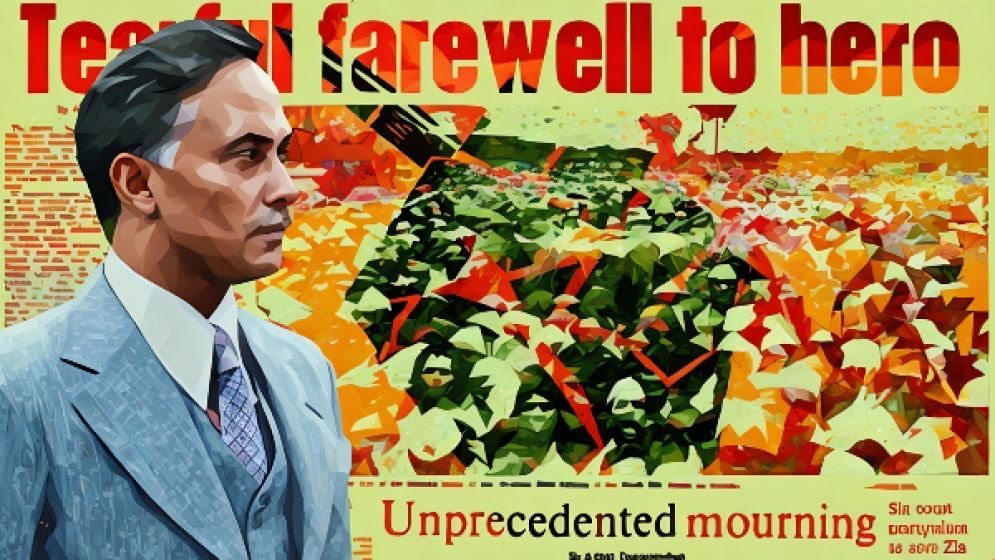
Programs aimed at increasing food production and improving irrigation became central to his image as a practical leader focused on everyday concerns rather than ideological battles.
Perhaps more significantly, Zia advanced the concept of “Bangladeshi nationalism,” a political identity intended to transcend ethnic distinctions and create a broader sense of nationhood.
The idea became the ideological foundation of the BNP and remains one of the defining fault lines in Bangladeshi political discourse.
His admirers portray him as a leader who repeatedly stepped into moments of national uncertainty. During the Liberation War, his radio declaration of independence helped transform him into a household name.
After the upheavals of 1975, supporters argue, he helped restore order to a fractured state. Even many who disagree with his politics acknowledge his enduring influence on the architecture of modern Bangladesh.
That influence helps explain why the anniversary of his death remains politically charged. This year, the BNP announced an eight-day program of commemorations, while social media filled with tributes recalling both the man and the ideals associated with him.
The language of those tributes often reveals something deeper than nostalgia. They speak not only about a former president but about unresolved hopes for governance, accountability and political leadership.
Bangladesh today is vastly different from the country Zia governed. Its economy has expanded dramatically. Its cities have transformed. Entire generations have grown up with no memory of the turbulent years that followed independence.
Yet many of the questions that animated public life in 1981 remain familiar: How should power be exercised? Who is accountable when institutions fail? Can political legitimacy survive without public trust?
The assassination at the Circuit House left those questions suspended in history.
For some, the mystery itself has become part of Ziaur Rahman’s legacy. His life ended before his political project could fully mature, allowing supporters and critics alike to project onto him competing visions of Bangladesh’s future.
The unanswered nature of his death has only reinforced that mythology.
—