


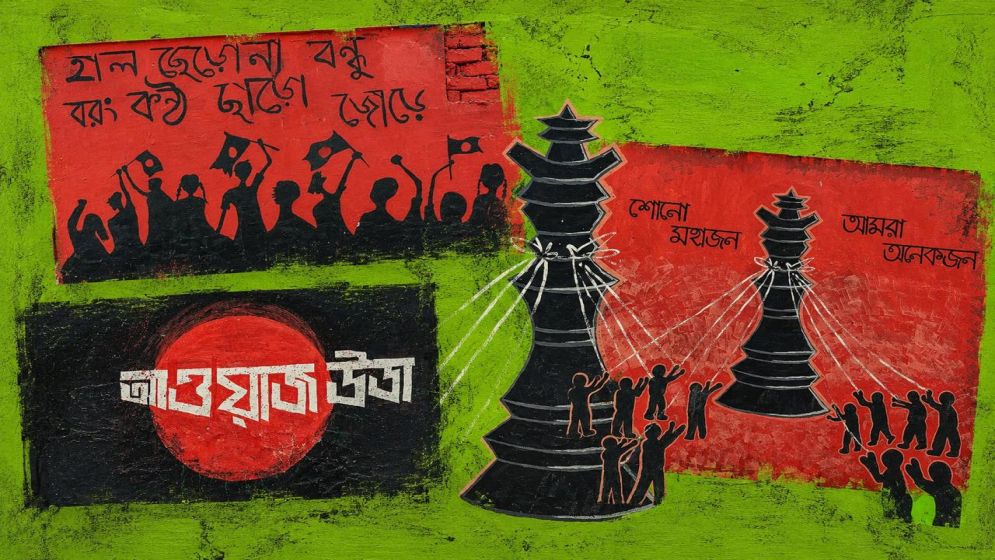
Every revolution produces its own gatekeepers. The slogans change and the banners change, but sooner or later, someone arrives to explain to the people what their own struggle was really about.
That process is underway in Bangladesh today.
The debate over whether the July uprising should be understood through the lens of “subalternity” may appear academic. It is not.
At stake is the ownership of one of the most consequential political events in the country’s recent history. The question is simple: Who gets to define July?
The people who lived it, bled for it, and buried their dead….or the intellectuals who arrived afterward with ready-made theories?
Before July, many of those now claiming the mantle of the subaltern may indeed have occupied marginal positions.
But revolutions have a way of rearranging social categories.
Once an uprising succeeds, yesterday’s outsiders often become today’s interpreters, as well as the power brokers.
The true subalterns of July are not the people speaking most loudly about it.
They are the millions of ordinary young men and women who marched, fought, suffered, and, in many cases, died.
They are the parents who still grieve in silence. They are the families carrying the burden of loss long after television cameras have moved on.
They have become a voiceless majority, trapped inside their own private memories of July while others compete to define its meaning.
During the chaotic days that followed the collapse of the old order, it was not theorists who protected temples, guarded neighborhoods, chased away looters, or maintained civic life.
It was ordinary citizens. While politicians negotiated their share of future power, anonymous people were trying to keep society from falling apart.
Yet their experiences are increasingly being buried beneath layers of ideological interpretation.
There is a familiar pattern here.
Bangladesh has lived through decades of grand theories. Socialism promised liberation and produced BAKSAL.
Scientific socialism promised progress and often delivered chaos. Ideological movements repeatedly claimed to speak for the people while reducing actual people to supporting actors in someone else’s historical script.
Today, a similar temptation exists. The language of the subaltern risks becoming another vocabulary through which intellectuals speak over the very people they claim to represent.
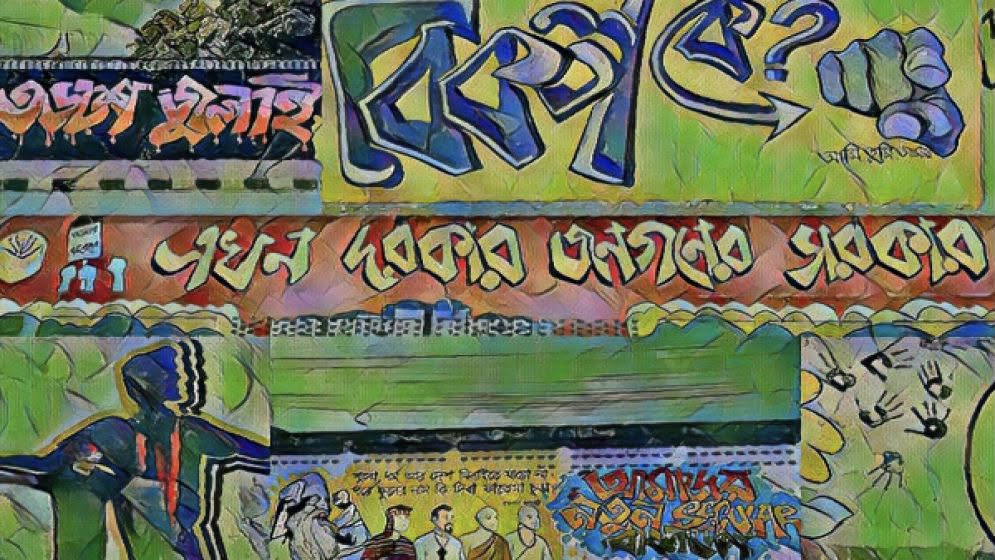
Was July a subaltern revolt?
The problem is more conceptual than political.
The July uprising does not fit the classical framework of subaltern studies developed by scholars such as Ranajit Guha.
Subaltern revolts, by definition, tend to be localized, fragmented, reactive, and largely disconnected from projects of state formation.
They emerge from oppression but rarely culminate in a coherent political order. They erupt, disrupt, and disappear.
July was something different.
It was a national resistance movement. It united students, workers, professionals, small business owners, political activists, and ordinary citizens across ideological divides.
It possessed a shared political objective, a recognizable enemy, and a national horizon. It was not a regional peasant rebellion. It was not an isolated eruption of social anger.
It was a mass uprising that sought to reshape the country’s political future.
In fact, many of the groups retrospectively described as subaltern were anything but.
Organizations such as BNP, Jamaat, or Hefazat may have experienced repression under the previous regime, but repression alone does not create subalternity.
These organizations possess leadership structures, ideological frameworks, organizational networks, and ambitions for state power.
They are political actors… not subaltern communities.
The real social engine of July was the emerging urban middle class—particularly students and young people facing uncertain economic futures.
In sociological terms, many belonged to what scholars call the precariat: educated citizens whose livelihoods and prospects remain deeply insecure.
Alongside them stood the urban working class—the rickshaw pullers, laborers, vendors, and service workers who supplied the uprising with both numbers and resilience.
Only later did segments of Bangladesh’s intellectual and cultural elite join the movement.
Their participation was important because it provided moral legitimacy and helped rebut attempts to portray the uprising as merely Islamist or extremist.
But they did not create July. Nor did they lead it.
The uprising’s defining image remains the student coordinator standing in front of crowds….not the intellectual writing essays afterward.
This distinction matters because movements often lose themselves when their interpreters become more important than their participants.
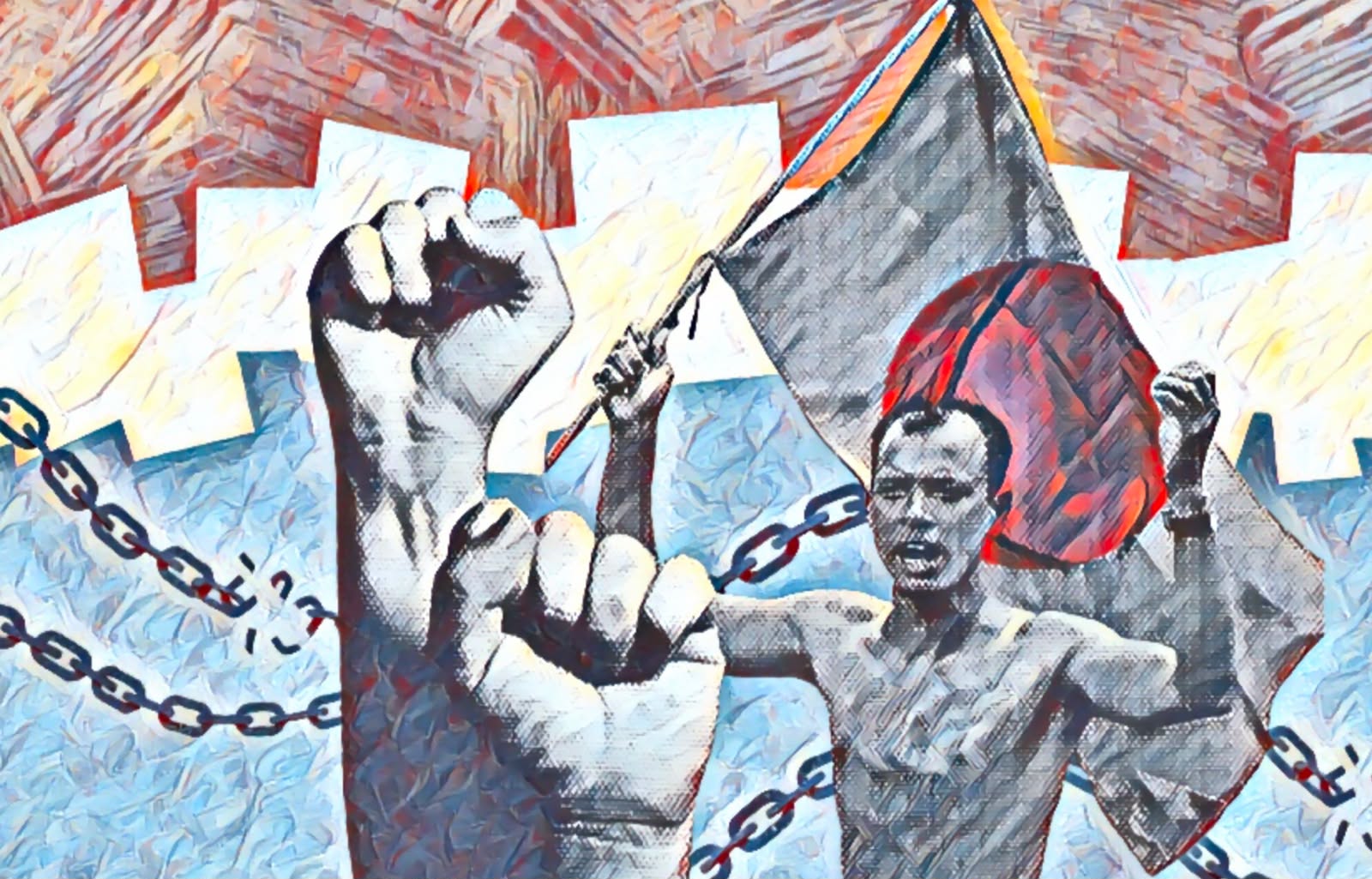
The danger of theorizing
There is another reason to be cautious about turning July into a subaltern story.
The subaltern framework has long struggled to account for the role of Muslim political consciousness in South Asian history.
Colonial-era movements such as the Faraizi movement or numerous peasant uprisings in Bengal contained powerful combinations of religious belief, economic grievance, and anti-colonial resistance.
Yet these elements often sit awkwardly within the conventional architecture of subaltern studies.
The result is a tendency to force complex historical realities into theoretical categories that were never designed to contain them.
Something similar is happening with July.
The uprising was not the triumph of a single class, ideology, or political constituency.
It was a temporary alliance of multiple social forces. In the language of Antonio Gramsci, it resembled a historic bloc….a coalition united by a common adversary despite significant internal differences.
That is why the movement’s greatest achievement and greatest weakness were the same thing.
Its strength came from its diversity. Students, workers, Islamists, secularists, conservatives, liberals, and apolitical citizens all found themselves on the same side of a common struggle.
But once the immediate threat receded, those differences resurfaced.
Some sought to redefine July through religious symbolism. Others attempted to transform it into a second revolution.
Still others viewed it primarily through the lens of secular resistance. Competing narratives quickly replaced collective purpose.
The tragedy is that July understood its enemies far better than it understood its allies.
The interim government inherited the impossible task of managing this fragile coalition. It lacked the organizational depth and institutional support necessary to translate revolutionary momentum into durable reform.
Meanwhile, established parties, bureaucratic networks, oligarchic interests, and entrenched power centers all retained significant leverage.
Under those conditions, disappointment was inevitable.
Yet reducing July to the shortcomings of the post-uprising period misses the larger historical significance of what occurred.
A movement should not be judged solely by the competence of those who inherit its aftermath.
The central achievement of July was the destruction of a political myth…..the belief that authoritarian power was invincible.
Whether the uprising ultimately produces lasting institutional change remains an open question. History has not rendered its verdict.
But one lesson is already clear.
Bangladesh’s future cannot be built by any single party, class, or ideology. Both the Pakistan Movement and the Bangladesh liberation struggle succeeded because they functioned as broad historical alliances rather than narrowly ideological projects.
The same principle applies today.
If Bangladesh is to resist both authoritarianism and external pressure, it will require a new political settlement grounded in cooperation among multiple parties, classes, and ideological traditions.
Such an alliance need not eliminate disagreement. Democratic politics depends on disagreement. But those disagreements must become conflicts among partners rather than wars of annihilation.
The greatest misunderstanding of July is to imagine that it belonged to one faction.
Its significance lies precisely in the opposite fact: for a brief moment, it belonged to everyone.
That is why the revolution’s silent majority deserves to be heard before another generation of interpreters explains away what they actually lived through.
—
Faruk Wasif is a writer. He is the current DG of PIB
(Translated from Bangla by Faisal Mahmud)