

Miles without milestones: The Delhi Mission that delivered little

Shaquib Ahmed
Publish: 19 Jul 2026, 03:12 PM
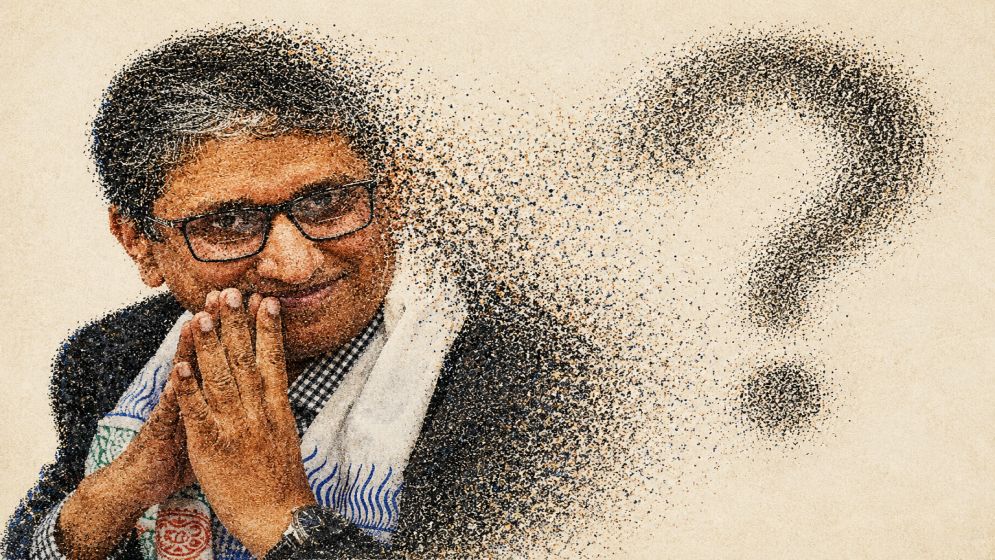
Bangladesh government’s decision to replace its High Commissioner to New Delhi, M Riaz Hamidullah, offers the clearest indication yet that Dhaka is fundamentally rewriting its approach toward its largest and most overbearing neighbor.
After nearly two years of strained relations, diminishing returns, and an asymmetric foreign policy built on unreciprocated goodwill, the government of Prime Minister Tarique Rahman has signaled that the era of deferential restraint is over.
By ‘possibly’ dispatching the country’s incumbent Foreign Secretary, Asad Alam Siam, to take charge of the mission in the Indian capital, Dhaka is signaling a transition from the soft prose of cultural affinity to the hard ledger of transactional diplomacy.
Within Bangladesh’s foreign policy establishment, the previous approach had increasingly come to symbolize a deferential philosophy that invested heavily in confidence building while real disputes accumulated.
For much of the past fourteen months, Bangladesh’s diplomatic posture toward India appeared stuck in a time warp. Envoy Hamidullah’s tenure, which began on April 14, 2025, followed a landmark meeting between Muhammad Yunus and Narendra Modi in Bangkok.
That summit was supposed to reset a relationship left fragile by Bangladesh’s political transition in August 2024. Instead, the subsequent months exposed a widening chasm between diplomatic activity and tangible policy outcomes.
While Dhaka’s envoy embarked on an energetic tour of the Indian subcontinent, visiting no fewer than ten states, including Tripura, Assam, Meghalaya, Gujarat, Madhya Pradesh, Kerala, Rajasthan, and Uttarakhand, the core irritants plaguing the bilateral relationship festered untouched.
To critics within Dhaka’s foreign policy establishment, this hyperactive itinerary resembled performance rather than statecraft. Hamidullah lectured at universities, attended literature festivals, and celebrated International Yoga Day, attempting to build historical trust.
Meanwhile, ordinary Bangladeshis faced an intractable visa crisis that was resolved only when India’s politically connected envoy in Dhaka intervened directly. On the border, security incidents persisted, alleged unauthorized entries continued to draw formal protests, and public resentment in Bangladesh deepened.
The uncomfortable reality confronting Dhaka was that soft power, while useful for embellishing a stable partnership, is entirely useless for repairing one fractured by hard geopolitical disputes. Cultural festivals cannot substitute for sovereign leverage when the agenda is dominated by immigration restrictions and strategic competition involving China.
The ultimate catalyst for Hamidullah’s upcoming removal from Delhi mission arrived not through a slow accumulation of policy failures, but via a sharp diplomatic insult at New Delhi’s international airport.
Zahed Ur Rahman, the influential adviser on policy and strategy to Prime Minister Tarique Rahman, abruptly abandoned an official visit to India after being held up in the airport in presence of envoy Hamidullah for several hours by immigration officials at Indira Gandhi International Airport.
For the newly emboldened administration in Dhaka, this episode crystallized the bankruptcy of Hamidullah’s approach and influence in New Delhi. His tenure had yielded neither mutual respect nor strategic concessions; instead, it had exposed senior officials to public humiliation.
The incident also highlighted a glaring disparity in how the two nations value access and influence. While New Delhi sent Dinesh Trivedi, a veteran former Union minister, as its envoy to Dhaka to ensure direct political access to the highest levels of the Bangladeshi government, Dhaka relied on a career diplomat who struggled to command similar attention in India.
It took Hamidullah nearly ten months before he finally secured formal meetings with India’s External Affairs Minister, S. Jaishankar, and Commerce Minister, Piyush Goyal, in March 2026. In the arithmetic of international relations, delayed access equals diminished influence.
While India’s representative in Dhaka engaged regularly with the host country's political elite, Bangladesh's high commission found itself frozen out of the rooms where real decisions were made.
To blame Hamidullah alone for this decline would be unfair. No single diplomat can alter the structural dynamics of regional geopolitics. The chill in bilateral ties was the inevitable consequence of Bangladesh’s political landscape, coupled with India’s evolving security anxieties and regional calculations.
Many of the most contentious choices were made in offices far above the pay grade of any ambassador. However, the true failure of Dhaka’s strategy lay in its inability to recognize that the political terrain had shifted.
For too long, Bangladesh acted on the outdated assumption that shared history and cultural proximity could smooth over modern disagreements regarding border management and mutual sovereignty.
Ironically, strategists in New Delhi had already abandoned such sentimentality, realizing that cultural diplomacy cannot offset structural mistrust.
By replacing Hamidullah with Ambassador Siam, Prime Minister Rahman is acknowledging that the old playbook has run its course. The selection of a serving foreign secretary underscores the seriousness with which Dhaka now views the relationship.
It marks a shift away from public relations toward a more pragmatic, transactional phase of diplomacy, where measurable outcomes will take precedence over optics. Bangladesh is signaling that it will no longer settle for symbolic gestures while its practical interests are ignored.
Activity will no longer be confused with achievement. If New Delhi wishes to maintain stable relations with its eastern neighbor, it will have to engage with a partner that has discarded its apologetic stance and is now determined to play the diplomatic game by an entirely different set of rules.
This bold and necessary transformation indicates that the time for inherited sentimentality has definitively passed, replaced by a highly calculating approach where Dhaka now intends to assert its own sovereign geopolitical worth on entirely equal terms.
—
Shaquib Ahmed is a Dhaka-based journalist