

Faith, betrayal…and the cost of revolution in Iran
Jarir Fadlullah
Publish: 02 Mar 2026, 05:43 PM
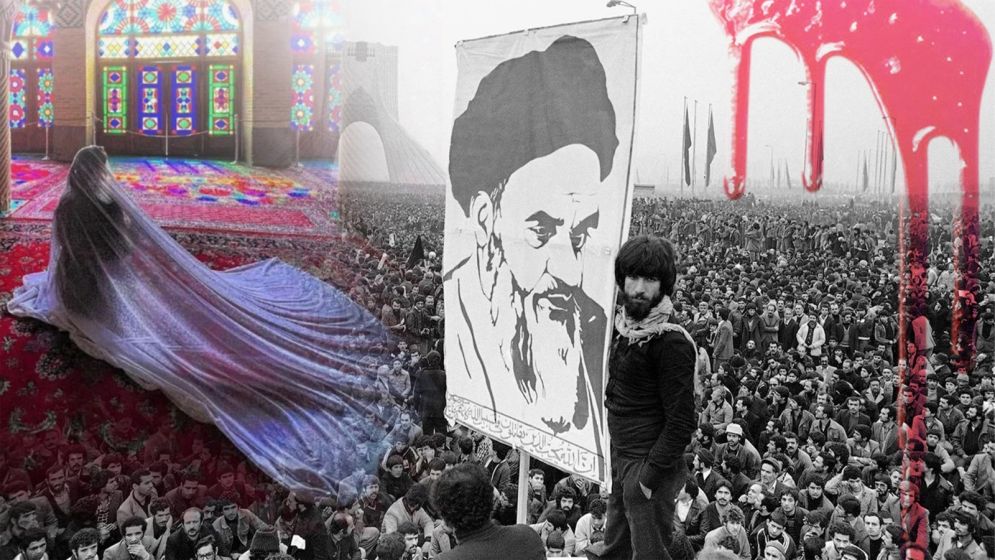
During my PhD in the US, I worked in a laboratory that might as well have been an annex of Tehran. My advisor was Iranian, my lab mates were mostly Iranian, and at one point I was probably the only person in the room who wasn’t.
It was an immersion that quietly dismantled the easy assumptions one carries about politics and appearances of that ancient land.
One colleague, whom I knew as Maryam [not revealing her full name], seemed to embody those [easy] assumptions at first glance. She was unfailingly polite, almost reserved.
She wore a hijab and a long black coat reminiscent of an abaya. If you were inclined to judge by costume alone, you might have taken her for a loyal daughter of the Islamic Republic.
Yet she had been admitted to the lab by a professor who himself had spent a night in the Shah’s prisons and, within two years of the revolution, grown bitterly disillusioned with Khomeini.
The professor was deeply religious though. He prayed in the lab three times a day and was utterly intolerant of the regime’s abuses. So, if Maryam had been a true believer in the state, she would never have been there.
By 2009, Maryam was already on a path that would eventually take her to a senior research post at a major American university. But one morning I walked into the lab and found her crying at her desk, her composure gone.
I hesitated to intrude, but other Persian-speaking colleagues pulled me aside to explain that the authorities in Iran had arrested her father. She had learned the news by phone moments after arriving at work.
When I later offered my condolences, she filled in the details herself.
Her father–Saeed Hajjarian–was not a firebrand, she said. He hadn’t led chants in the streets against Ali Khamenei. But he was a former newspaper editor and was a well-known reformist aligned with Mohammad Khatami, the former Iranian president.
That, apparently, was enough. He and several others like him had been taken away. Their families had no idea where they were being held.
Maryam’s fear sharpened as she spoke. Her mother was a physician, and she worried constantly about her father’s health. Hajjarian—paralyzed, confined to a wheelchair, his speech badly slurred after a previous assassination attempt—suffered from high blood pressure and required constant care.
His alleged crimes, she recited with a kind of numb disbelief, were the standard litany. Acting against national security, stoking unrest, colluding with foreign intelligence..and so on...
In all the time I knew her, Maryam had caused no trouble, attracted no scrutiny, lived no life that could plausibly be called subversive. Her husband, another graduate student, came from a political family as well.
What struck me most was not the cruelty of the charges against her father. Those were familiar enough but the quiet precision with which an entire family could be pulled into the machinery of the state, thousands of miles away from where the consequences were finally felt.
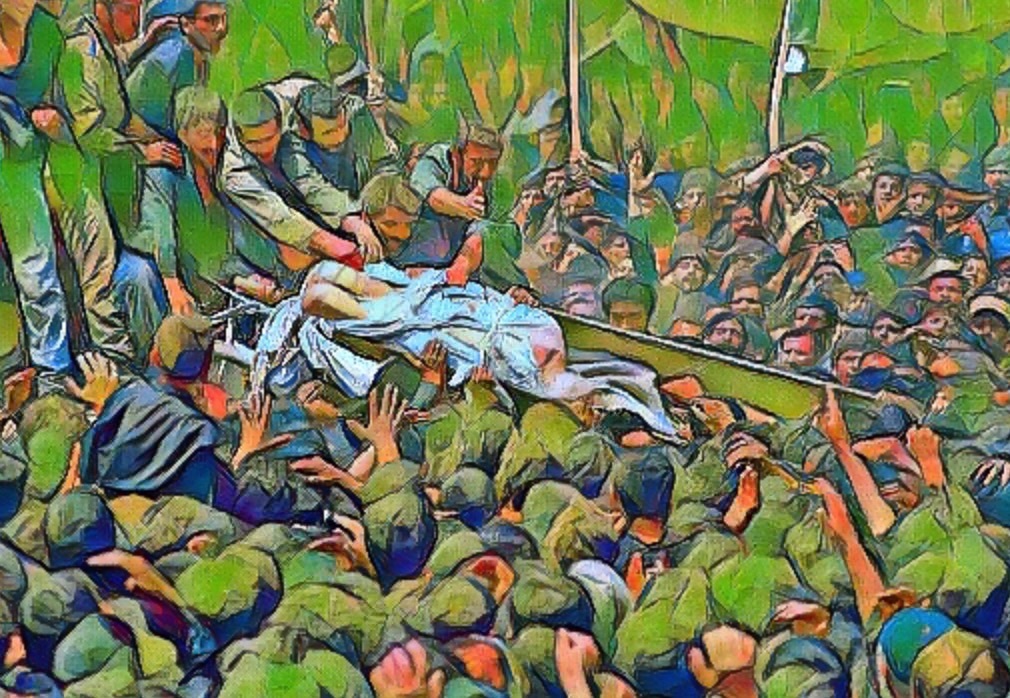
A choreography of a trial followed against her father. Months later, I learned that several detainees—including Saeed Hajjarian—were wheeled into a courtroom for a televised spectacle ordered from the top, at the pleasure of Ali Khamenei.
Hajjarian could not speak. A co-defendant read his “confession” for him, a script of contrition and regret. He was released soon after. He never returned to politics.
He has stayed away even as new protests have rippled through Iran. Those who know him say his sympathies are evident in private glances and small gestures, but his body—his health, his age—no longer permits the street.
The irony is thickened by history. Hajjarian was not a marginal figure who wandered into trouble. He was one of the principal architects of the 1979 revolution itself, a man who helped build the post-revolutionary intelligence apparatus—an institution that would come to rival, and in time surpass, the Shah’s dreaded SAVAK.
After the Iran–Iraq War, he stepped away from power and turned to analysis, founding a think tank and, gradually, a political doctrine.
His argument was blunt. The revolutionary fervor that had sustained the Islamic Republic through war had expired, he believed.
Without democracy and the rule of law, the system would rot from within. He called the remedy “Pressure from Below, Negotiation at the Top”—a strategy that treated popular mobilization as leverage instead of treason.
Its clearest test came in 1997, with the improbable rise of Mohammad Khatami.
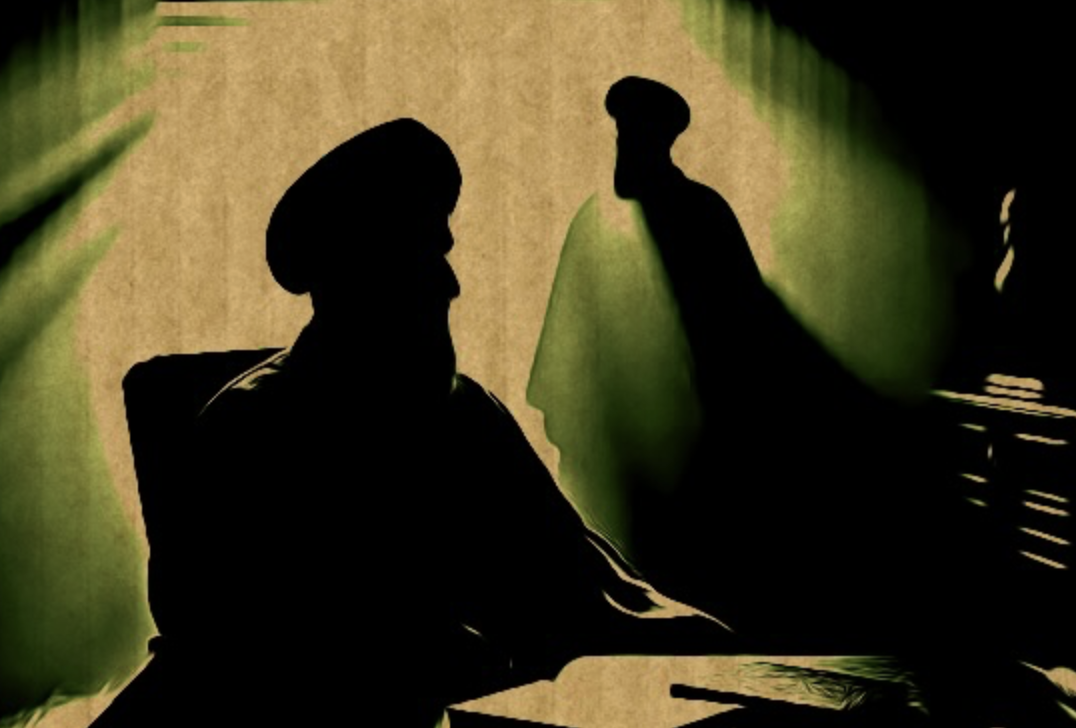
Khatami, a former culture minister, had been sidelined and branded a “liberal,” a political dead end. The Guardian Council let him run precisely because they assumed he would lose.
The establishment’s choice was the parliamentary speaker, Ali Akbar Nateq-Nouri.
The electorate had other plans. Turnout surged to nearly 80 percent; Khatami won roughly 70 percent of the vote. It was the “Second of Khordad” election, named for the day he prevailed.
At the time, nearly 60 percent of Iran’s population was under 25—too young to feel nostalgia for 1979, old enough to resent the morality police and the stagnation of the postwar economy.
Khatami spoke to them in a vocabulary they recognized—civil society, rule of law, freedom of expression—and, for him at least, those phrases were not decorative.
That a man who helped found the system would later be paraded, voiceless, to renounce it tells you something essential about how power works in Iran. It devours even its authors.
The reaction from Ali Khamenei and his circle was swift and vindictive. The ballot box had spoken; the state moved to muffle it. Vetting rules hardened. Disqualifications multiplied.
In some elections, as many as two-thirds of prospective candidates were barred before the race even began. The system had learned how to win without persuading.
By the late 1990s, the struggle had taken on the texture of a cold civil war—by Iranian standards—pitting reformists against the clerical establishment and its street muscle, the Basij.
One of the Basij’s rising figures was Mahmoud Ahmadinejad, then a hardline organizer rather than a household name.
Saeed Hajjarian, meanwhile, was at the height of his influence. He advised Mohammad Khatami directly, won a seat in Tehran’s first city council elections in 1999, and helped steer early efforts at decentralization.
He also founded a daily newspaper, Sobhe Emrouz, which quickly became a clearinghouse for reformist argument—and investigation.
That prominence made him a target. In March 2000, as he arrived at his newspaper’s offices, Hajjarian was attacked by a Basij member. He survived after weeks in a coma, but the damage was permanent.
Paralysis, immobility, impaired speech, a life abruptly narrowed.
The timing was no accident. Reformists had just notched another decisive victory, this time in elections for the Islamic Consultative Assembly. A message needed to be sent.
There was a second reason. Sobhe Emrouz had begun probing allegations that Basij operatives, linked to Ahmadinejad’s network, were involved in a campaign of intimidation and targeted violence against locally elected officials after the reformist surge.
With sources deep inside the state, Hajjarian had edged close to the machinery behind it.
After that, the rollback accelerated. Khatami’s allies were pressured out, one by one. Tehran’s city council slipped from reformist hands.
In 2003, Ahmadinejad became mayor—of course not through a popular mandate, but by appointment. Turnout had collapsed to around 12 percent. Voters, exhausted by promises unmet and reforms reversed, turned their attention elsewhere—to the economy, to survival.
The lesson was quite unmistakable. Participation would be tolerated only when it posed no threat to power.
When Mohammad Khatami stepped aside in 2005, the experiment was finished. What followed was an election in name only, conducted under blanket conservative supervision and remembered inside Iran as a “midnight vote”—a process closer to administrative decree than public choice.
The operation, reformists say, was overseen by Mojtaba Khamenei, with the muscle of the Islamic Revolutionary Guard Corps and the Basij close at hand.
The intended casualty was Akbar Hashemi Rafsanjani, a founding figure of the republic and the regime’s designated moderate. The beneficiary was Mahmoud Ahmadinejad.
Inside the Interior Ministry, early tallies reportedly told one story; the final numbers released by the Guardian Council told another entirely. Four years later, in 2009, the scale of manipulation grew bolder still, detonating mass protests that briefly returned millions to the streets.
For Maryam, those years never really ended. Any fresh headline about Ahmadinejad—whether rumors, reappraisals, or the churn of political memory—reopens a history she lived through at a distance, in a laboratory thousands of miles away, while her country convulsed.
Time and again, Iran has tried to inch back from the edge through figures working from inside the system. Time and again, the same men have dragged it down, clinging to power with a grip that does not loosen.
As Karim Sadjadpour, the Iranian-born foreign policy analyst, once wrote of the ruling elite: “They live to kill, they kill to live.” It is a bleak aphorism—but for those who watched hope rise and be crushed, over and over, it has the ring of grim accuracy.
—
Jarir Fadlullah is an engineer at Qualcomm in San Diego. Outside of work, he is an avid student of history and archaeology, spending his spare time excavating the margins of the past and tracing its more obscure threads
(Translated from Bangla by Faisal Mahmud)