

India, and the world, loses the lens of Raghu Rai
Faisal Mahmud
Publish: 26 Apr 2026, 10:45 PM
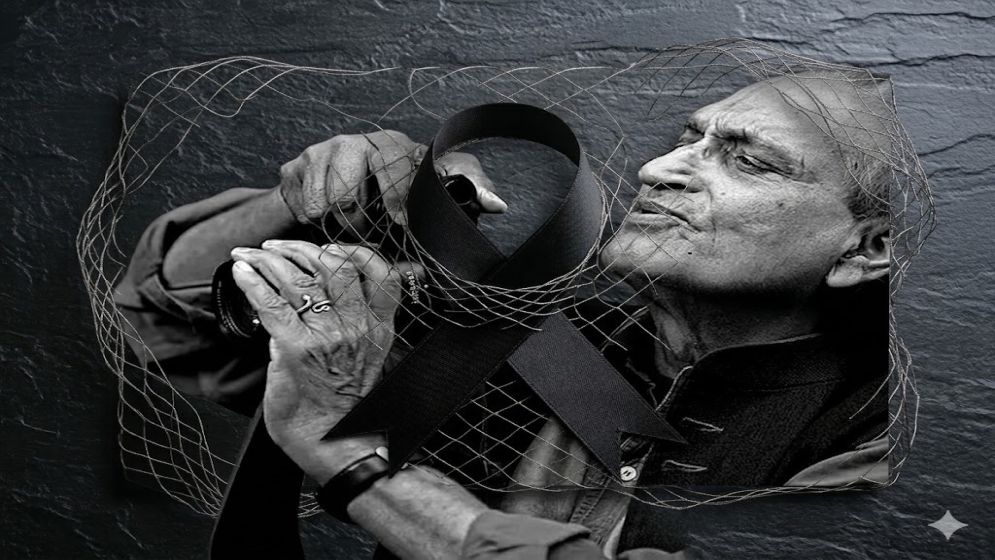
My first (and only so far) meeting with Raghu Rai came by chance.
During my posting in New Delhi as Minister (Press), I often attended gatherings connected to the city’s vibrant cultural life…concerts, exhibitions, readings, and recitals.
At one such evening at the India Habitat Centre, during a piano performance by an Austrian artist, I found myself standing beside the legendary photographer.
Tall, striking, and carrying himself with the ease of someone who had long ago stopped needing introductions, he seemed at once formidable and warm. I introduced myself and mentioned that my High Commissioner M Riaz Hamidulah had spoken of him with great admiration.
Rai smiled, offered a few gentle pleasantries, and in that brief exchange revealed something essential about himself….a sort of greatness without ceremony.
For Bangladesh, Raghu Rai was more than a distinguished Indian photographer; he was among the important witnesses to our birth as a nation. His images from 1971 carried the anguish of war, the vast tide of refugees, and the resolve of a people seeking freedom to audiences far beyond the region.
At a moment when facts were obscured by propaganda and distance, his camera offered clarity, helping the world see Bangladesh as a human struggle for dignity and self-determination.
Rai breathed his last on Sunday, and that fleeting encounter with him returns to me with unusual clarity. Some people leave behind conversations; others leave behind rooms brightened by their presence. Raghu Rai leaves behind a nation seen anew.
He died in Delhi at the age of 83, closing one of the most extraordinary chapters in modern Indian visual history. For more than six decades, his camera chronicled India in all its paradoxes—its hunger and splendour, its violence and tenderness, its politicians and pilgrims, its monuments and anonymous streets.
Few photographers have interpreted a country so fully, and fewer still have done so with such fidelity to its contradictions.
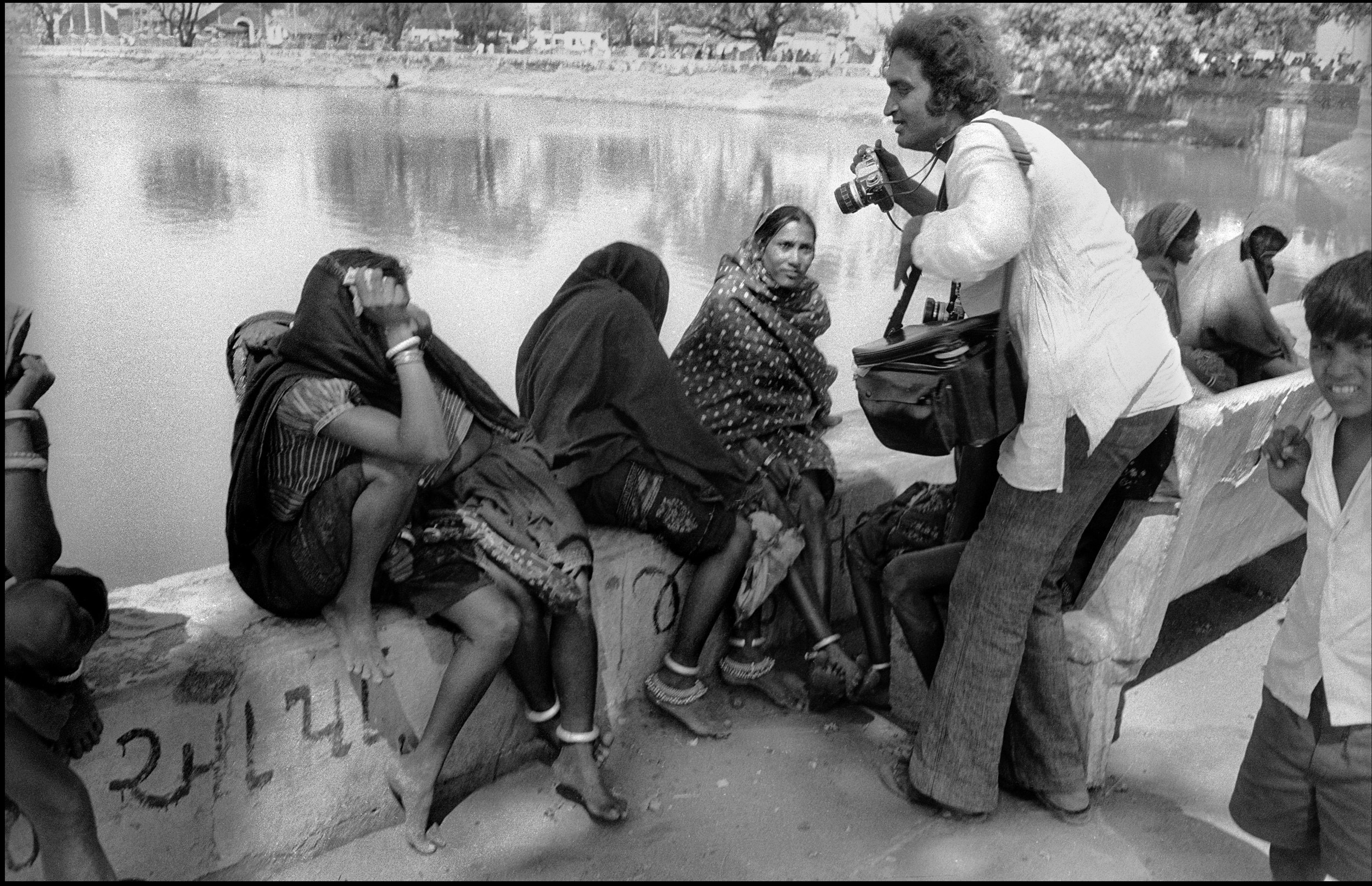
Born in Jhang in undivided Punjab in 1942, in a place that now lies in Pakistan, Rai belonged to that generation marked by Partition’s historical wound. Perhaps that early inheritance of rupture sharpened his instinct for human fragility.
He did not begin as a photographer by design. He trained in civil engineering before being drawn to the camera by his elder brother, the noted photographer S. Paul. What followed was less a career than a calling.
When he joined The Statesman in New Delhi in the 1960s, Indian photojournalism was still finding its grammar. Rai helped write it.
He did not merely take pictures of events; he made photographs that interpreted events. His frames carried atmosphere and moral tension. A crowd scene under his lens was never just a crowd scene. It became theatre and poetry at once.
He went on to document defining episodes of the subcontinent: the Bangladesh Liberation War, the Emergency, the rise of Punjab militancy, the Bhopal gas disaster, the long years of democratic theatre in Delhi, and the everyday resilience of ordinary Indians.
His iconic image from Bhopal—a grieving father carrying a dead child for burial—became one of the most searing indictments ever made by a camera.
What set Rai apart from many acclaimed photographers was his refusal to turn suffering into spectacle; instead, he restored humanity to it. He stepped into moments of pain without ever exploiting them. Even in the midst of disaster, he worked with a profound sense of ethical closeness.
A line often associated with him was that if you are not close enough, your picture is not good enough. He meant proximity in the literal sense, of course, but also something deeper—an emotional and moral intimacy. For Rai, the camera had to feel as much as it saw.
His portraits of public figures are equally memorable. He photographed Indira Gandhi with a complexity that captured authority and solitude in the same frame. He photographed Mother Teresa with reverence but never sentimentality.
He photographed the Dalai Lama with the serenity and mischief that define the man himself. Yet no matter how famous the subject, Rai’s deeper interest was always the human weather around them….the glance, the pause, the accidental gesture that betrayed truth.
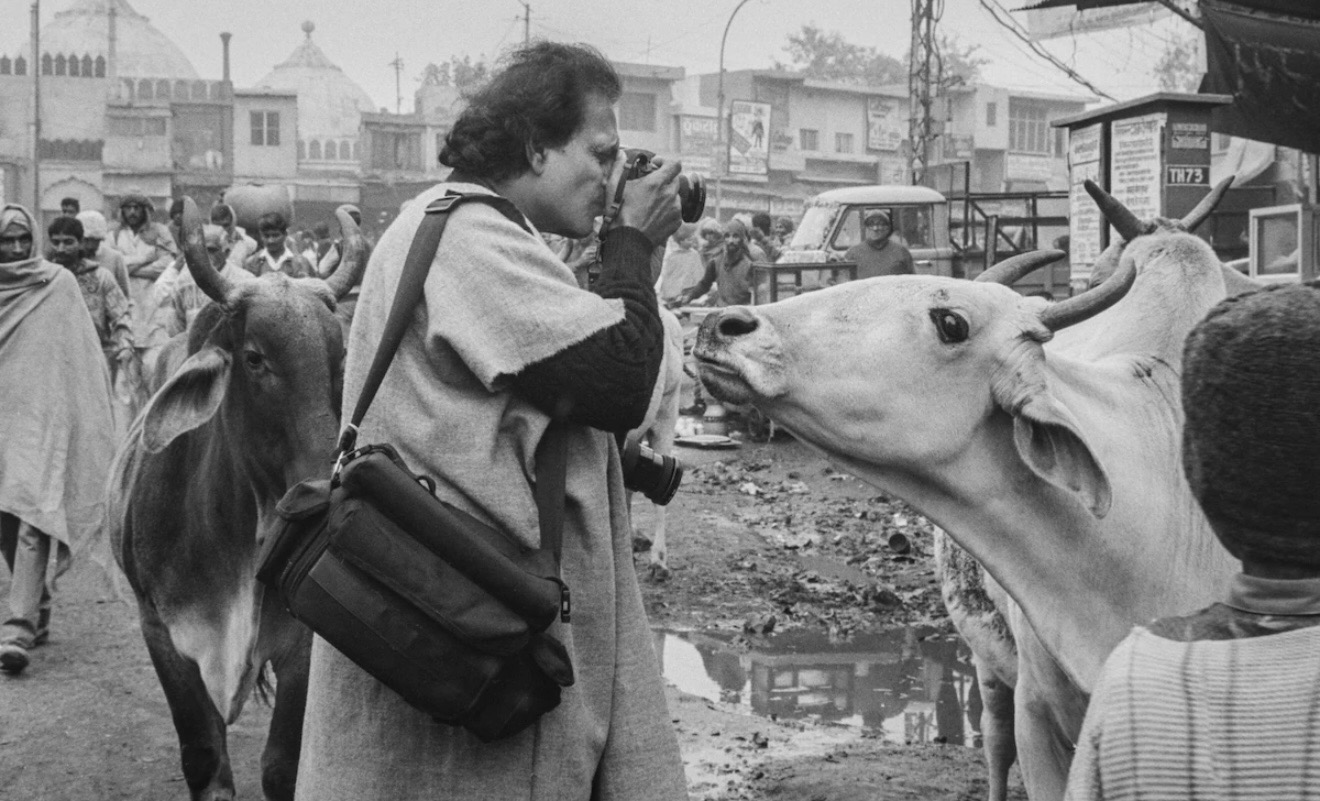
International recognition followed naturally. Magnum Photos, that cathedral of documentary photography, welcomed him after nomination by Henri Cartier-Bresson in 1977. It was an extraordinary endorsement, but also a fitting one.
Cartier-Bresson sought the decisive moment; Rai found something broader and perhaps harder to define—the decisive atmosphere.
And yet fame never seemed to harden him into performance. In that brief meeting at India Habitat Centre, there was no entourage of ego, no rehearsed grandeur. He was attentive and gracious. The handsome face and tall bearing were there, yes, but so too was the unaffected simplicity of a man who knew that the work mattered more than the worker.
Artists of Rai’s scale often become institutions while alive. The danger is that institutions can feel distant. Rai resisted that fate because he remained rooted in people.
He liked bazaars, railway platforms, alleyways, religious festivals, roadside pauses, and weathered faces. He trusted the unarranged moment. Even his most composed images feel discovered rather than manufactured.
There is a lesson here for our own age of relentless self-display. Today millions make images, but fewer truly see. Technology has democratised photography while thinning attention. We click instantly, edit compulsively, and forget by nightfall.
Rai belonged to an older discipline in which looking was slow, respectful, and patient. He waited for the picture to reveal itself. He understood that reality does not surrender meaning to the hurried eye.
His passing therefore marks the fading of a sensibility: the belief that photography can be civic memory, moral testimony, and art simultaneously. In an age of manipulated images and exhausted outrage, Rai reminds us that truth can still reside in a frame honestly made.
India will continue to be photographed endlessly. Its elections, processions, floods, weddings, protests, and sunsets will crowd the world’s screens.
But something irreplaceable has departed—the man who showed India to itself without flattery and without contempt.
—