


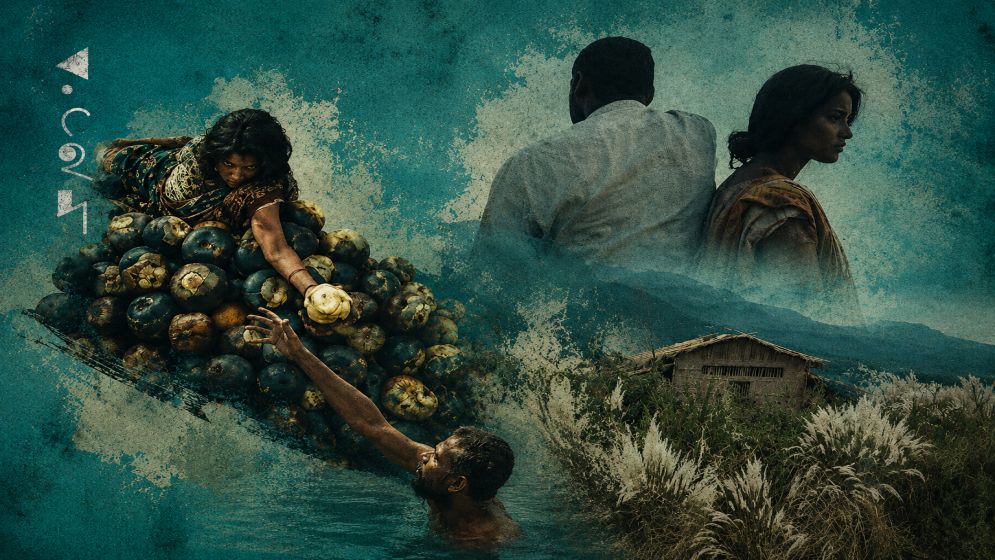
Some films ask what human beings are willing to sacrifice for love; others ask what happens when love disappears.
Roid, the haunting new Bengali film directed by Mejbaur Rahman Sumon, asks a more unsettling question….what happens when the thing you desire keeps coming back?
The question sounds romantic. The answer is anything but.
At first glance, Roid appears to belong to a familiar cinematic tradition. A lonely rural man finds companionship. Circumstances intervene. Separation follows. Longing takes over.
The film unfolds among rivers, trees, rain, animals, mud, and silence…the elemental vocabulary of village life that Bengali cinema has often used to tell stories about poverty and human connection.
Yet Roid gradually reveals itself as a different kind of work altogether.
It is not fundamentally a romance, though romance is present. It is not quite a folk tale, though folklore permeates its atmosphere. It is not strictly a religious allegory, though Biblical echoes linger everywhere. It is not a horror film, though by its final movement it produces a kind of existential terror rarely encountered in contemporary South Asian cinema.
Instead, Roid operates in a more elusive territory. It is a film about repetition. About obsession. About the strange distance between loving a person and wanting them. Most of all, it is about the possibility that desire itself may be humanity's original curse.
The film follows Sadhu, a poor laborer whose life appears defined by simplicity. He works hard. He is respected. He occupies the margins of society without actively resisting them. There is little glamour in his existence and even less mystery.
Then he marries. The arrival of his wife transforms the film….because she introduces unpredictability.
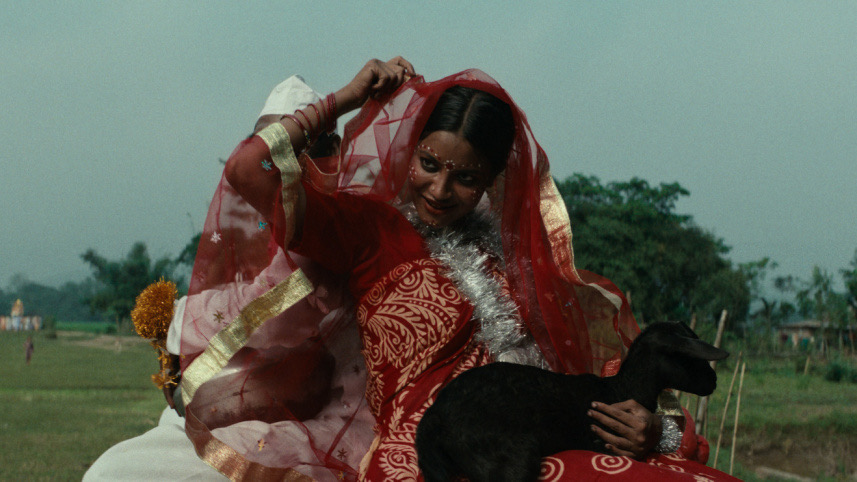
She does not behave according to the social expectations governing village life. She speaks to animals. She inhabits a private emotional universe. She appears detached from the invisible rules that everyone else obeys.
Cinema has often portrayed unconventional women through the lens of male fascination. Roid does something more complicated. It refuses to tell us whether the wife is eccentric, mentally ill, spiritually liberated, childlike, wise, or all of these at once.
Her difference remains unresolved. That ambiguity becomes crucial, because what disturbs Sadhu is not merely her behavior. What disturbs him is her refusal to conform to the world he understands.
Human beings often claim to desire freedom. What they frequently desire instead is predictability. The wife disrupts predictability. And eventually Sadhu abandons her.
In a lesser film, that abandonment would serve as the story's emotional climax. In Roid, it functions as the beginning of a much stranger journey.
The narrative repeatedly destabilizes the distinction between absence and presence. People disappear. People return. Time seems to move forward while simultaneously circling back upon itself.
The result is a film that feels less interested in conventional storytelling than in exploring the mechanics of longing.
Longing, after all, is among the most misunderstood human emotions. We tend to imagine desire as a bridge leading toward fulfillment. We want something. We obtain it. The story ends.
Ancient myths tell a different story. In Greek mythology, desires create catastrophes. In religious narratives, desires lead to exile. In fairy tales, wishes arrive with hidden costs.
Across civilizations, the act of wanting often proves more consequential than the object being wanted.
Roid belongs firmly within this tradition. The film's symbolic architecture is remarkably rich, drawing from folklore, religious imagination, cyclical concepts of time, and archetypal narratives about human temptation.
Yet its greatest achievement lies in refusing to lock itself into a single symbolic system. Watch it one way and it resembles a folk tale. Watch it another way and it resembles a theological parable.
Watch it again and it becomes a psychological study of obsession.
This flexibility explains why audiences have argued so intensely about what the film "means."
The question itself may be misguided. Roid is less interested in delivering a definitive interpretation than in creating a structure capable of accommodating many.
The best myths function similarly. They survive because they generate meaning rather than merely containing it.
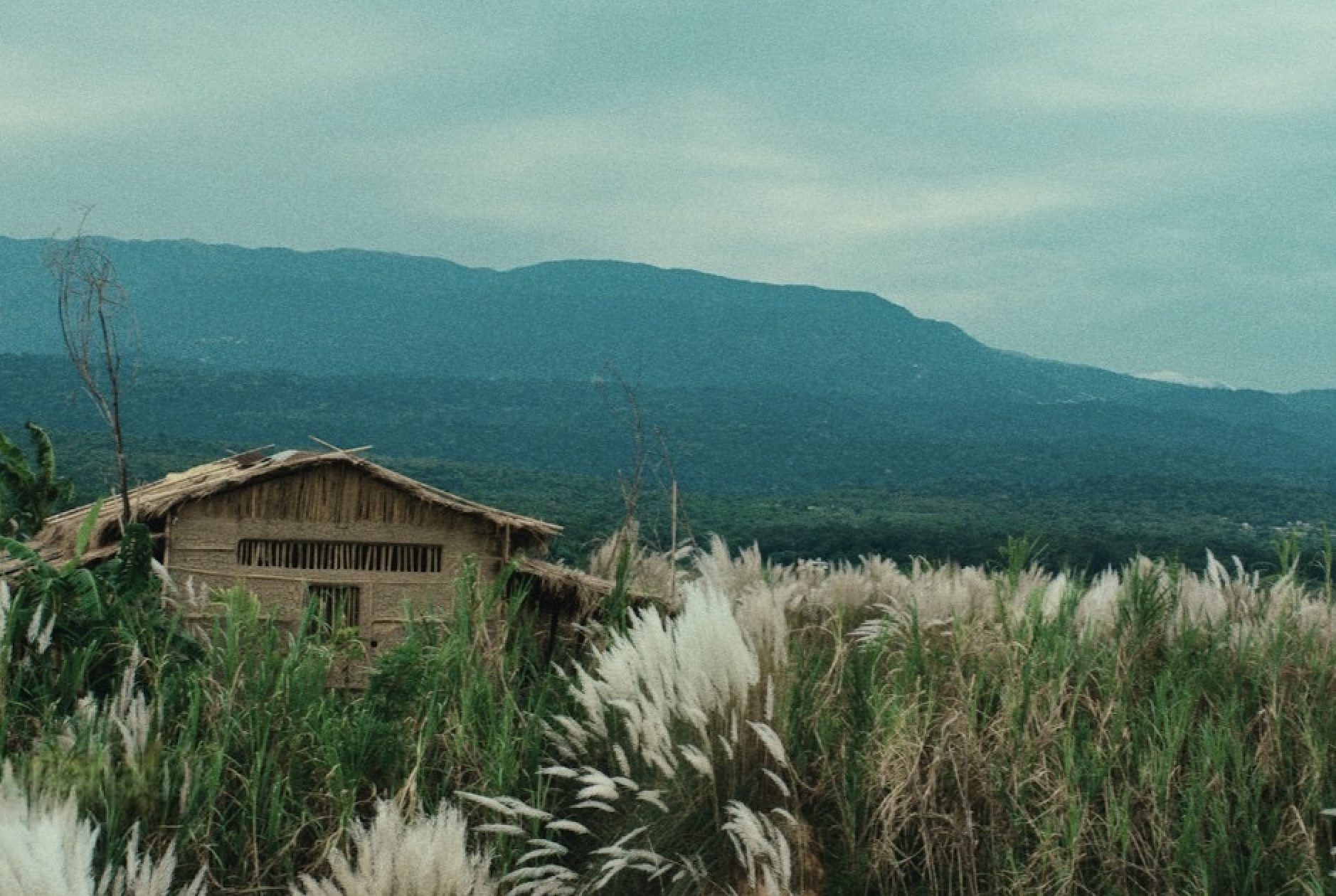
The film's visual language reinforces this openness.
Water, trees, animals, fire, darkness, weather, and earth become recurring presences. They operate as active participants in the narrative.
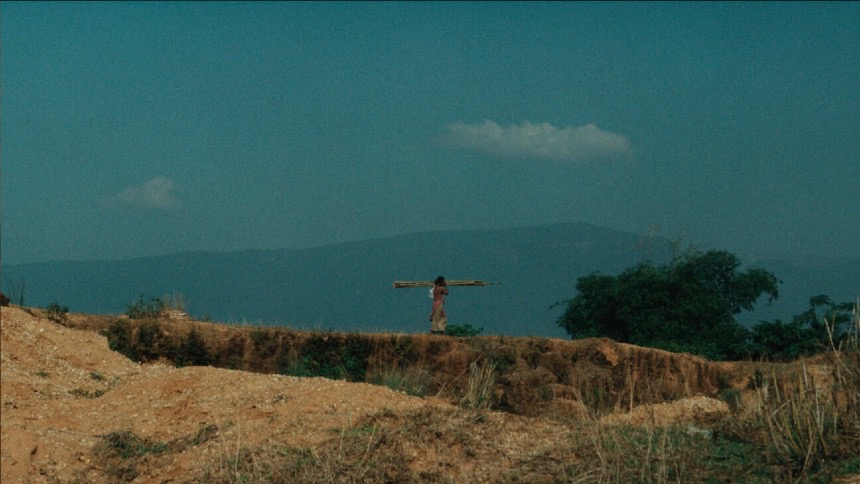
Contemporary cinema often mistakes visual beauty for visual meaning. Roid rarely commits that error. Its landscapes are not backgrounds. They are emotional environments.
Rain alters perception and darkness does not simply conceal; it transforms. Nature functions almost as another consciousness moving alongside the characters.
This quality gives the film an unusually timeless feeling. Although rooted in a recognizable rural setting, it often feels as though it exists outside ordinary history. The effect recalls the atmosphere of myth more than realism.
Myths occupy an ambiguous temporal space. They happened long ago. They are happening now. They happen every time they are retold.
Roid understands this instinctively. Its characters seem trapped within patterns older than themselves.
The film repeatedly returns to a central human paradox…that we are shaped by desires we do not fully understand. Sadhu believes he knows what he wants. That belief gradually destroys him.
One of the film's most impressive achievements is the patience with which it charts this transformation. There is no sudden transformation. No dramatic conversion. No single moment in which innocence becomes guilt.
Instead, the process unfolds incrementally.
A compromise here. A rationalization there. A small act of selfishness. A larger act later. By the time viewers recognize the scale of the transformation, the transformation has already occurred.
This gradual descent feels psychologically authentic because human beings rarely experience moral collapse as a dramatic event. More often, they experience it as a series of understandable decisions.
Every step appears reasonable when viewed individually. Only later does the path reveal itself.
In this respect, Roid joins a long tradition of stories about self-deception. We tell ourselves we are acting out of love; we are acting out of fear. We tell ourselves we are protecting someone; we are protecting ourselves.
We tell ourselves we want happiness; what we actually want is control. The film repeatedly explores these distinctions.
Control masquerades as care and possession masquerades as intimacy.
The emotional complexity of these exchanges elevates Roid beyond symbolic abstraction. The characters never become mere philosophical concepts.
Their experiences remain stubbornly human.
This is especially true of the relationship at the film's center. Many contemporary romances celebrate compatibility. Roid is fascinated by incompatibility.
The wife remains mysterious partly because she refuses to become fully legible to either Sadhu or the audience. She cannot be reduced to a role.
She is not simply wife. Not simply lover. Not simply victim. Not simply muse. Her opacity generates much of the film's emotional power.
People often speak about understanding those they love. The reality is more unsettling.
Much of love consists of negotiating the fact that another human being remains partially unknowable. The tragedy begins when that unknowability becomes intolerable. Then comes the temptation to reshape the other person into something easier to understand.
The film repeatedly circles around this temptation. Viewed from this perspective, Roid becomes a story about the violence hidden within idealization. Idealization appears benign because it sounds complimentary.
In practice, it often involves replacing a real person with an imagined one. The beloved becomes less important than the fantasy. Reality becomes an obstacle. The fantasy becomes the goal.
The film's cyclical structure reinforces this idea beautifully.
Repetition creates variation. Each return feels familiar yet altered. Each recurrence carries subtle modifications. The pattern resembles memory itself.
Human beings rarely remember people accurately. Instead, we revise them. We soften edges and we erase contradictions. We reconstruct relationships according to present emotional needs.
The person we miss eventually becomes someone who never existed.
Roid understands this process at a profound level. Its recurring encounters feel less like literal events than manifestations of psychological desire. Whether interpreted symbolically or emotionally, the effect remains the same.
The past refuses to stay fixed. It keeps returning in altered form. This dynamic gives the film an almost dreamlike quality.
Dreams frequently operate through repetition and emotional truths become more important than factual ones. Roid often feels constructed according to dream logic.
Yet unlike many films that embrace ambiguity, it never feels arbitrary. Everything appears connected. The viewer may not immediately understand the connections, but the film behaves as though they exist.
That confidence matters. Ambiguity succeeds when it emerges from conviction rather than uncertainty. Roid possesses conviction in abundance.
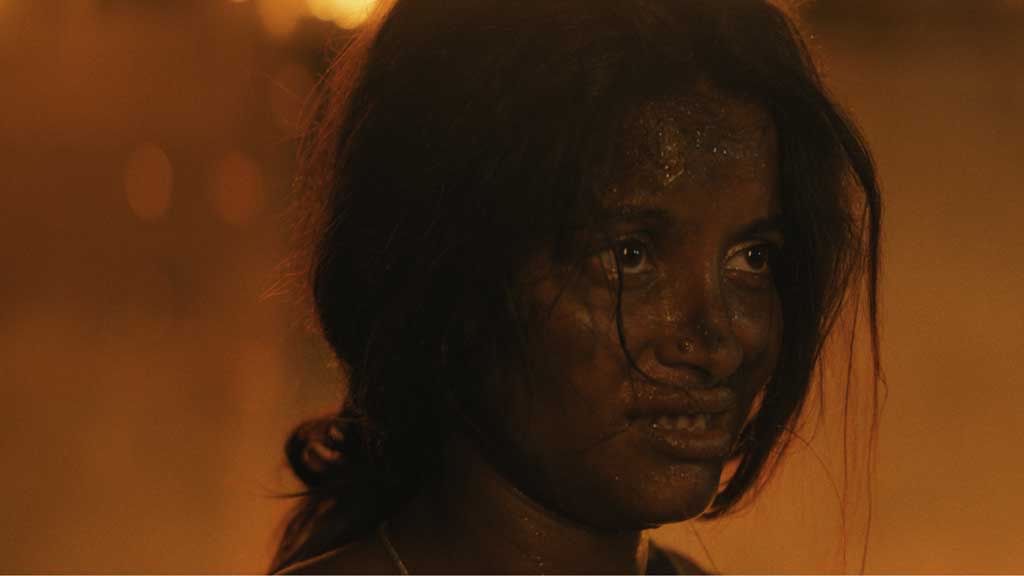
The film's final movement demonstrates this most clearly. Without revealing specific narrative developments, it is worth noting how fearlessly the film commits to its central concerns.
Many directors establish symbolic frameworks only to abandon them in favor of straightforward emotional resolution. Here, director Sumon does the opposite. The further the film progresses, the more rigorously it follows its own internal logic.
As a result, the climax feels simultaneously surprising and inevitable. This is among the highest compliments one can pay any narrative.
The ending does not answer every question. It answers the right ones. There is a difference.
Contemporary audiences have become accustomed to explanations. We want mysteries solved and symbols decoded. And we want uncertainty eliminated.
Great art often resists these desires. Not because it lacks answers but because some answers reduce rather than deepen experience. The most enduring works leave room for interpretation while preserving emotional clarity.
Roid accomplishes exactly that. Its final images linger because they feel larger than any single reading. One viewer may see theology. Another may see folklore.
Another may see a meditation on masculinity, loneliness, or power. The film accommodates all of them.
Such interpretive openness is difficult to achieve. Too much ambiguity produces confusion. Too much explanation produces rigidity.
Roid walks the line with remarkable confidence.
The performances deserve enormous credit for this achievement. Nazifa Tushi delivers one of the most intriguing performances in recent Bengali cinema.
Her character remains perpetually difficult to categorize, yet Tushi prevents mystery from becoming abstraction. She creates someone vivid enough to feel real while preserving the aura of unpredictability that the film requires.
The result is mesmerizing. The performance continually shifts between innocence, eccentricity, vulnerability, humor, and something harder to name. Few actors possess the confidence to remain partially unknowable.
Tushi understands precisely how much to reveal and how much to withhold.
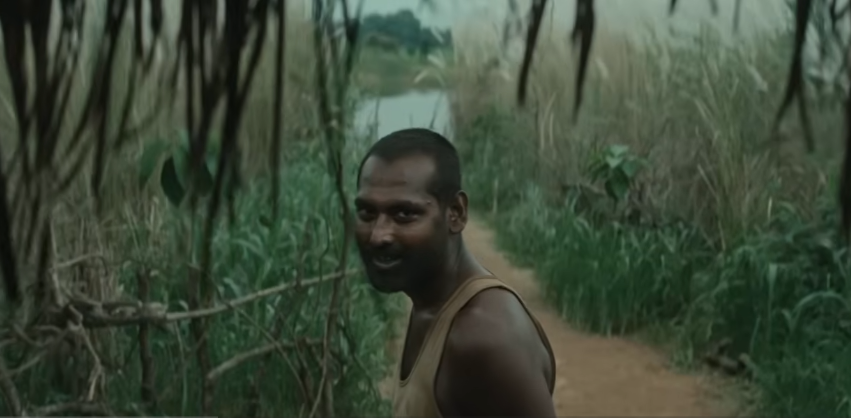
Mostafizur Noor Imran faces an equally difficult challenge. Sadhu's transformation depends upon subtle evolution rather than dramatic gestures. The actor must persuade audiences that they are watching the same man even as that man gradually becomes someone else.
Imran succeeds impressively.
His performance grounds the film's symbolic ambitions in recognizable human behavior. Without that grounding, the narrative might drift into abstraction. Instead, it remains emotionally immediate.
The technical achievements are brilliant. The cinematography frequently approaches the sublime. Frames possess a painterly quality without becoming self-conscious. Visual beauty emerges organically from the world rather than being imposed upon it.
Many contemporary films advertise their artistry. Roid simply inhabits it.
The sound design deserves particular recognition. Sound often receives less critical attention than image despite being equally important to cinematic experience. Here, environmental sounds acquire extraordinary presence.
Rain, wind, animals, silence—all become expressive tools. The score contributes another layer altogether. Rather than instructing viewers how to feel, the music expands the emotional space around the images.
By the climax, sound and image combine to create something approaching trance.
This may be the film's greatest accomplishment. It creates a state of mind. The viewer gradually enters the film's rhythms and begins experiencing time differently.
Repetition stops feeling repetitive. Ambiguity stops feeling confusing. The film teaches audiences how to watch it. Few works achieve this level of formal coherence.
By the end, Roid emerges as something increasingly rare in contemporary cinema…a film wholly committed to its own vision. Every artistic choice appears aligned with a central philosophical concern.
What happens when desire becomes destiny? What happens when longing survives fulfillment? What happens when obtaining what we want merely teaches us to want more?
These questions are ancient. Religions have wrestled with them. Myths have dramatized them. Philosophers have debated them. Roid transforms them into cinema.
—