

The allotment of Parliament seats is carried out like a plot allotment: Saiful Haque

Publish: 25 Dec 2023, 07:03 AM
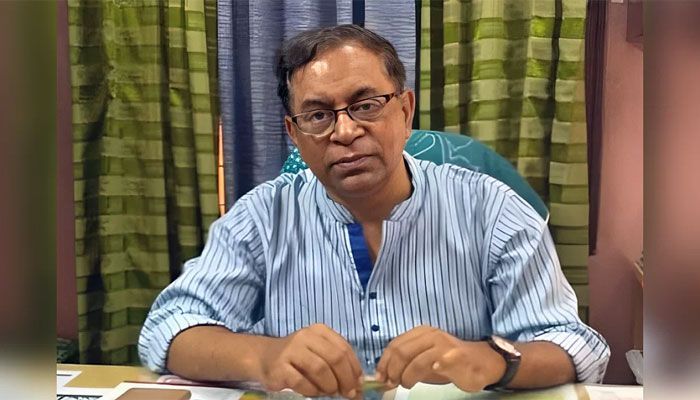
Saiful Haque
Saiful Haque, the General Secretary of the Bangladesh Revolutionary Workers Party, stands as a prominent leader in the ongoing movement advocating for the establishment of democracy. He plays a pivotal role as one of the organizers of the 'Gonotontro Moncho'. His courageous and resolute stance has garnered widespread appreciation within the opposition camp. Haque has recently addressed contemporary issues in discussions with Bangla Outlook.
Bangla Outlook: The affidavits provided by ministers and MPs during the parliamentary elections have led people to perceive a resurgence of the Shaista Khan era in the country. Candidates have been found providing false information in the election process. However, presenting incorrect information in an affidavit constitutes a punishable offence under the law, carrying potential imprisonment of up to three years. Given this violation, there's a valid argument for the cancellation of their candidature and their disqualification from future elections. However, the Election Commission (EC) appears to be inactive in addressing this issue. What are your thoughts on the EC's lack of action?
Saiful Haque: Certain segments of the affidavits submitted by candidates in the parliamentary elections have been highlighted in the media. As people read these reports, there's a growing sentiment likening the current situation to the Shaista Khan era in the country. Notably, Shafiqur Rahman Chowdhury, the Awami League candidate for the Sylhet-2 constituency, declared the value of his 100 bhari gold as merely one lakh taka in his affidavit. Similarly, the nominated Awami League candidate for Comilla-7, Pran Gopal Dutt, stated the value of 22 bhari gold at Tk 21 thousand, and another candidate, Pratibhari, listed the price of per bhari gold at 955 Taka. Would even the most irrational believe it?
According to the prevailing law in the country, an affidavit constitutes a form of written oath. Furnishing false information in this document is an offense punishable under criminal and electoral law, potentially resulting in imprisonment for up to three years under criminal law and disqualification of candidacy under electoral law. However, there's scepticism about whether the Election Commission (EC) will enforce these penalties uniformly, as there appears to be a distinction in the application of the law between members of the ruling party and activists from opposition political parties.
BO: Who will be the opposition party of Awami League in the parliamentary elections?
SH: The way seats have been allocated at Ganabhaban before the parliamentary elections has unequivocally indicated which party the government expects to designate as the opposition. The allotment resembles Rajuk's plot allocation, suggesting a granting of zamindari to someone specific. This time, the government, led by Prime Minister Sheikh Hasina, is dictating the identity of the opposition party. The overt process of seat sharing is absurd, ludicrous, and utterly bizarre. The government's conduct lacks political ethics, marking the completion of democracy's burial. How the spoils are divvied up mimics the actions of thieves, sparking conflicts over distribution and fostering anger and resentment. The shamelessness displayed has surpassed all limits, with misdeeds committed shamelessly. Jatiya Party Chairman Ghulam Mohammad Quader (GM Quader) recently delivered speeches advocating for the people, only to abruptly change course and align with the government. Politicians should be answerable to the public, upholding ethical values in their electoral pursuits.
BO: The government distributes seats as if dividing a pie, hinting at one-sided elections looming ahead. Will your movement's efforts actually restore the people's voting rights? There's a prevailing belief among the public that the ongoing movement won't produce any meaningful results.
SH: The movement is an ongoing process, and we're currently assessing its progress. There will be changes in the upcoming program. Precisely, people can anticipate what's to unfold in the name of parliamentary elections. Consequently, we'll appeal to the people to abstain from voting. We urge them to avoid going to the polls on the designated day. To facilitate this, we'll conduct a mass communication program. I will personally appeal to the voters to refrain from casting their votes. If a voter doesn't attend the polling station, their vote won't be accepted. The populace has psychological issues regarding the movement and struggle in Bangladesh. While millions are participating in our meetings, many don't recognize it as a movement. They perceive immobilizing the country through arson as a movement, but genuine movements don't involve destroying the country. Responsible political parties won't endorse such programs.
Additionally, in Bangladesh, the government, ruling party, and state have merged into one, fostering a climate of fascism. All decisions revolve around the whims of a single individual. Consequently, people's rights recognized by the constitution, including voting and human rights, are nonexistent. People face various challenges, including soaring commodity prices and cornering them. In this circumstance, we aim to channel the accumulated anger among the people into a mass street movement.
BO: On the first day of election campaigning, a fire incident occurred on a train. The government is placing the blame on the opposition parties. What are your thoughts on this?
SH: We condemn such incidents and firmly protest against them. This incident is regrettable. As we continue our agitation and struggle, indirectly, the responsibility is being attributed to us. However, past experiences indicate government involvement in most of these incidents. Individuals within the government tend to accuse the opposition of instigating these events. Whenever there's sabotage in the country, opposition political parties are held accountable. The blame for the train fire in Tejgaon has been directed at us, including the BNP, currently protesting on the streets. Since October 28, the government has accused leaders from anti-government political parties, including the BNP, of the recent vandalism in the country. We seek a fair, independent, credible, and impartial investigation into these incidents. Ensuring that the actual perpetrators aren't shielded through this blame game is crucial. Moreover, when responsibility is thrust upon opposition political parties by the highest echelons of the government, those under investigation must conform to the government's narrative.
BO: Do you have a message for the general public?
SH: Certainly! We are advocating for the rights of the ordinary people. Currently, the citizens of our country are deprived of their voting rights, and in the past, election day in Bangladesh used to be a celebration. However, since the Awami League came into power in the 2008 elections, ordinary citizens have been unable to cast their votes. Over the last decade, the number of young voters in the country has increased by more than 2.25 million since implementing the voter list with photos in preparation for the ninth parliamentary elections 2008. Most of these newly registered voters, now aged between 18 and 28, could not vote in the last two parliamentary elections and may be unable to vote in the upcoming one. Hence, we are advocating for their right to vote. We hope that this younger generation will join our movement.
BO: Anti-government political parties, including the BNP, have announced a non-cooperation movement to meet single-point demand. Non-cooperation was prevalent during the liberation war. Presently, people in independent nations are divided. How effective do you think non-cooperation will be in this situation?
SH: Despite people being divided under different political banners, the current situation regarding voting in the country is hindering people from exercising their right to vote. Specifically, leaders and activists of the Awami League aren't participating in voting. Furthermore, the escalating commodity prices affect everyone in the country, regardless of their political affiliations. Due to ineffective governance, people from all social classes and professions are bearing the brunt. Even those working within all government institutions, including the country's administration, law enforcement, and judiciary, are feeling the impact. Only a select few are reaping the benefits. As our movement represents the oppressed people throughout the nation, we urge everyone to join forces and reclaim our rights.
BO: Thank you from Bangla Outlook.
SH: Thanks also to Bangla Outlook.