

One researcher, two employers: How dual roles in Beximco and Novus undermine Bangladesh’s drug trials

Zulkarnain Saer
Publish: 14 Oct 2025, 04:38 PM
-68ee283ead916.jpeg)
The integrity of Bangladesh's burgeoning $4 billion pharmaceutical sector is facing intense scrutiny over allegations of compromised independence in vital drug-testing processes.
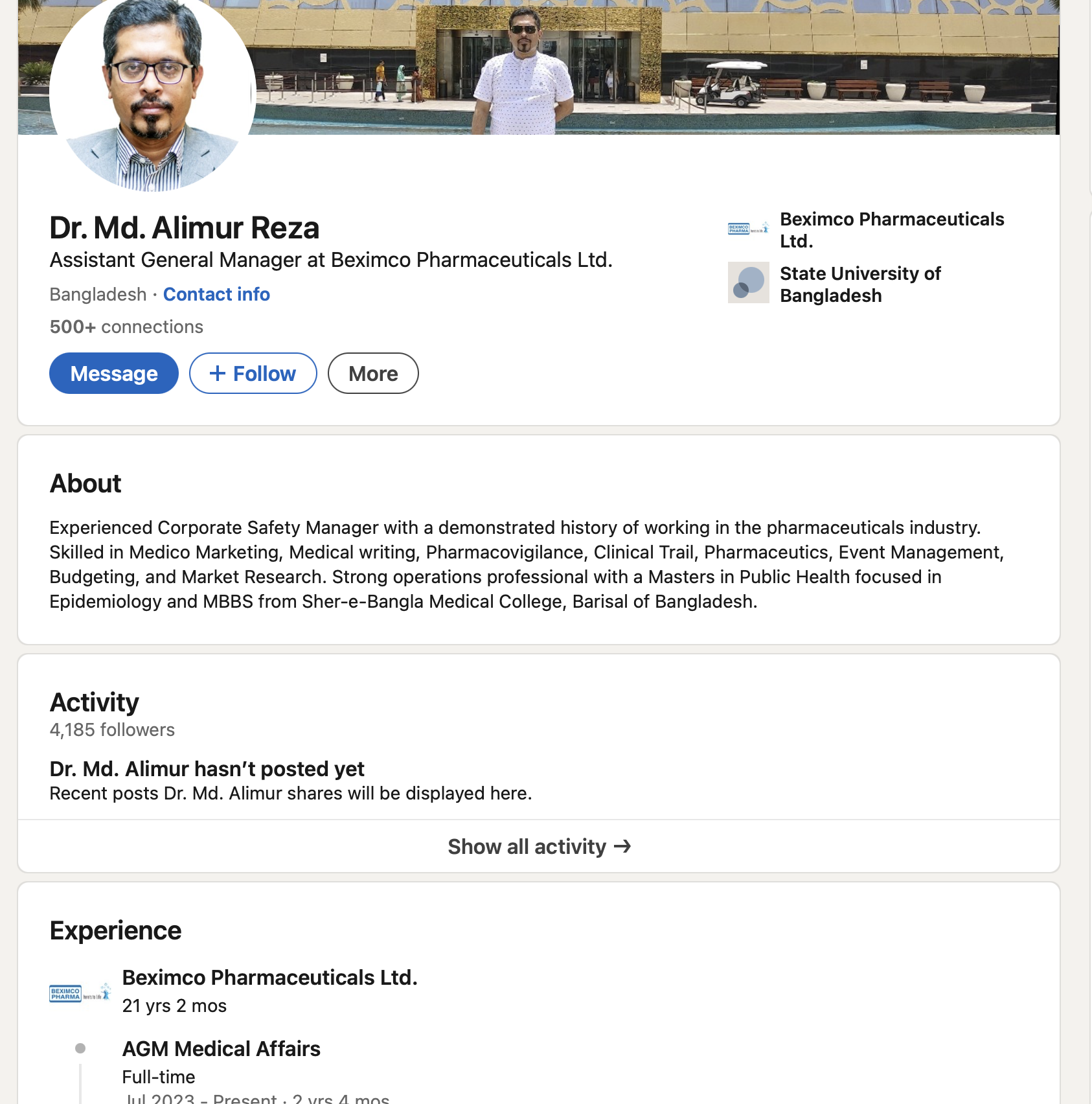
Dr. Md. Alimur Reza, a senior figure whose dual, overlapping roles at both a top manufacturer and a key clinical research organization illustrate a troubling regulatory blind spot.
Dr. Reza is an assistant general manager within the Medical Affairs Department of Beximco Pharmaceuticals Ltd., one of the country's largest drug manufacturers and exporters.
In
parallel, he is also holding the post of deputy director of medical management
of Novus Clinical research services., a contract research organization (CRO)
that performs trials for Beximco's generic medicines.
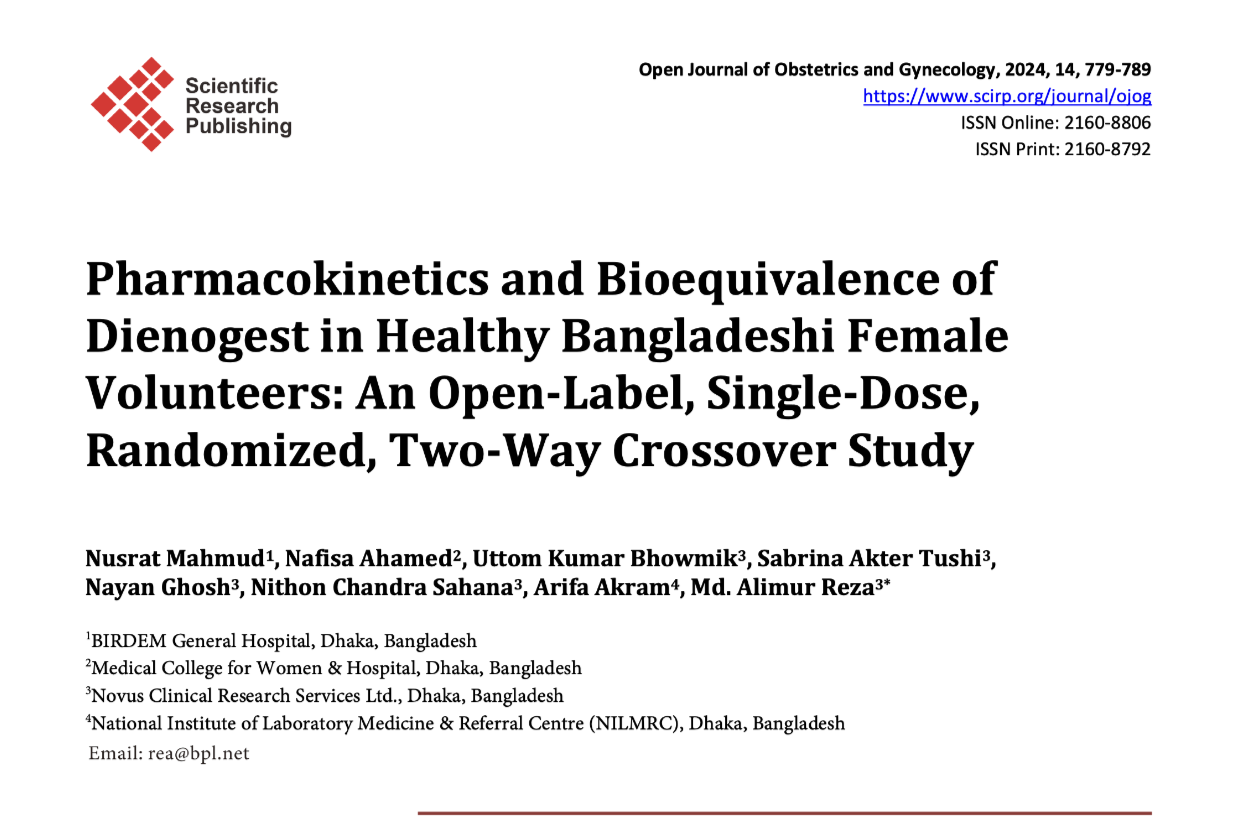
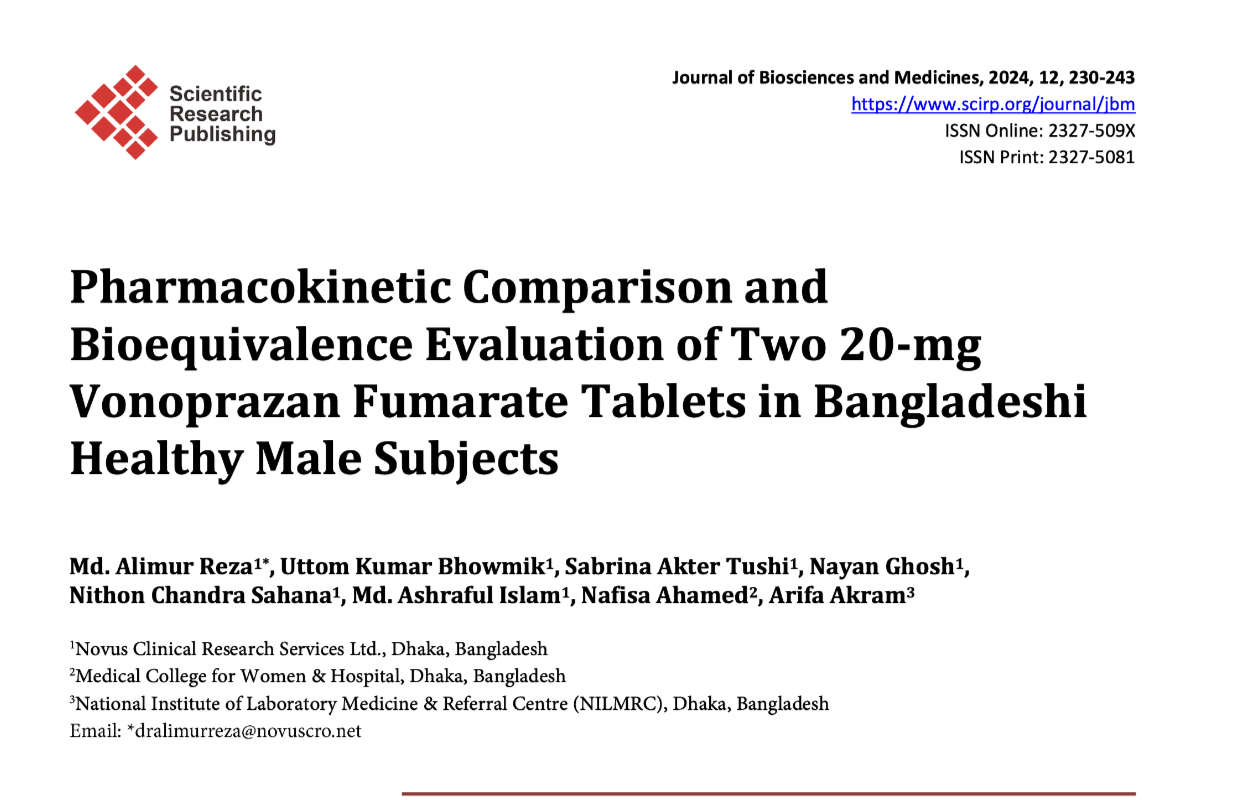
Dr Reza consistently appears as an author and supervisor on bioequivalence studies conducted by Novus Clinical Research Services Ltd., in many journals without declaring any "conflict of interest,” violating international standards and practices.
The conflict is starkly evident in a series of peer-reviewed publications where the manufacturer's executive is essentially certifying his own company’s products.
Interestingly,
Dr. Reza’s LinkedIn profile makes no mention of any role or affiliation with
Novus. It lists only his position at Beximco Pharmaceuticals. Yet, in at least
three peer-reviewed journals reviewed by Bangla Outlook, he is identified as a
researcher representing Novus.
In one paper this year in the Open Journal of Endocrine and Metabolic Diseases, Dr. Reza is listed as the principal author of a study conducted entirely by Novus, which found Beximco’s fixed-dose combination drug, branded locally as Jardimet (Empagliflozin/Metformin), to be bioequivalent to the German original, Synjardy.
Crucially, the publication declared no conflict of interest.
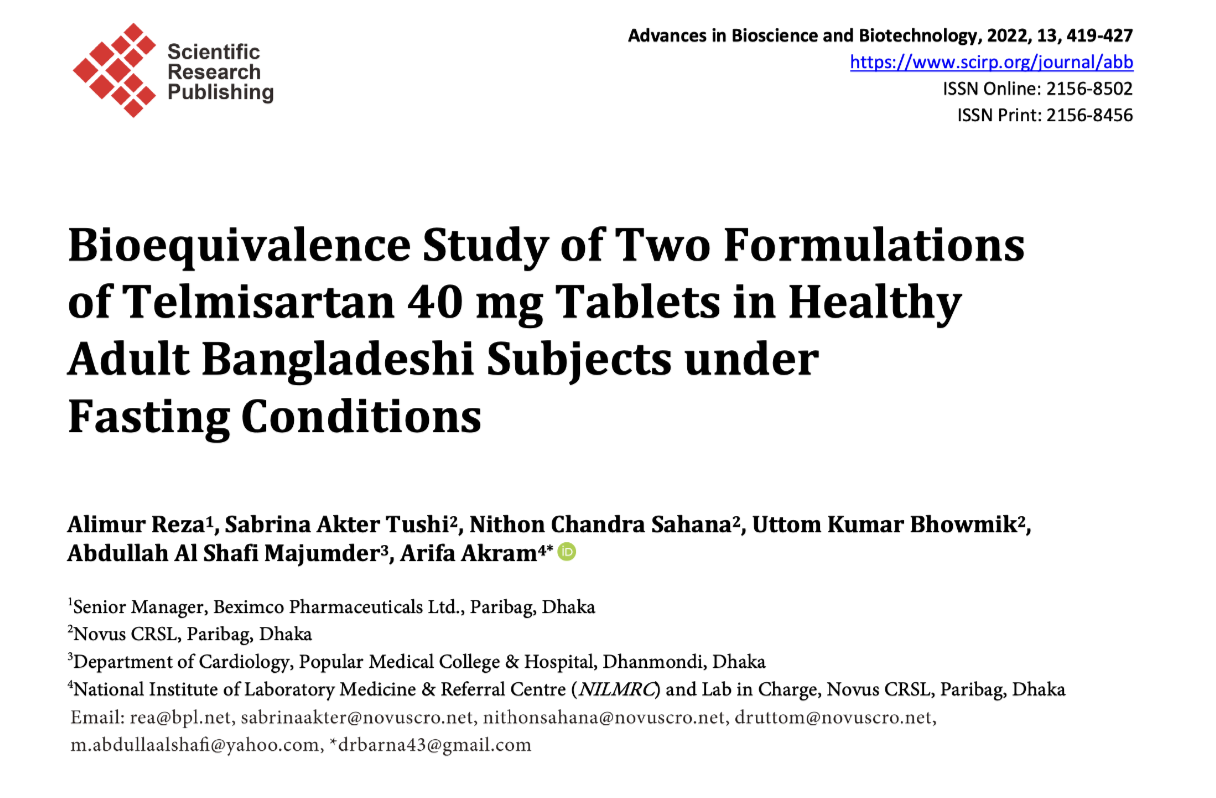
A similar pattern is found in a study published in Advances in Bioscience and Biotechnology, where Dr. Reza, explicitly identified as a "Senior Manager, Beximco Pharmaceuticals Ltd.," co-authored a trial on Beximco's Telmisartan 40 mg tablet, again conducted by Novus, which determined it matched the original branded product, Micardis.
This
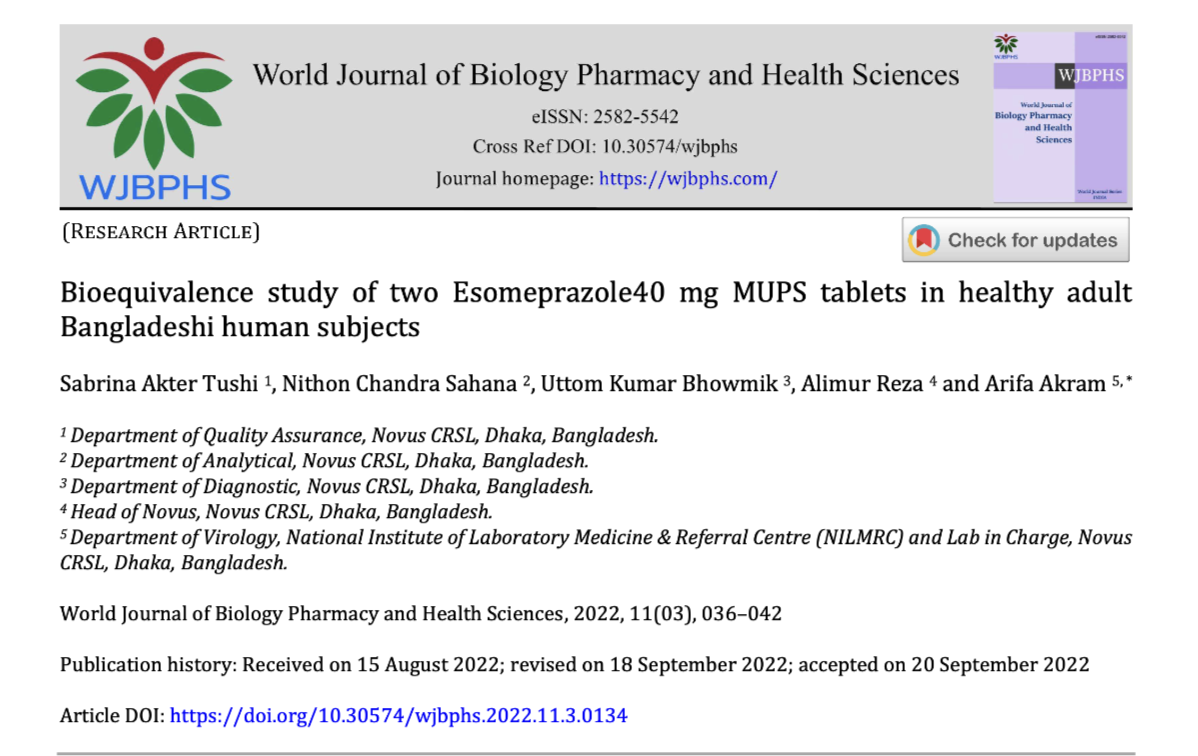
self-validation extends across multiple studies, including one for Beximco’s
Esomeprazole 40 mg, further cementing the appearance that the independence
required between a drug's sponsor and its evaluator has been systematically
eroded.
Despite a string of studies listing Novus Clinical Research Services as the testing institution, Beximco Pharmaceuticals as the sponsor, and Dr. Md. Alimur Reza as a core author or research head, these scientific papers uniformly carry the declaration of "no competing interests."
Dr. Reza was contacted by Bangla Outlook but he declined to comment on this.

This
arrangement bypasses the fundamental principles of Good Clinical Practice (GCP)
and raises serious concerns about the reliability of the data underpinning the
widespread use and export of these generic drugs, posing a challenge to the
credibility of the Bangladeshi Directorate General of Drug Administration
(DGDA).
Bangla Outlook contacted multiple officials from DGDA and sought explanations by providing documented evidence but didn’t get any reply.
Industry insiders meanwhile argue that the integrity of data collection, laboratory analysis, and statistical evaluation is inherently compromised when the clinical testing facility and the drug manufacturer effectively share leadership via a key executive.
The potential for subtle bias, in everything from study design and subject selection to the interpretation of marginal pharmacokinetic results, becomes undeniable when the financial rewards of a favorable outcome flow back to the employer of the person directing the research, said an independent drug researcher who preferred to be unnamed.
Meanwhile, though the DGDA and the Bangladesh Medical Research Council (BMRC)--the bodies responsible for granting both regulatory and ethical clearances–formally approved these trials, they appear to have overlooked or dismissed the underlying professional entanglement.
Industry insiders said unlike the rigorous pharmaceutical oversight regimes in the United States, the European Union, or even major emerging markets like India, Bangladesh currently lacks a robust, mandated system for third-party auditing of bioequivalence trial data.
There is no consistent requirement to bring in independent statisticians to re-analyze the raw data before a drug is cleared for marketing and export.
This
critical gap in post-submission scrutiny means that the government's approval relies
heavily on the same reports authored by individuals closely associated with the
sponsoring company, effectively allowing the industry to grade its own
homework.
As a major exporter leveraging the Trade-Related Aspects of Intellectual Property Rights (TRIPS) waiver, the long-term credibility of Bangladesh's pharmaceutical exports depends on addressing this deep-seated failure to enforce a clear separation between corporate interest and scientific rigor, said the experts.
Bangla Outlook investigation however has found no explicit evidence of data fabrication or scientific fraud, but the convergence of financial and scientific interests is so stark that it violates the foundational ethical standards of global clinical research.
Both the World Health Organization (WHO) and the International Council for Harmonization (ICH) stipulate that investigators must be demonstrably free from financial or organizational ties that could influence the study outcome.
By this measure, said the experts, the close relationship between Beximco and Novus, mediated by Dr. Reza fundamentally fails the test of independence and impartiality.
—