

Offshore ship imports raise red flags in Tk 8,000 crore probe into Eastern Bank Chairman

Zulkarnain Saer
Publish: 09 Nov 2025, 10:52 PM
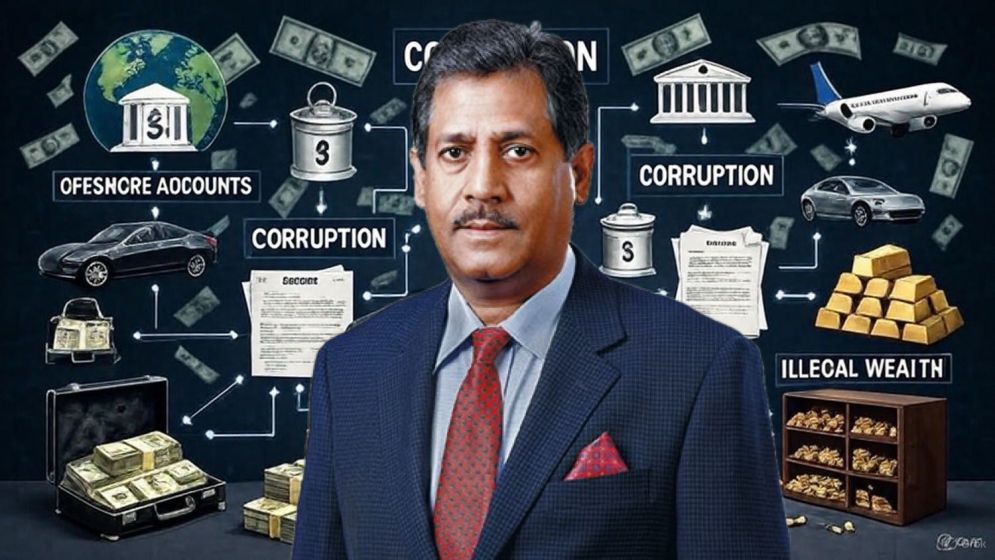
When investigators in Dhaka began tracing a string of ship-purchase transactions tied to one of Bangladesh’s most renowned bankers, they did not expect all roads to lead to the same address–a post-office box in the British Virgin Islands.
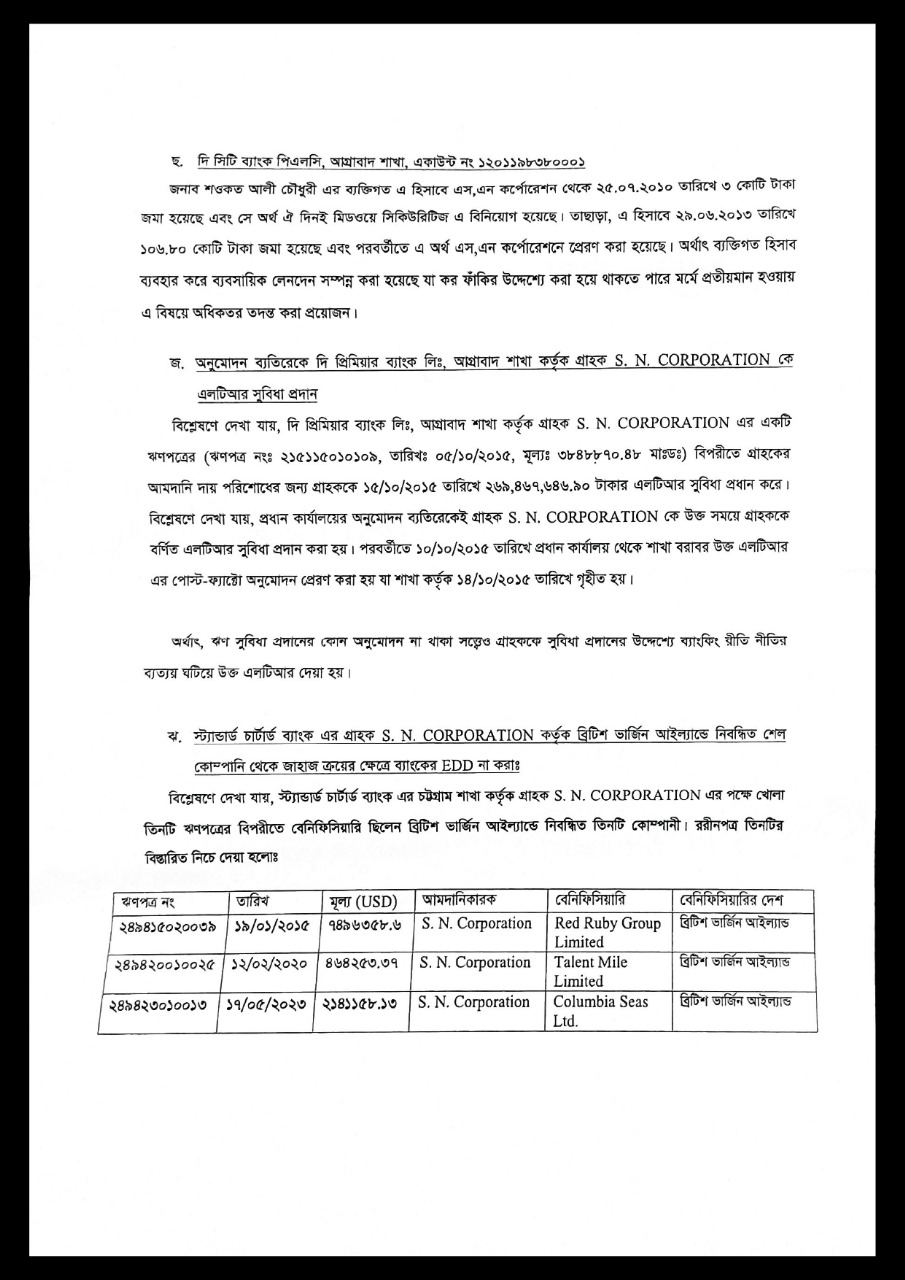
According to an investigation report done by Bangladesh Financial Intelligence Unit (BFIU), a copy of which is obtained by Bangla Outlook, S. N. Corporation–a company owned by Md. Showkat Ali Chowdhury, the chairman of Eastern Bank PLC–purchased ships from three offshore entities that appear to exist only on paper.
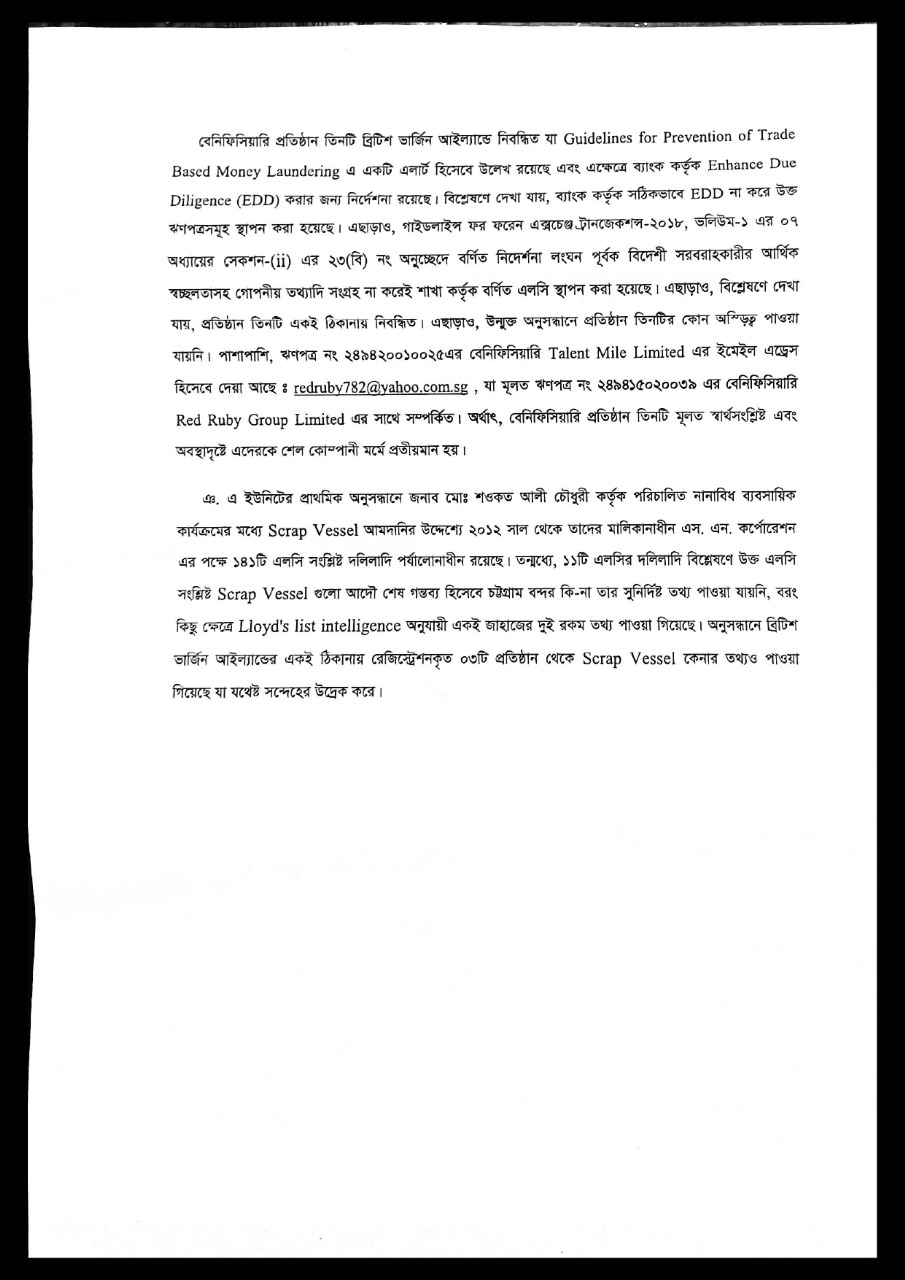
Each of those firms–Red Ruby Group Limited, Talent Mile Limited, and Columbia Seas Ltd–is registered in the British Virgin Islands, at the very same address. The BFIU concluded bluntly that the companies have “no effective existence.”
The BFIU’s findings have prompted the Anti-Corruption Commission (ACC) to open a probe into roughly Tk 8,000 crore (about $800 million) in transactions linked to Chowdhury and his family’s personal and corporate accounts.
At the heart of the inquiry are three Letters of Credit (LoC)--essentially the financial lifeline of Bangladesh’s import business–issued by Standard Chartered Bank’s Chittagong branch on behalf of S. N. Corporation between 2015 and 2023.
The bank authorized payments ranging from hundreds of thousands to several million dollars to the BVI companies for ship purchases. Yet each of the three LCs lists a different beneficiary while all three beneficiaries trace back to that same offshore address.
Bangladesh Bank regulations require financial institutions to conduct Enhanced Due Diligence on any transactions involving high-risk jurisdictions like the British Virgin Islands.
But the central bank’s analytical report found that Standard Chartered had not done so, a lapse that violates the Guidelines for Foreign Exchange Transactions 2018.
The oversight effectively allowed millions of dollars to move offshore without proper verification of who controlled the companies on the receiving end.
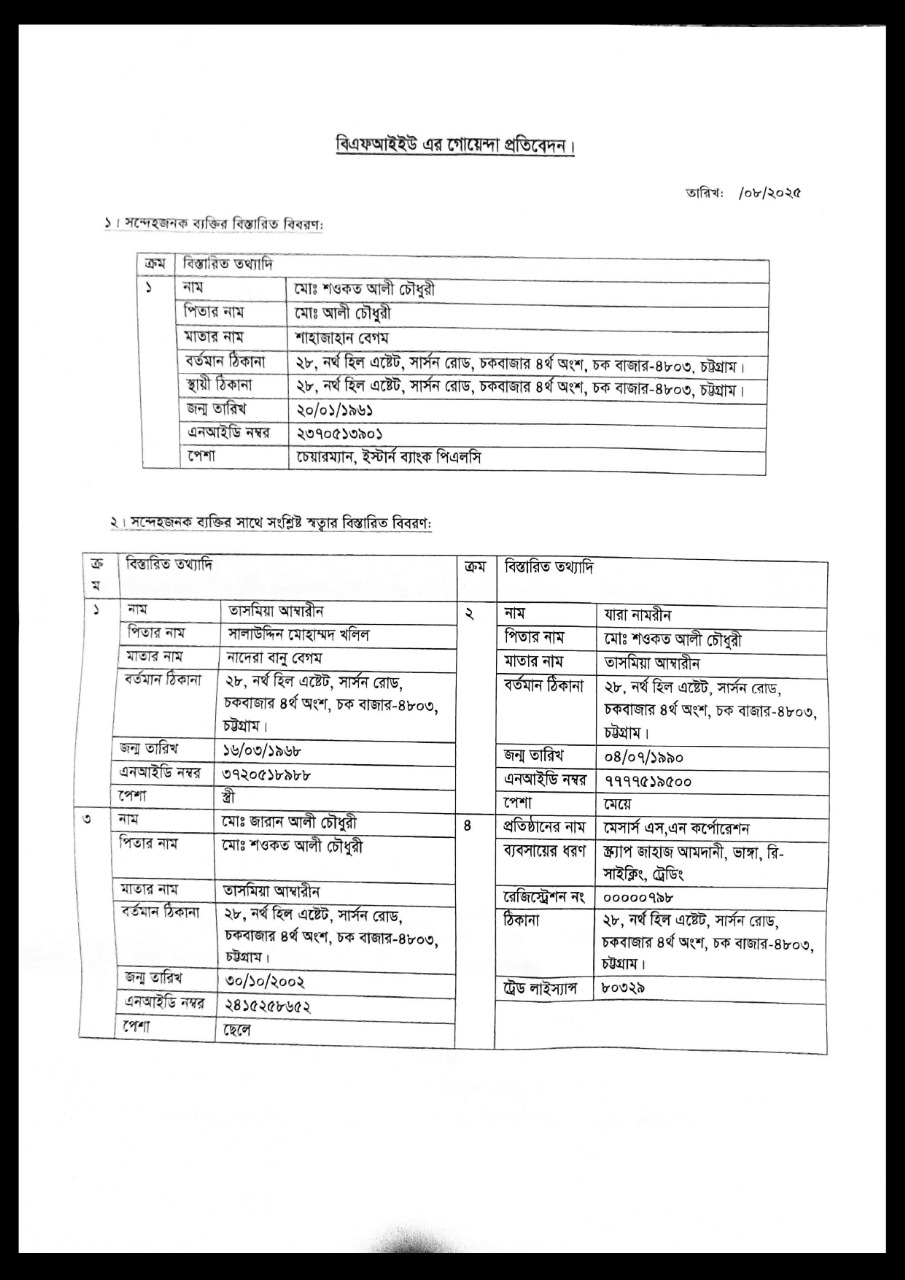
The paper trail contains even more peculiar overlaps.
Investigators discovered that the email address listed for Talent Mile Limited
was identical to the one used by Red Ruby Group
Limited–a detail suggesting that the supposedly separate firms might in fact
have been run by the same people.
For Bangladesh’s financial regulators, the implications are serious. Offshore shell companies, often used to conceal ownership and shift profits, have long haunted the country’s ship-breaking and trading industries, but rarely have they appeared in direct connection with a sitting bank chairman.
The
case now raises uncomfortable questions about whether one of the nation’s
leading private banks turned a blind eye to compliance rules, and whether the
country’s trade-finance system remains vulnerable to being used as a conduit
for illicit capital flight.
A trail from the shipyards to the
banks
Along Bangladesh’s southern coast, in the grim, smoke-tinged expanse of Sitakunda, ships come to die. The beach is lined with more than a hundred ship-breaking yards, where old vessels are dismantled piece by piece.
From their hulls, workers recover iron, steel, copper, aluminum, and salvageable machinery–the raw materials that feed much of Bangladesh’s construction industry.
The country relies on this trade for up to sixty percent of its total demand for rebar and steel, with hundreds of ships reduced to scrap every year.
It is this very trade–lucrative, loosely regulated, and often shrouded in murky financial dealings–that investigators say prompted the Eastern Bank Chairman Md. Showkat Ali Chowdhury used these fronts for money laundering.
According to documents reviewed by Bangla Outlook, the BFIU has uncovered an extensive network of 187 bank accounts spread across 28 financial institutions linked to Chowdhury, his wife Tasmia Ambarin, their daughter Zara Namreen, son Zaran Ali Chowdhury, and several associated companies.
Fourteen of those accounts are in the chairman’s own name, with dozens more held by family members and corporate fronts.
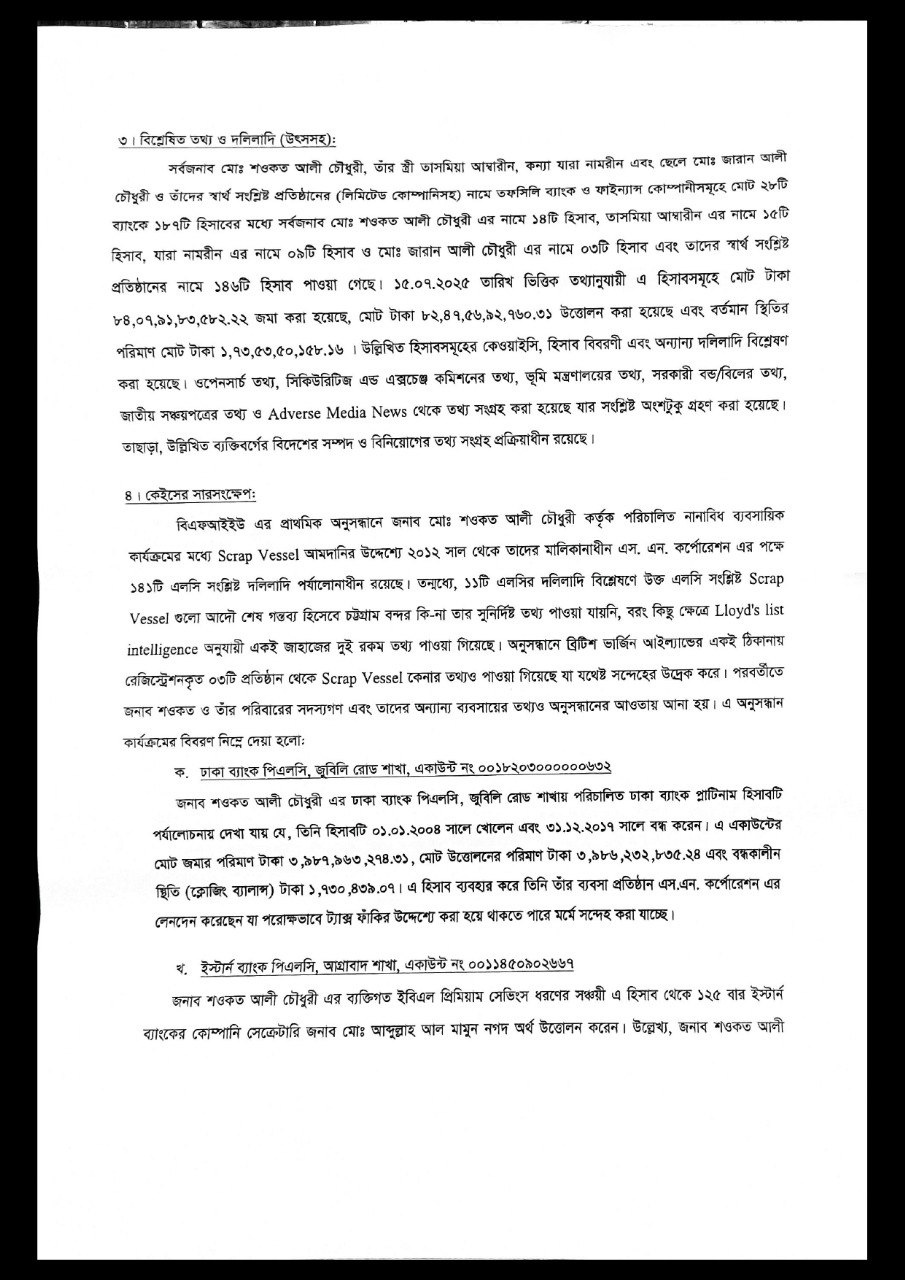
As
of mid-July this year, those accounts had recorded deposits totaling Tk 8,407.9
crore and withdrawals of Tk 8,247.5 crore–nearly the same amount flowing in and
out–leaving a current combined balance of roughly Tk 173 crore.
Investigators say the tight circulation of such vast sums, across so many accounts, suggests systematic layering of funds rather than ordinary business activity.
The BFIU’s analysis drew on Know-Your-Customer files, transaction records, and disclosures from the Securities and Exchange Commission, land registries, government savings certificates, and bond holdings. Its inquiry into the family’s offshore assets is ongoing.
What investigators have already found, however, is a pattern that stretches back more than a decade.
Since 2012, S. N. Corporation–Chowdhury’s ship-importing firm–has opened at least 141 Letters of Credit for bringing in old vessels to be dismantled in Sitakunda. Yet in a detailed review of eleven of those LCs, no documentation could confirm that the ships ever reached Chattogram Port, the entry point for such imports.
The irregularities did not end there. According to Lloyd’s List, the London-based maritime journal, at least one of the vessels tied to S. N. Corporation appeared twice in shipping records, listed under two conflicting identities–a discrepancy that investigators now suspect could signal falsified paperwork or double invoicing.
The suspicion deepened when BFIU analysts discovered a Tk 50.4 lakh deposit into the account of a company called Need Dresses Private Limited–a fashion retailer with no discernible connection to ship-breaking or imports.
That transfer, according to one official familiar with the findings, “did not fit the trade narrative in any conceivable way.”
Taken together, the data–from the Sitakunda yards to the offshore firms in the British Virgin Islands–outlines what investigators describe as a vast, overlapping network of domestic and international accounts.
It is a network that, for years, appears to have operated just beyond the reach of compliance officers and regulators, moving millions under the guise of a legitimate trade that has long served as one of the country’s industrial backbones.
Money on the move
Investigators say the financial trail runs not only through corporate accounts but directly through the personal finances of Eastern Bank Chairman Md. Showkat Ali Chowdhury.
Records obtained by the BFIU show that his personal account at City Bank PLC’s Agrabad branch received deposits of Tk 3 crore, which were invested in Midway Securities, and another Tk 106 crore that was later transferred to S. N. Corporation–his own company.
To regulators, such transfers blur the line between personal wealth and business capital, reinforcing suspicions that these transactions were structured to conceal income and evade taxes.
The investigation also unearthed irregular lending practices surrounding Chowdhury’s business operations. At Premier Bank’s Agrabad branch, S. N. Corporation obtained a Tk 26.9 crore Loan Against Trust Receipt (LTR) facility–a short-term credit instrument typically secured against import documents–before any authorization from the bank’s head office.
Approval was granted only after the loan had already been issued, in direct violation of standard banking procedures. Officials familiar with the matter described the move as “an egregious breach of internal controls.”
When contacted for comment, Chowdhury did not respond to repeated phone calls or written queries from Bangla Outlook seeking his explanation for the transactions flagged in the BFIU report.
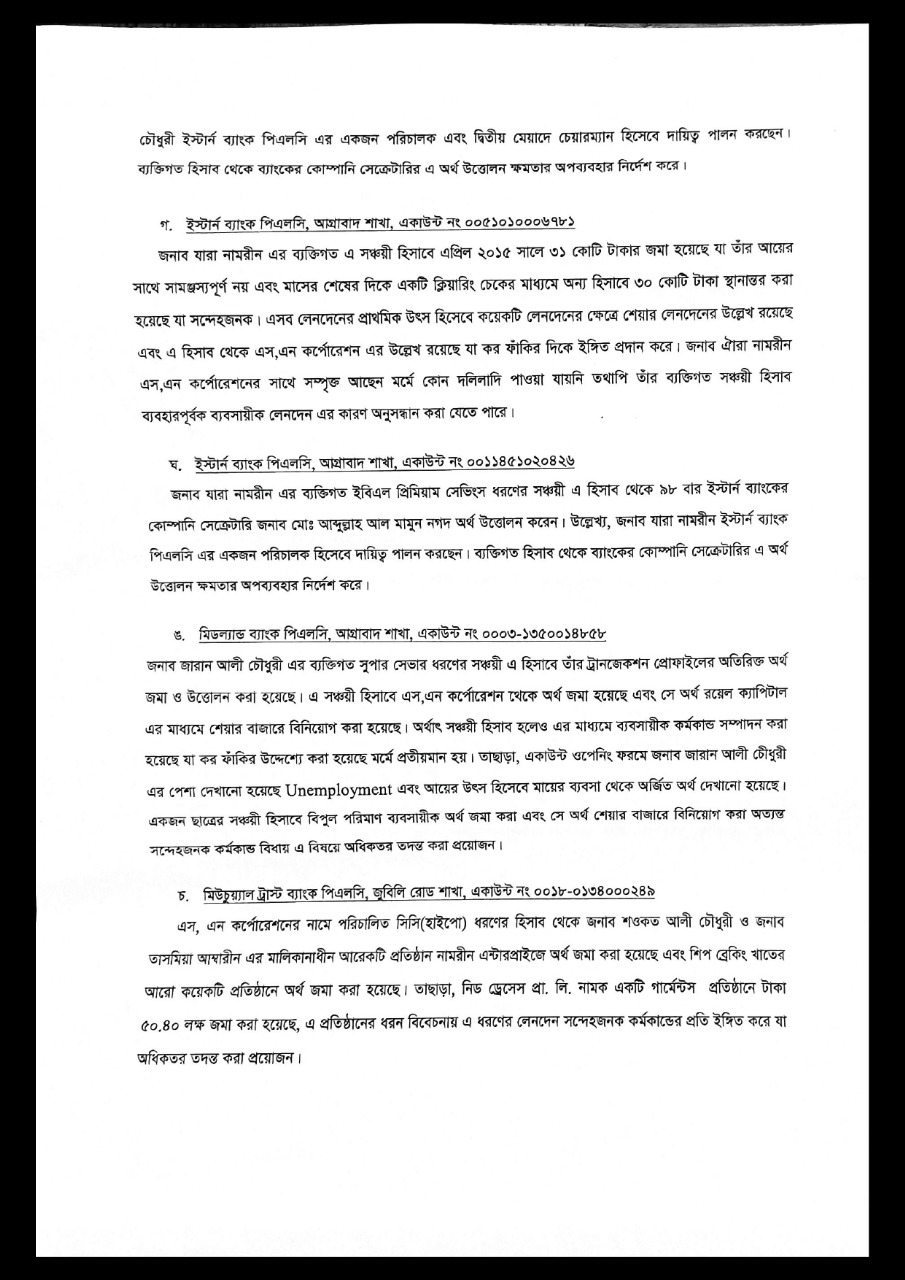
The deeper the investigators dug, the more the numbers seemed to defy logic. A Platinum account Chowdhury maintained at Dhaka Bank PLC’s Jubilee Road branch between 2004 and 2017 saw deposits and withdrawals totaling Tk 398 crore–nearly identical amounts moving in and out, year after year.
Though listed as a personal account, records show it was routinely used to channel business funds for S. N. Corporation, a pattern regulators interpret as deliberate obfuscation for tax purposes.
BFIU analysts also flagged activity within Eastern Bank itself, the very institution Chowdhury leads.
His
personal Premium Savings account at the bank’s Agrabad branch showed 125 cash
withdrawals made not by him, but by the bank’s own company secretary, Abdullah
Al Mamun.
For a sitting chairman serving his second consecutive term on the board, investigators say, the withdrawals raise “serious governance concerns” and potential abuse of position.
The financial network extends to Chowdhury’s family as well. His daughter, Zara Namreen, maintains a personal savings account at the same branch where Tk 31 crore has been deposited since 2015–an amount far exceeding her declared income.
The deposits, labeled under “share transactions” and “S. N. Corporation,” suggest that family accounts may have been used as conduits for moving or reclassifying corporate funds.
Together, the findings paint a picture of intertwined personal and corporate finances–money moving through banks where Chowdhury held influence, loans approved outsidenormal channels, and offshore dealings concealed behind the paperwork of legitimate trade.
Dubious trails of transactions
At Eastern Bank’s Agrabad branch, the bank’s company secretary, Abdullah Al Mamun, made 98 separate cash withdrawals from the Premium Savings account of Chowdhury’s daughter, Zara Namreen.
Regulators view those transactions as a glaring breach of banking ethics and potential abuse of authority, particularly given that the account belonged to a private individual –and the withdrawals were executed by a bank official subordinate to her father.
Investigators also traced irregular money movements linked to Chowdhury’s son, Zaran Ali. His Super Saver account at Midland Bank’s Agrabad branch showed deposits originating from S. N. Corporation, followed by investments in the stock market.
On
paper, Zaran was a student whose declared income source was “his mother’s
business.” To investigators, that declaration appears implausible, raising
questions about whether family accounts were used to mask the movement of
company funds under personal names.
The probe found similar inconsistencies across Chowdhury’s network of business accounts.
At Mutual Trust Bank’s Jubilee Road branch, funds from S. N. Corporation’s Cash Credit (Hypo) account were transferred to Namreen Enterprise and other firms in the ship-breaking sector–a web of interconnected entities that investigators believe may have served to cycle money through different fronts.
One such transfer, a Tk 50.4 lakh deposit into the account of Need Dresses Private Limite–a retail clothing company with no link to ship imports–intensified suspicions of fund diversion.
The BFIU also confirmed that Chowdhury’s personal account at City Bank’s Agrabad branch received Tk 3 crore, which was invested in Midway Securities, and another Tk 106 crore that was later funneled back to S. N. Corporation.
The pattern of transactions, according to financial analysts briefed on the case, reflects “the use of personal accounts as business conduits”--a structure often designed to disguise income and evade taxes.
In another violation of banking protocol, Premier Bank’s Agrabad branch extended a Tk 26.9 crore Loan Against Trust Receipt (LTR) to S. N. Corporation without prior approval from its head office.
The loan was later retroactively approved–a maneuver investigators say shows how standard oversight was bypassed to accommodate a powerful client.
–-