

Dual citizenship holder’s appointment to metro rail top post violates Bangladeshi law

Zulkarnain Saer
Publish: 16 Nov 2025, 07:25 PM
-6919d0d685d35.jpeg)
When Bangladesh's interim government appointed Faruque Ahmed as Managing Director of the Dhaka Mass Transit Company Limited (DMTCL), the announcement attracted little public attention.
A routine ministry circular, written in the dry language of bureaucratic procedure, introduced him as the new head of the state-owned company charged with building and operating the capital’s lone metro rail system.
Nothing in the official paperwork hinted at controversy. Yet, a deeper examination of the laws governing such appointments reveals a troubling pattern of violations that legal experts say may constitute not just procedural lapses, but potential acts of corruption.
DMTCL, the company Ahmed was selected to lead, occupies a peculiar but powerful position in Bangladesh’s administrative structure. Although it was incorporated under the Companies Act in 2013, its corporate status is largely nominal.
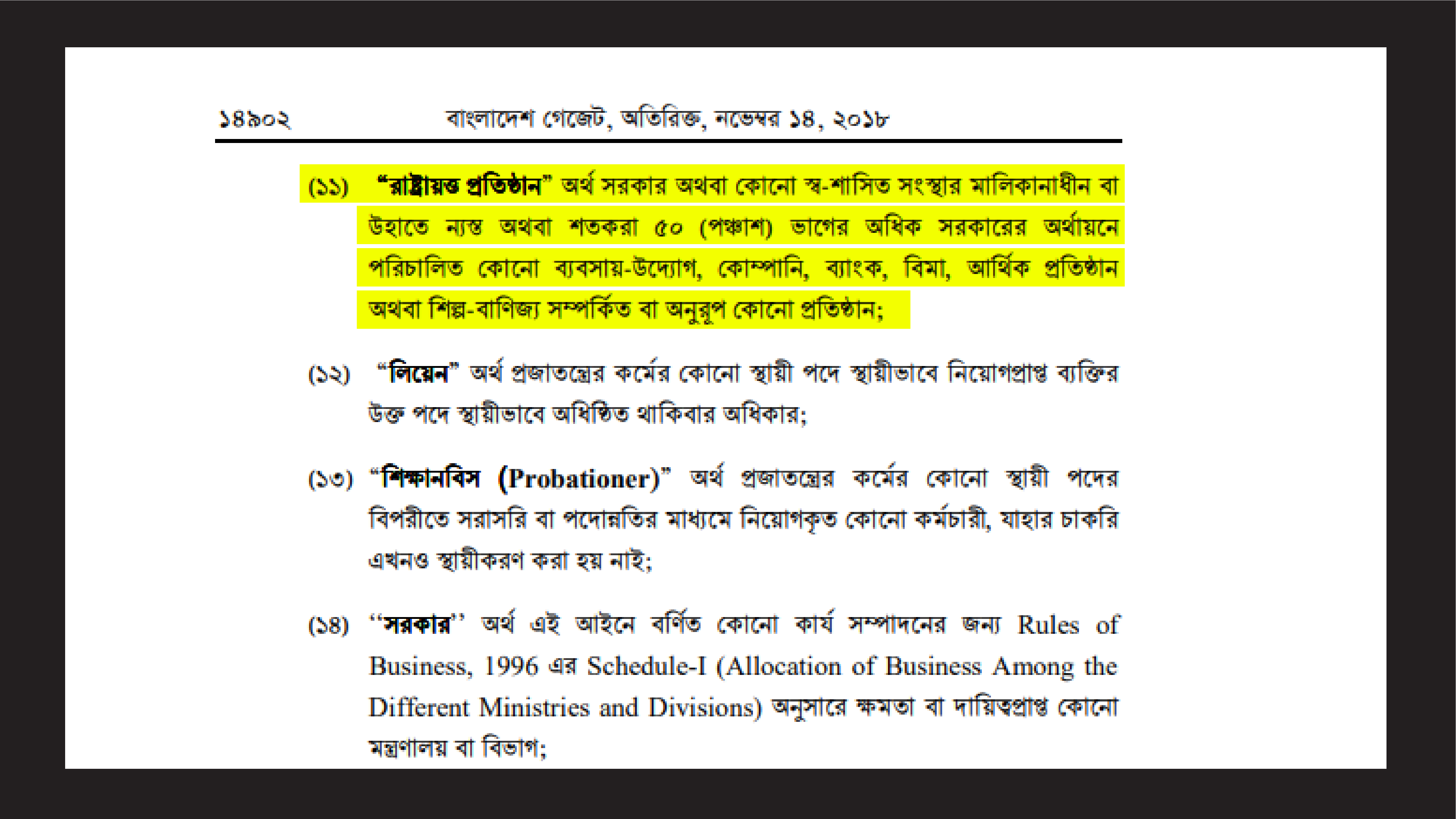
The
company is fully owned by the government, its funding comes directly from the
national exchequer, and its board members are appointed by the Road Transport
and Bridges Ministry. Its mandate—planning and operating multi-billion-dollar
metro rail systems—amounts to the exercise of sovereign authority. For all
practical purposes, it functions as an arm of the state.
Because of this, Bangladeshi law is unequivocal about how to classify the company’s top executive. Under Section 21 of the Penal Code, every officer of a government company is considered a public servant.
The Prevention of Corruption Act echoes this definition, and the Anti-Corruption Commission (ACC) routinely applies this interpretation to executives of state-owned enterprises. In public statements and official circulars, the ACC has made it clear that employees and heads of bodies such as Biman, Petrobangla, WASA, DESCO, DPDC, BRTA, and the Bangladesh Bank fall under its jurisdiction. DMTCL fits neatly within that framework.
A set of documents obtained by Bangla Outlook, detailing the ACC’s position, shows the agency regards the Managing Director of DMTCL as a public servant. This subjects the position holder to investigation and binds them to the same standards of integrity and eligibility that govern government service.
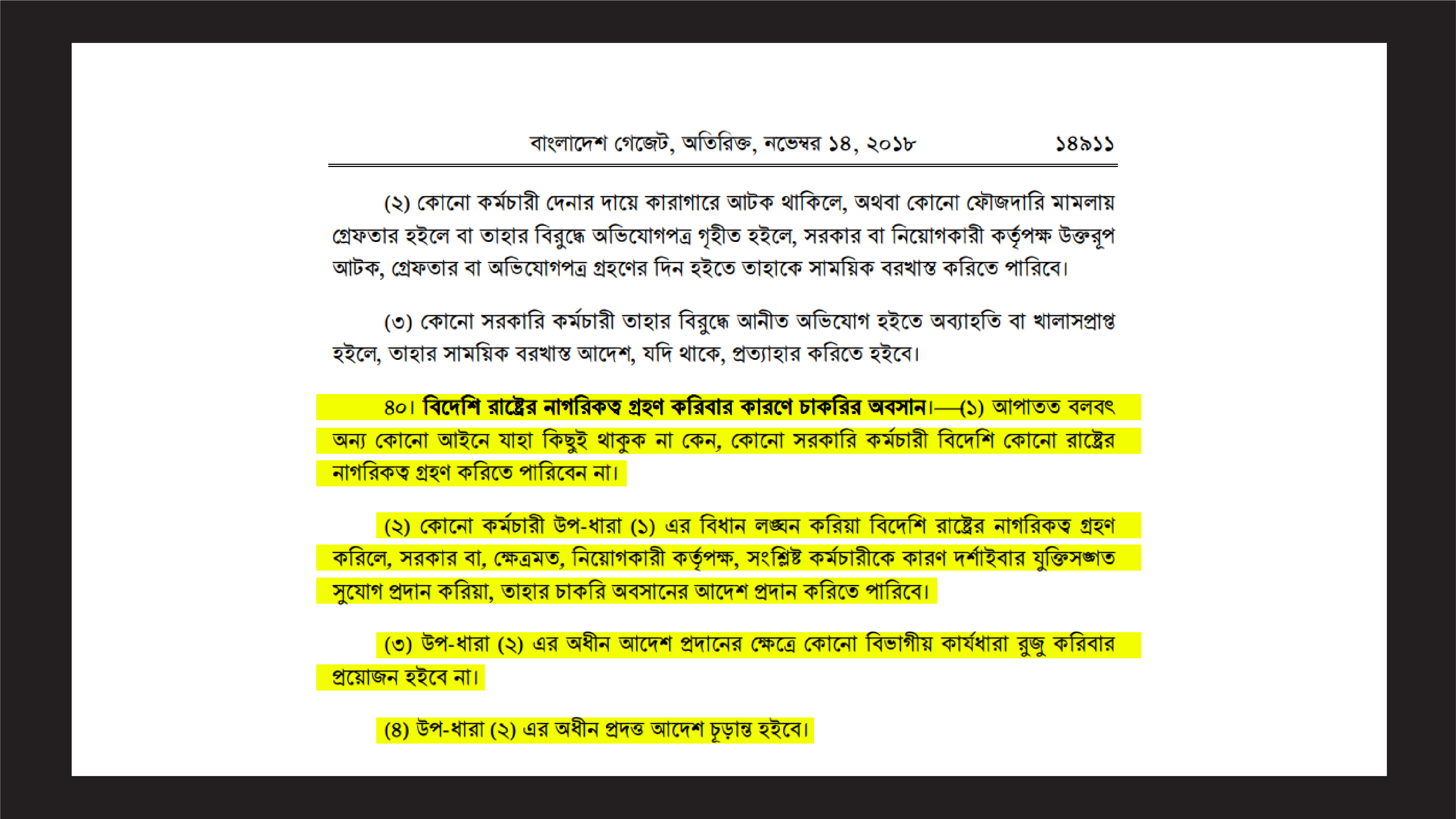
From
this legal premise, a critical issue emerges: Faruque Ahmed is a dual citizen
of Bangladesh and Australia. Section 40 of the Public Service Act of 2018
leaves no room for interpretation on this point. It states that no government
employee may remain a citizen of another country while in government service.
There are no carve-outs for state-owned enterprises, no exemptions for contractual appointments, and no mechanisms by which the government can waive this requirement. The restriction is absolute.
This prohibition becomes even more consequential when read alongside a key sentence in Ahmed’s appointment letter, which states that his “contractual appointment will be governed by Government Service Rules as well as the rules and provisions of DMTCL.”
By declaring that his employment falls under government service rules, the appointment triggers the dual-citizenship prohibition with full force. Legal scholars consulted for this report emphasized that once a post is tied to these rules, the holder must satisfy the citizenship requirements of the Public Service Act—a condition Ahmed, as a dual citizen, could not meet.

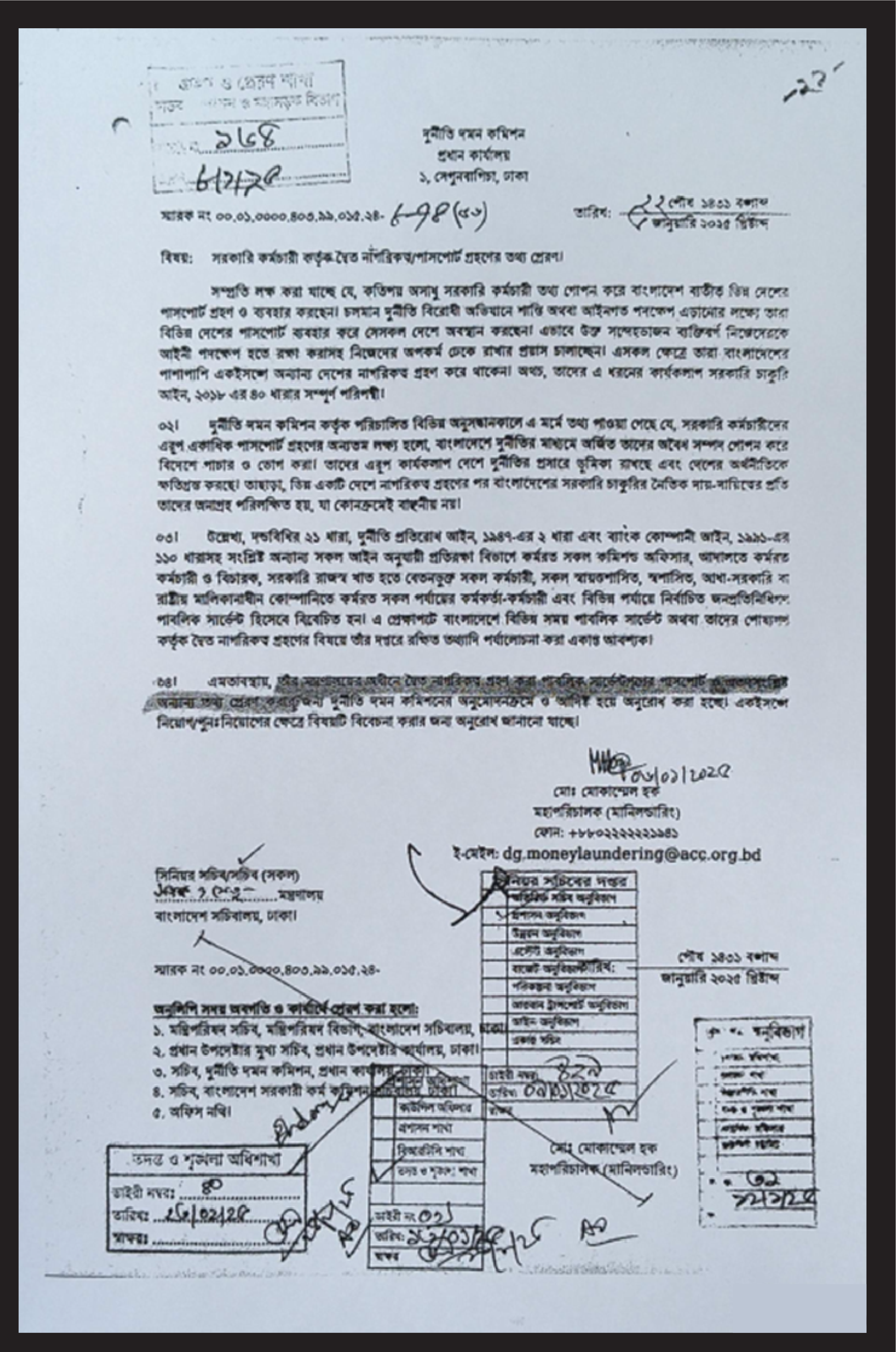
The
Anti-Corruption Commission itself has, in recent months, requested records from
multiple agencies to identify government employees who hold dual citizenship.
The agency’s own notices, referenced in the documents obtained by Bangla Outlook,
show that it views dual citizenship among public servants as a statutory
violation that may warrant dismissal or prosecution.
Two former senior officials of the Ministry of Public Administration told Bangla Outlook that vetting for such positions typically identifies dual citizenship automatically. “If a foreign passport holder gets through, it means the vetting process was bypassed or overridden,” one of them said.
High Court rulings have also repeatedly affirmed that officers of state-owned enterprises are public servants for constitutional and legal purposes. The ACC Act grants the anti-corruption body authority to investigate them, the Public Service Act bars dual citizens from holding such roles, and government service rules require that every appointment adhere to statutory eligibility criteria.
In Ahmed’s case, every one of those layers appears to have been ignored.
Experts say the act of
appointing an ineligible individual to a senior public position can itself
constitute corruption. Abuse of discretion by appointing someone who cannot legally
hold the role meets the definition of corruption under Bangladeshi
anti-corruption laws.
The violation also exposes the agency and the public to significant risks inherent in having a dual citizen manage major public contracts, including procurement decisions, negotiations with foreign entities, and the handling of sensitive financial data. In a sector like mass transit construction, where foreign governments and multinational companies are involved, such conflicts of interest can be profound, opined a former bureaucrat who preferred to remain anonymous.
The opacity of the appointment process raises further concern. There is no publicly available document explaining how Ahmed was vetted, whether the ministry considered Section 40, or whether anyone in the government raised objections.
This absence of documentation suggests, at best, negligence and, at worst, a deliberate effort to ignore clear legal barriers. A senior former secretary told Bangla Outlook bluntly: “This is not a grey area. It is black and white. A dual citizen cannot hold this position.”
—