

Azaz snubbed homegrown traffic plan, opted for high-cost Chinese project

Zulkarnain Saer
Publish: 10 Feb 2026, 02:33 AM
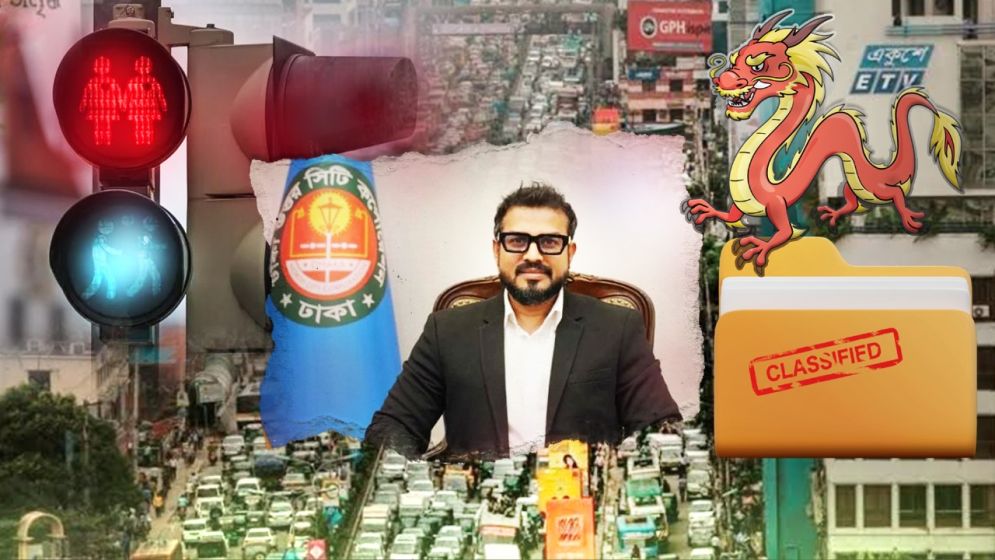
In the last week of September last year, a peculiar meeting took place in the conference room of the Dhaka North City Corporation (DNCC) building in Gulshan.
The meeting was chaired by DNCC Administrator Mohammad Azaz, who was relieved of his post earlier this week and is currently under investigation by the Anti-Corruption Commission (ACC). The meeting included a group of Bangladeshi engineers, some of whom are based in the United Kingdom (UK).
They were there to assess and supposedly ‘finalize’ their proposal for an innovative traffic management system–a project that promised to be a major benefit for the world's most traffic-congested capital.
As the engineers presented their meticulously prepared data and tables on the white screen, explaining what these metrics meant for Dhaka's traffic flow, Administrator Azaz, who seemed impatient from the start, quickly lost interest.
In a move that demonstrated a lack of focus on the city's urgent problems, Azaz abruptly began discussing a trivial matter on how DNCC officials had [recently] organized the rescue of a stranded cat from the Gulshan area with the other officials present.
One of the engineers who attended the meeting told Bangla Outlook, "It felt as though our presentation didn’t matter at all. He (Azaz) was busy with trivials and gave us the distinct vibe that our presentation was utterly irrelevant."
The reason for Azaz's evident indifference was later revealed. The DNCC, under his direction, had already decided in principle to award the critical traffic management project to a Chinese company.
While the Chinese company has experience implementing such projects in several Chinese cities, and the Bangladeshi engineers' company is admittedly new and lacks this international portfolio, this was not the primary reason for the decision.
The core issue lies in the massive financial disparity. The Chinese company offered a project cost of approximately 3,000 crore Taka, whereas the Bangladeshi engineers proposed to deliver a superior system–with broader parameter coverage tailored for Dhaka–for just 400 crore Taka, representing a cost difference of 2,600 crore Taka.
“Of course, our project gave the DNCC officials no room for financial maneuvering, rather provide a low-cost real time solution,” said one of the Bangladeshi engineers, “But what they essentially wanted is commission from the project which our proposal had no room for.”
Bangla Outlook discovered by talking with several sources that two weeks before that meeting, DNCC had already signed a memorandum with the dockyard partner of the Chinese consortium.
But by then, the Bangladeshi engineers team had installed a signal monitoring system in Gulshan-1 signal at its own expense, spending nearly four lakh taka per month to keep it functional. “We just wanted to prove that it worked,” one engineer said. “But apparently, that wasn’t the point.”
An officer from the DMP’s traffic division confirmed that police were “satisfied” with the system’s performance. “It’s stable and records everything,” he said. “We wish it could continue.”
No real solution
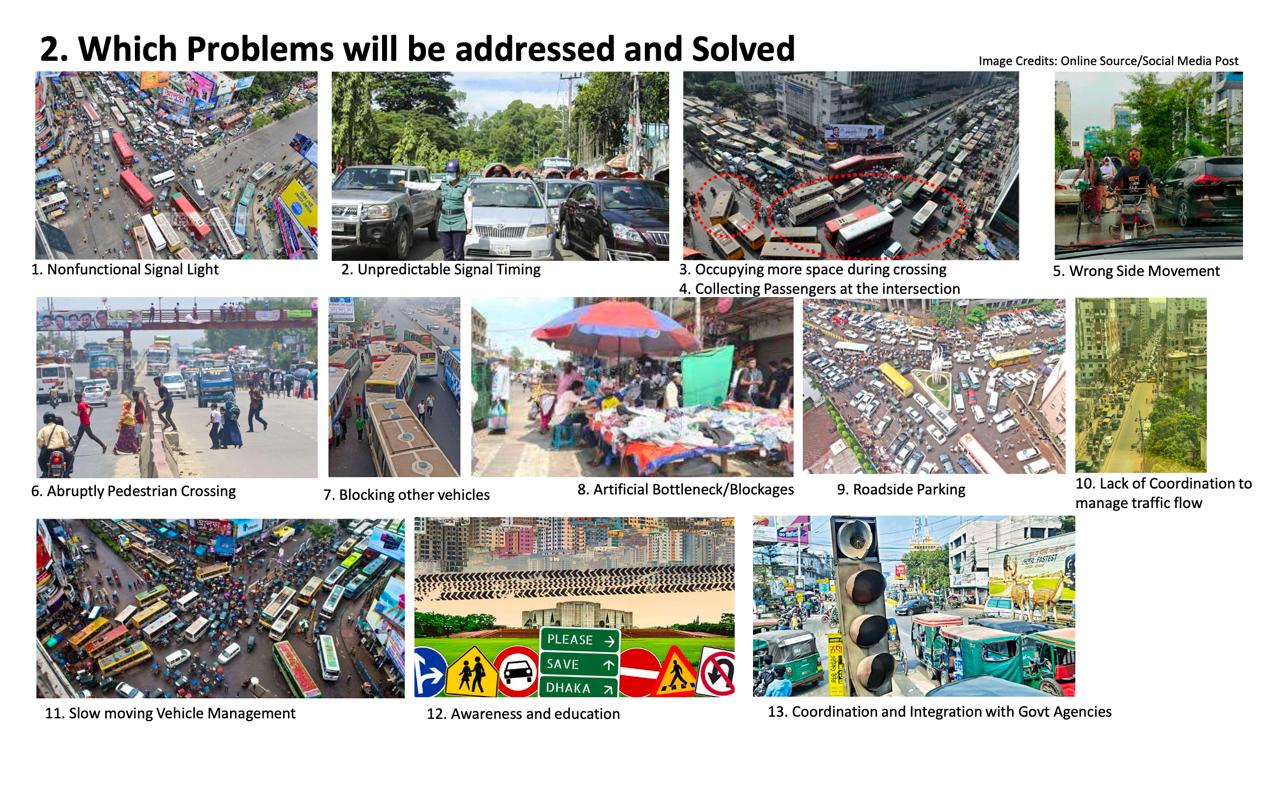
For decades, Dhaka’s perennial traffic gridlock has stood as the country's most visible emblem of systemic dysfunction.
With the city's intersections managing an unparalleled diversity of over 25 categories of vehicles–ranging from full-sized buses and traditional rickshaws to informal minibuses, motorcycles, and pushcarts–the congestion has become an operational nightmare.
Despite this acute problem, billions of takas have been spent on numerous imported technological solutions, including automated signals funded by Japan’s JICA, digital monitoring systems financed by the World Bank, and elaborate advisory frameworks from the ADB.
Virtually all these costly foreign ventures failed, with many becoming inoperable within months of deployment.
The regulatory environment was supposed to be streamlined by the Dhaka Transport Coordination Authority (DTCA), a body mandated to align all key actors: the two city corporations, the traffic police, and the BRTA.
Instead, the DTCA effectively became, as one former official sharply noted, "a coordination office without coordination."
By 2022, the last surviving automated traffic signals from these earlier, abandoned experiments blinked only sporadically over intersections, leaving police officers to return to the decades-old practice of manual signaling, waving their arms amid the choking fumes and mounting public frustration.
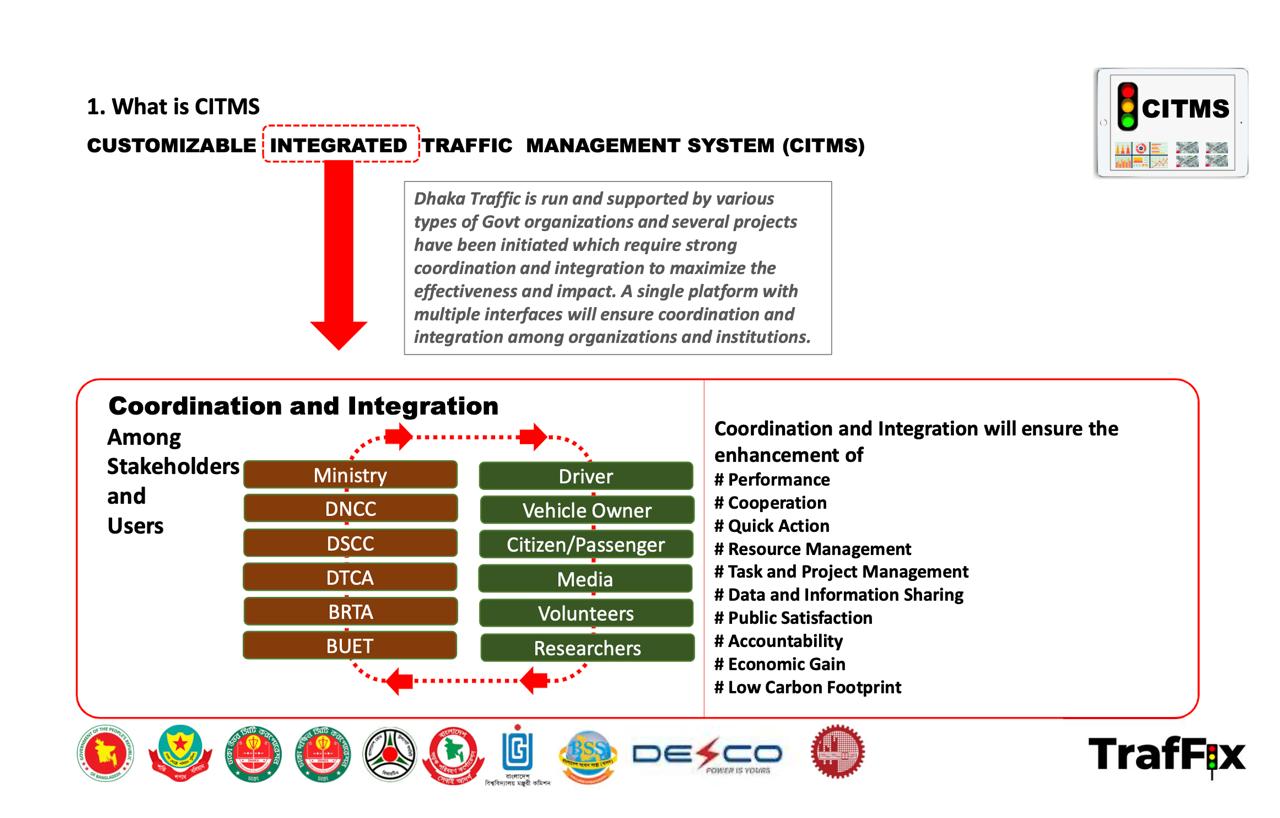
It was against this backdrop of repeated institutional failure that a small, dedicated team of engineers, most of whom have graduated from BUET and have settled in UK and Australia, quietly installed a prototype system at Gulshan-1 in early 2023.
The technology, which they dubbed the Customizable Integrated Traffic Management System (CITMS), was engineered specifically for Dhaka’s unique chaos.
It leveraged a local network of cameras, artificial intelligence, and internet-linked signal controllers designed to adapt to real-time traffic flow–and, crucially, to the unpredictable, necessary intervention of police officers.
"Our system learned the rhythm of the city," explained one developer. "We built it to recognize and manage 25 kinds of users—including cars, rickshaws, pedestrians, and even street vendors."
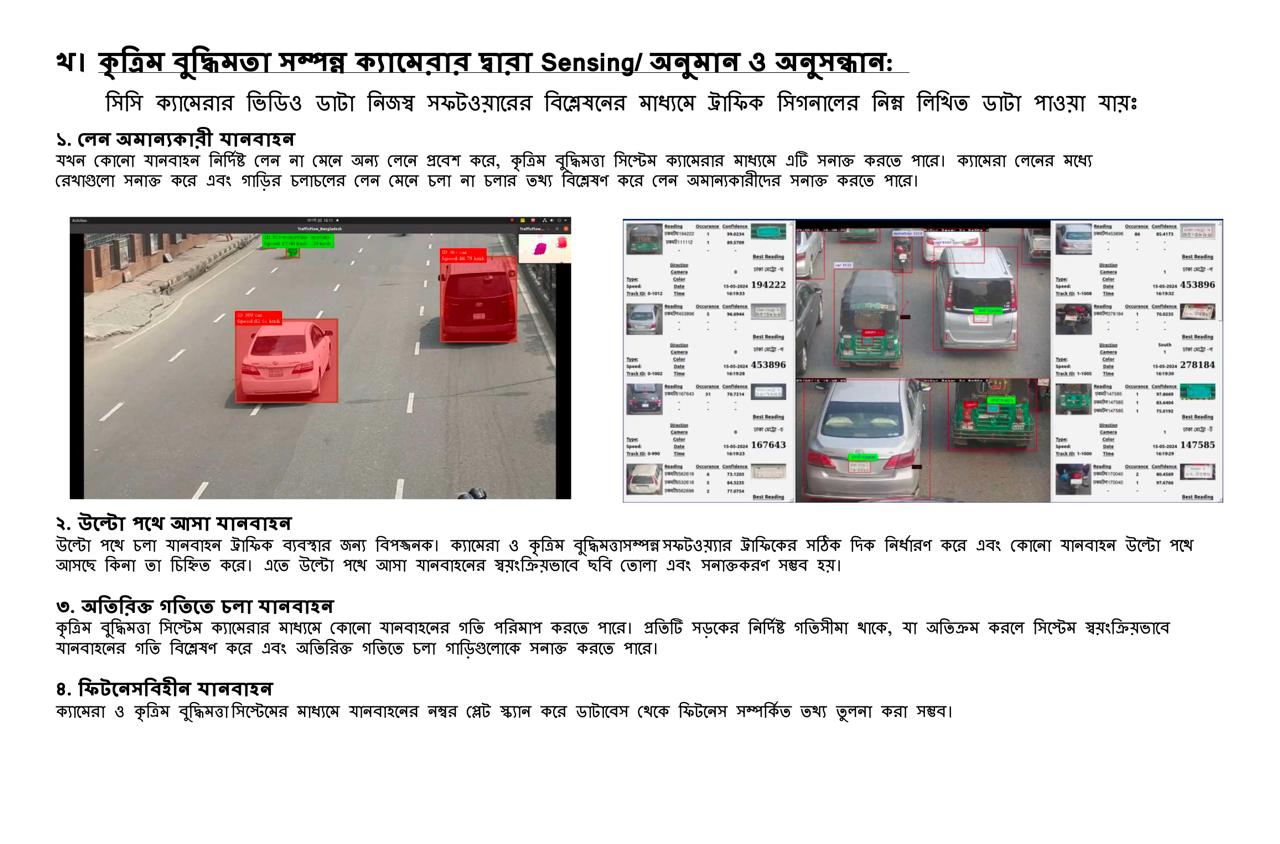
Their successful pilot project at Gulshan-1 demonstrated its effectiveness, slashing the average vehicle waiting time from 15 minutes to under 5 minutes. Furthermore, it offered instant violation detection and automatically generated reports complete with video evidence.
The engineers estimated that scaling the CITMS to cover all parts under DNCC jurisdiction would cost no more than 400 crore taka.
However, at the same time the local solution was proving its worth on the ground, that Chinese firm proposed a sweeping, full-city solution priced at 3,300 crore taka–a cost more than eight times higher than the locally developed system, and one that inherently offered far less flexibility for Dhaka’s anarchic road culture.
The locally built and tested system, with verifiable data demonstrating its performance, meanwhile was ready for immediate, cost-effective deployment.
A familiar pattern
Interviews with the involved engineers, police officers, and city officials reveal a pattern tragically familiar in Bangladesh’s governance: local innovation gaining critical traction only to mysteriously stall once larger foreign interests appear.
The team behind the CITMS had dedicated years to presenting their system to various ministries, city corporations, and the Dhaka Metropolitan Police.
Even the then Prime Minister’s Office had formally reviewed their comprehensive concept note in 2021. Yet, bureaucratic inertia consistently kept this solution in limbo—until late 2022.
The deadlock finally broke when the newly appointed police commissioner Habibur Rahman saw the CITMS demo and, recognizing its potential, reportedly urged his staff, "Let them show it at two intersections. If it works, we’ll expand.”
It did work. By mid-2023, data collected from the Gulshan-1 pilot showed a measurable decrease in overall congestion and a dramatic 40 percent drop in red-light violations.
Encouraged by the verified results, the commissioner quickly pushed for expansion, prompting the engineers to propose integrating the system across the critical corridor spanning from Gulshan-2 to Tejgaon Love Road—a route involving seven signals.
This is precisely when the developers ran directly into the DNCC.
According to meeting minutes and multiple engineer interviews, the Administrator reportedly told the team that DNCC would consider formally awarding them the coveted corridor only if they could first install the entire system at their own expense and successfully demonstrate performance within a single month.
Despite the high risk of this unwritten agreement, the engineers accepted the terms. By early June, the installation was fully complete and operational–still operating without a formal, written contract.
“They posted about it on their official Facebook page,” one team member recounted, confirming the sheer lack of legal documentation. “That’s all the documentation we got.”
The engineers immediately began waiting for a formal contractual handover. Instead, they began hearing deeply concerning news from their contacts inside the city corporation: discussions were actively underway with a completely different bidder–the high-cost Chinese consortium–which was working through a state-owned dockyard partner.
Insiders allege that this process would be cleverly executed as a Direct Tender Method for a limited number of intersections, strategically giving the Chinese side a critical head start before any eventual open tender process.
By September, the inevitable conclusion was apparent. During a meeting, the Administrator Azaz reportedly told the CITMS team, "The trial you did is impressive. But for the larger system, we’ll need an international partner.”
Despite the clear success and verified data, no written evaluation of the domestic pilot’s performance was ever officially released.
Procurement, politics, and percentages
According to officials and engineers familiar with the procurement process–most of whom requested anonymity for fear of professional reprisal–suggested that the decision to lean toward the Chinese system was not purely technical.
According to two separate individuals directly involved in early procurement discussions, the Chinese proposal offered what they explicitly described as “incentives” for certain senior officials within the Dhaka North City Corporation (DNCC).
While the term “commission” was reportedly never used in official documents, internal communications reviewed by Bangla Outlook show repeated references to “project facilitation margins”--a euphemism commonly employed in public works procurement to disguise illicit payments.
An employee of the Ministry of Local Government and Rural Development (LGRD) who reviewed the case, and also requested anonymity, explained that such opaque margins frequently determine which proposal is allowed to advance.
“When the cost difference is this extreme [8x higher], there has to be a non-technical motivation.”
DNCC Administrator Azaz, who had earlier been approached by Bangla Outlook for comment on the allegations, declined to respond. This week, the interim government removed him from his post after choosing not to renew his contract.
The Anti-Corruption Commission has also imposed a travel ban on Azaz while it investigates a graft case against him.
This however is not the first instance where Dhaka has elected to ignore a functional domestic technology in favor of an expensive, failing foreign one.
A precedent for systemic waste was set in 2017 when a Japan International Cooperation Agency (JICA) project, valued at 54 crore Taka, entirely collapsed before it could even launch after its central server—which had been stored in an unsecured office—was mysteriously stolen.
The entire sophisticated system never became operational. Similarly, in 2020, a pilot run by BUET professors cost a staggering 18 crore Taka for 22 intersections, but the resulting system required a dedicated human operator at every single signal.
It consistently failed to synchronize lights and was widely ridiculed within the transportation community, yet its designers were still paid 7 crore Taka in consultancy fees. “It’s not about solving traffic,” stated Professor Dr. Shamsul Haque of BUET, a leading transportation expert.
“It’s about keeping the project money flowing. Each failure creates room for another round of contracts.” The Chinese system currently favored by the DNCC, according to internal technical evaluators, utilizes static timing and offers only limited AI adaptation.
Crucially, it cannot respond to the sudden lane changes or manual police overrides that are an everyday occurrence in Dhaka’s unique traffic environment. More worryingly, the system's data servers would be hosted overseas.
“That means our entire database of vehicle and facial data could be stored in foreign servers,” warned a local cybersecurity specialist. “From a national security point of view, it’s reckless.” The local CITMS, by sharp contrast, relies on local cloud servers and open-source integration.
“We can fix or customize it anytime without paying licensing fees abroad,” one of the system’s engineers asserted. “But local solutions rarely get local protection.”
Dhaka’s residents may never know why a proven, affordable solution was abandoned. But they feel the consequences daily.
On a recent afternoon near Gulshan-2, drivers sat sweating as lights changed with no apparent logic. An officer blew his whistle helplessly. “We heard there was a new system,” he said, glancing toward the inoperative cameras. “Maybe it went to another area.”
—