

Electricity and fuel prices being increased to protect unscrupulous traders

Publish: 03 May 2024, 11:49 AM
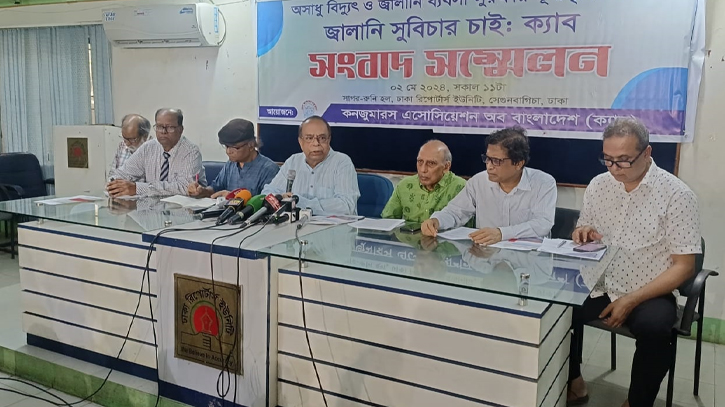
At a press conference held at the Dhaka Reporters Unity's Sagar-Runi Auditorium, the Consumer Association of Bangladesh (CAB) claimed that the government is raising electricity and fuel prices to protect unscrupulous business interests. This national organization, which works to protect consumer rights, argued that instead of raising prices under the pretext of reducing subsidies as per the conditions of the International Monetary Fund (IMF), attention should be directed towards addressing deficits through curbing irregularities and corruption.
Dr. M Shamsul Alam, energy advisor to CAB, stated, "Under the Rapid Supply of Electricity and Energy Act of 2010, the sector continues to develop with uncompetitive private investments. Investors are arbitrarily increasing the cost of electricity and energy supplies, seizing opportunities for exploitative profits, which in turn rapidly escalates the financial deficit, leading to simultaneous increases in both prices and subsidies. The deficit is not being effectively managed."
Dr. Alam expressed concern that the government is now desperately seeking a loan of 4.5 billion U.S. dollars from the IMF, where securing public interest and energy security appears to be of dwindling importance. As a result, consumers are in a state of extreme anxiety. In this situation, we urge the government to rein in the corrupt practices in the electricity and energy sectors, step back from price hikes, and assure the public.
Professor M M Akash, former professor of Economics at Dhaka University, mentioned, "Electricity and energy are strategic commodities, and their price increases cannot be accepted merely through notices but should be done through public hearings by the Bangladesh Energy Regulatory Commission (BERC). However, executive orders have undermined BERC’s authority, and now price increases are being enacted through these orders, stripping the public of their rights."
Samsul Huda, executive director of ALRD, commented, "There is no example of a country that has prospered by accepting IMF's conditions. The government needs to be cautious about not trapping the country in detrimental conditions imposed by the IMF, as these are not in the public interest."
Golam Rahman, president of CAB, criticized the IMF's directives, "The IMF suggests reducing subsidies through price increases, but this is neither logical nor just. Therefore, we will tell the IMF to identify and address the discrepancies instead of imposing conditions for price hikes."
At the conference, CAB presented a 13-point demand aimed at eliminating subsidies within three years without increasing electricity and energy prices. These demands include prohibiting investments without competition in the electricity, energy, and renewable energy sectors by law; repealing the Rapid Supply of Electricity and Energy Act of 2010; ensuring financial contributions to the gas development fund, power development fund, and energy security fund are considered as consumer equity investments; and that the government should maintain over 50% of electricity and gas production on a cost-plus basis without profit.
These comprehensive measures suggested by CAB aim to address various systemic issues within the energy sector, promoting transparency, regulatory improvements, and sustainable energy practices to ensure energy security and justice for the consumers.