

Unwavering Communist: Life and Legacy of Haider Akbar Khan Rono

Harun Ur Rashid
Publish: 11 May 2024, 08:37 PM
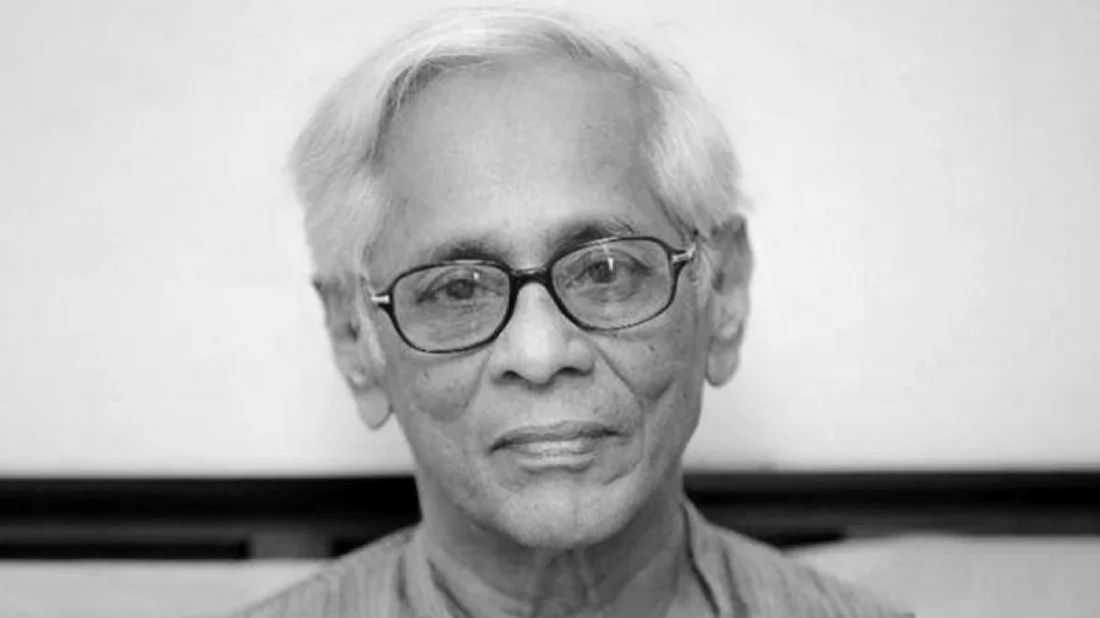
Haider Akbar Khan Rono, a towering figure in Bangladeshi leftist politics, passed away on May 11, 2024, at the age of 81. A theorist, writer, and advisor to the Communist Party of Bangladesh (CPB) central committee, he leaves behind a legacy of unwavering commitment to social justice and a prolific body of literary work.
Born in Kolkata in 1942, Rono's political consciousness blossomed during his student years at the Dhaka University. He became the general secretary of the East Pakistan Students Union, a platform that would propel him to the forefront of the 1971 Liberation War. Rono's leadership and organizational skills were instrumental in mobilizing student activism against the Pakistani regime.
In Independent Bangladesh, Rono's political trajectory saw him join the Workers Party of Bangladesh before finding an ideological home in the Communist Party of Bangladesh (CPB). There, he rose through the ranks for more than three decades, becoming a presidium member in 2012.
In the polarized world of the 60's to 90’s, CPB used to wield significant influence over the educated urban class but the party has seen a significant decline in influence over the years. In Rono’s own observations, two major factors contributed to this: internal divisions and the fall of the Soviet Union.
The first blow came in 1967 with the Sino-Soviet Split, a major disagreement between China and the Soviet Union that fractured communist parties worldwide. The CPB itself split between pro-China and pro-Moscow factions with Rono opting towards the former.
The reasons for the pro-China faction's further splintering within a few years are unclear but in a number of interviews Rono hinted that leadership rivalries have played a bigger role than ideological differences.
The second major blow came in 1991 with the collapse of the Soviet Union, the ideological and financial patron of many communist parties. Surprisingly, despite having received training and education in Marxism from the USSR, a large portion of the CPB's central committee, including the president and general secretary, advocated for the party's dissolution.
Rono believed that such a decision stood in stark contrast to the Communist Party of India, which remained strong despite the Soviet collapse and vehemently opposed the views of the CPB’s central committee.
In his write-ups, Rono mentioned that the global communist and socialist movements undeniably faces challenges as party membership dwindles, and socialist governments seem less frequent. Yet, this might be a period of hibernation, not extinction, he believed and pointed out quoting Schumpeter, a prominent Austrian economist, who said capitalism's very success could pave the way for its eventual downfall and a socialist resurgence.
Rono's dedication to communist ideals came at a cost. He faced imprisonment four times and went into hiding on seven occasions due to his political activities. This unwavering spirit, however, fueled his prolific writing career. He authored over 25 books and numerous booklets, tackling themes of social struggle, political ideology, and historical analysis. His work garnered critical acclaim, with Rono receiving the prestigious Bangla Academy Literary Award in 2021.
His communist ideology naturally placed him at odds with the dominant capitalist world order and his advocacy for alternative economic models and critique of institutions like the IMF would be seen as controversial by those invested in the current system.
Besides, the splintering within the Bangladeshi communist movement could lead to some questioning Rono's approach or the faction he aligned with. However, the focus would likely be on the broader factionalism, not solely on Rono.
Rono's voice remained a constant critique of the status quo. His life embodied the unwavering pursuit of social change. He was a scholar, a revolutionary, and a leader who inspired generations of Bangladeshi leftists. His legacy will continue to influence political discourse and inspire those who fight for a more just and equitable society.