

Speed governor seals: A solution to check high speed on highways gather dust at BRTA

Nazmul Islam
Publish: 18 May 2024, 08:59 PM
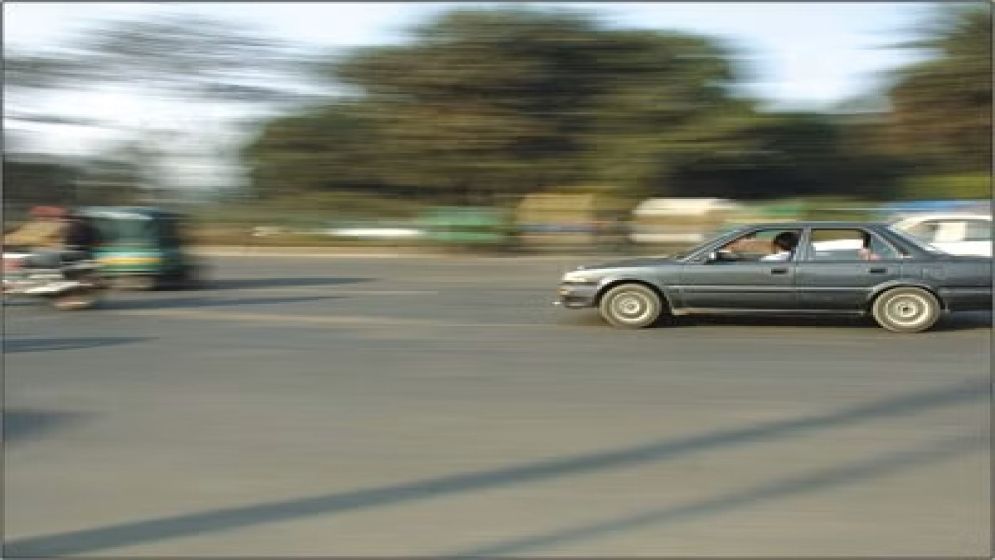
Over half (53%) of road accidents in Bangladesh are attributed to excessive and uncontrolled vehicle speeds but despite this alarming statistic, there has been a lack of effective action to curb speeding on the country's roads.
In October 2015, a glimmer of hope emerged. Following a National Road Safety Council meeting, the government announced a nationwide highway speed limit of 80 kilometers per hour to combat the prevalent issue of road accidents.
The Road Transport and Bridges Minister, Obaidul Quader, further promised the installation of "speed governor seals" - devices to monitor vehicle speed - specifically in highway buses.
However, nearly nine years later, these initiatives remain unrealized and there has been a disappointing absence of concrete steps to implement these crucial road safety measures.
The issue of curbing speeding through speed governor seals technology however isn’t a nine year old issue rather a decade and a half long.
A High Court suo moto ruling way back in March 2008 directed the mandatory installation of speed governor seals in all vehicles by March 2009. This aimed to tackle the growing number of traffic accidents caused by speeding.
The Bangladesh Road Transport Authority (BRTA) formed a committee to implement this directive. However, a significant hurdle emerged – the technology for speed governor seals was only readily available for diesel-run vehicles.
Recognizing this limitation, the BRTA informed the Ministry of Communication that the March 10, 2009 deadline for installing speed governor seals in all vehicles wouldn't be achievable. They requested the development of a separate mechanism for vehicles using gas, octane, and petrol engines.
The multifaceted problems
Talking with Bangla Outlook, Nurul Islam, a former BRTA director of Engineering who was in charge of the issue said that the transport regulator has conducted a number of meetings with the ministry and experts from Accident Research Institute of Bangladesh University of Engineering Technology (BUET).
“We had multiple meetings but nothing concrete was decided,” Islam said adding that the complexity of installing speed governor seals in the Bangladeshi context was manifold.
There are two main approaches to speed governor seals, each with its advantages and limitations.
The first option is a more budget-friendly choice, costing around 20,000 taka. However, this design has a significant drawback: it only functions with diesel engines.
It works by regulating the flow of diesel fuel to the engine using a solenoid (a coil that acts like a magnet when electricity flows through it). By controlling the fuel intake, the speed of the vehicle is limited.
The second option offers broader applicability but comes at a steeper price tag of 1.5 lakh taka.
This design boasts compatibility with various fuel types, including diesel, petrol, CNG, LPG, and others. It achieves speed control by attaching a limiting device alongside the vehicle's accelerator pedal.
Once the set speed is reached, the device disconnects the pedal, preventing further acceleration even if the driver keeps pressing it. The vehicle maintains the set speed until it falls below a lower limit, at which point the pedal re-engages. This design ensures a consistent maximum speed.
According to Islam, in discussions with experts from BUET and the Ministry, several concerns emerged regarding the expensive speed governor seals.
Firstly, the high cost (1.5 lakh taka) raised questions about its cost-effectiveness. Many vehicle owners would likely be hesitant to bear this expense.
Secondly, the issue of adaptability arose. With the construction of new highways, speed limits might be revised upwards in the future. If a specific speed limit is encoded in the expensive seal installed on a vehicle, changing it would require a complete replacement of the seal.
This inflexibility was a major point of contention for representatives from the transport owners association, who strongly opposed the proposal.
Alternative solutions?
Nur Mohammad Majumder, Chairman of the BRTA spoke to Bangla Outlook about the difficulties surrounding the implementation of speed governor seals. He acknowledged several reasons why this solution hasn't been adopted.
Technical challenges were mentioned, but the primary obstacle appears to be resistance from the transport owners association. They expressed opposition to installing the seals in their vehicles.
Majumder however said that the BRTA has pursued alternative methods for speed control. He highlighted the use of speed guns by highway police as a current measure.
Shahabuddin Khan, head of Highway Police, acknowledges their reliance on speed guns to manage vehicle speeds on highways.
While they have a workforce of approximately 2,900 officers, the number of available speed guns remains insufficient. Despite this limitation, they strive to enforce speed limits effectively.
Khan mentioned that the Highway Police issues an average of 180-200 speeding tickets daily. “Strategic patrols are deployed on highways, and vehicles are randomly checked using speed guns. Drivers exceeding the speed limit face legal consequences,” he told Bangla Outlook.
Professor Dr. Moazzem Hossain, former Director of the ARI at BUET, shared some concerning research findings with Bangla Outlook.
Their studies revealed that speeding is a major factor in highway accidents, contributing to a staggering 53%. Rough and impatient driving habits were identified as another significant cause, responsible for roughly 37% of accidents.
"In essence," Dr. Hossain said, "over-speeding and reckless driving are culprits in nearly 80% of all road accidents across the country."
While acknowledging the higher cost of speed governor seals, Dr. Hossain, emphasized that they had long been recommending their installation.
“The cost of any accident is way more than this technology,” he said.