

Beyond efficiency: How green buildings can maximize output of the RMG sector

Nazmul Islam
Publish: 20 May 2024, 01:31 AM
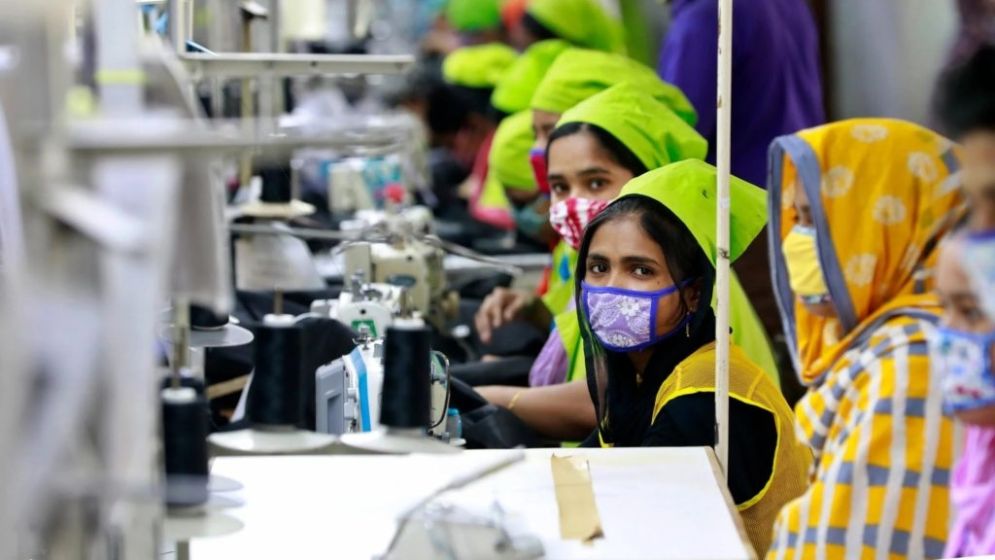
Bangladesh's booming garment industry, a major source of national income, faces a hidden enemy: inefficient buildings.
A recent study by BUET and GIZ found that a staggering 70% of garment factories are poorly constructed, leading to a 30% waste in electricity consumption.
Imagine factories battling the heat, not just from production processes, but from poorly insulated metal roofs that radiate heat.
These same buildings often lack natural light due to inadequate design, forcing factories to rely heavily on energy-guzzling artificial lights, further compounding the cooling problem.
The situation gets worse: humidity levels in many factories exceed a whopping 85%, far surpassing the global standard of 60%.
But there's a silver lining. The study proposes a solution: green retrofitting. This process involves modifying existing buildings to improve their energy efficiency.
The benefits are two-fold: reduced energy consumption, translating to lower costs and higher productivity for the garment industry, and a significant reduction in the environmental impact of these factories.
Problems of inefficient buildings
The problems with inefficient buildings don't stop at wasted energy.
The BUET-GIZ study revealed a concerning trend: most garment factories are built without considering worker comfort. In these poorly designed spaces, inappropriate room sizes lead to excessive heat buildup, creating a stressful environment.
The report highlights that noise, ventilation, and other comfort factors are often neglected during construction. This neglect has a direct consequence – it hampers worker efficiency.
The study's findings are alarming. Nearly half (46%) of garment workers reported suffering from chronic headaches, while a quarter (27%) experience severe eye strain.
The culprit? A lack of natural light.
The research emphasizes the importance of natural light for worker well-being. Factories with sufficient natural light not only saw a decrease in headaches and eye strain, but also reported a boost in worker productivity and a reduction in garment defects.
Sajal Chowdhury, a research architect from the BUET-GIZ project, exposes a crucial gap in Bangladesh's garment industry: a lack of building performance modeling (BPM).
This essential practice, mandatory in many countries, is surprisingly considered optional in Bangladesh, he said.
Chowdhury explains, "BPM is like a blueprint for a building's efficiency. It allows architects to factor in elements like natural light and wind during the design phase. This not only optimizes energy use but also creates a more comfortable work environment for factory workers."
The study's findings echo his claim. "Our research demonstrates that with proper design, factories can achieve significantly higher output while consuming less energy. BPM is the key to unlocking this potential."
The issue goes beyond just inefficient design. Dr. Khondaker Shabbir Ahmed, a professor of architecture at BUET, raises a critical point: most existing garment factories rely heavily on fossil fuels to power their operations.
This is particularly concerning because buildings are estimated to account for a staggering 44% of Bangladesh's total energy consumption.
"Energy-efficient building design plays a crucial role in combating global warming," explains Dr. Ahmed. "By reducing the carbon footprint of building operations, we can significantly mitigate the impact of climate change."
Benefits of green retrofitting
Here's where the concept of green retrofitting comes in.
Dr. Ahmed proposes it as the "perfect solution" for existing factories. Green retrofitting involves modifying these buildings to improve their energy efficiency.
This not only reduces reliance on fossil fuels but also creates a more sustainable future for the garment industry.
Dr. Zebun Nasreen Ahmed, a former professor at BUET's Department of Architecture, expands on the benefits of green buildings.
She emphasizes the potential of utilizing readily available natural resources: wind, daylight, solar energy, and rainwater. By incorporating these elements, factories can not only reduce energy consumption but also minimize pollution and environmental impact.
Dr. Ahmed also highlights the concept of social equity within green buildings.
These buildings are designed to provide a fair and healthy environment for all occupants, she said, adding this translates to appropriate workspaces and dedicated recreation areas for factory workers, promoting their well-being and overall productivity.
While the initial costs of green retrofitting may raise eyebrows among garment factory owners, Shafiul Islam Mohiuddin, former president of BGMEA, emphasizes the long-term benefits.
"It's an investment, not an expense," he argues.
Mohiuddin also highlights a crucial safety aspect: fire prevention.
Tragic incidents involving garment factory fires are a grim reality in Bangladesh. Green-certified buildings prioritize better ventilation, fire safety measures, and air quality. These features not only protect lives but also translate to lower maintenance costs and the use of safer, non-flammable equipment.
Mohiudin said that Bangladesh's garment industry is already taking a step towards a greener future. Several leading manufacturers have adopted green practices, focusing on reducing emissions, improving energy efficiency, and implementing responsible waste management and recycling initiatives.
These efforts pave the way for a more sustainable and responsible fashion industry in Bangladesh, he says.