

Fixed-income group, middle class homes changing habits to maintain family expenses

UNB
Publish: 25 May 2024, 02:33 AM
Dhaka,
May 24 (UNB)-The fixed income group, usually drawing salaries from a job, and
large swathes of the middle class are facing an uncomfortable situation in the
kitchen market, as minimum prices of vegetables at Tk 50, and fish or chicken a
minimum Tk 230 per kg.
Visiting different
kitchen markets and talking with the consumers, the correspondent gathered
experienced that people are cutting consumption of protein to adjust with
inflationary price hike.
Tabibur Rahman, a
private job holder who draws a monthly salary of Tk52000, lives with five
members of his family (wife, 2 children and mother) at Tejkunipara of Tejgaon
in the capital.
Talking with UNB at
Karwan Bazar on Friday, he said that he has been avoiding chicken, beef and
costly fish items since Eid-ul-Fitr, as the prices of these items are on a
rising trend. To maintain family expenditure with the salary he has to almost
completely forego animal and fish protein.
Moreover, utility bills,
medicine cost for an old aged mother and education cost of his two children
also shot up. So Tabibur was forced to change food consumption habit to
maintain his family expenditures.
He is depending for
protein on pangash, eggs and other low-cost items. Several service holders like
Tabibur echo the same experience as him.
However, prices of green
chilli, vegetables, eggs and chicken were up pretty steeply Friday in the
kitchen market of the capital.
The price of green
chilli increased by Tk100 per kg, selling at Tk200 to 220 per kg on Friday. The
green chilli was sold at Tk80 to 100 per kg in the first week of this month.
Egg prices remained on a
rising trend since the beginning of this month, selling at Tk 165-170 per dozen
on Friday in the capital -an increase of Tk30 per dozen this month.
Eggs from
domestically-reared hens are selling at Tk 85-90 per hali (4 pieces), and
duck's eggs were selling at Tk 75-80 per hali.
The price of broiler
chicken and Pakistani origin Sonali chicken have increased by Tk10 to 20 per kg
in the last two weeks. Broiler chicken was selling at Tk 220 to 240 per kg
based on size and quality. Apart from this, the price of Sonali chicken has
also increased and is being sold at Tk 360 to 370 per kg based on size and
quality.
Similarly, cock chicken
is being sold at Tk 370 to 390 per kg, layer chicken at Tk 300 to Tk350 per kg,
and indigenous (desi) chicken at Tk 670 to Tk 765 per kg.
The traders of the
concerned sectors said that prices of chicken increased due to price hikes of
chicken food and chicks. Besides, the ongoing heat wave also affected chicken
farms, which also impacted on price hike.
Beef was selling between
Tk 750 to 780 per kg on Friday based on quality, and saw a raise of price by Tk
30 per kg than other days of the week. Mutton and goat meat was selling at
Tk1000 to 1180 per kg based on quality, which saw an increase of Tk 50 per kg.
Hilsha weighing about
450 gram was selling at Tk650 per kg while Hilsha weighing 1kg-plus were
selling at Tk 1800 to 2000 per kg at Karwan Bazar fish market on Friday. Hilsha
weighing 700 to 800 grams were selling at Tk 900 to 1000 per piece.
Fish like Ruhit and carp
were selling between Tk 300 to 450 per kg based on size and quality. Riverine
small fish were selling at Tk400 to 700 per kg on Friday.
Meanwhile, the prices of
vegetables have stabilised at a higher rate this time compared to the previous
years. Traders blame overall inflation for this higher price. Vegetables
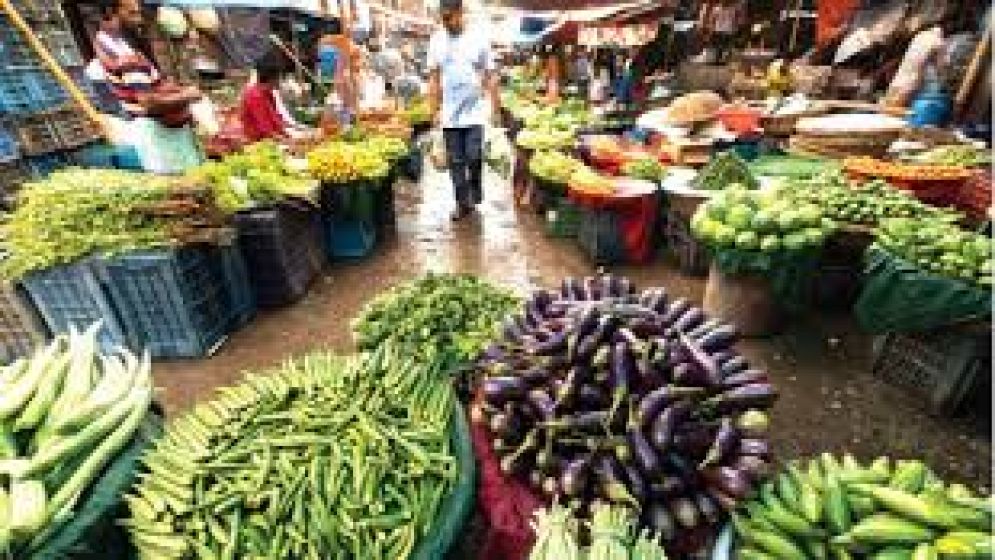
including eggplant, okra, drumsticks, string beans, and bitter gourd were stable
between Tk 50 to 60 per kg on Friday. The prices of tomatoes have increased as
the season is ending. Good quality tomatoes were selling between Tk 60 to 70
per kg.
Brinjals were selling
between Tk 50 to 60 per kg, while bottle gourd, ash gourd, and cauliflower at
Tk 50 to 60 per piece.
Local variety of onion
was selling between Tk70 to 80 per kg, garlic at Tk180 to 250, and ginger at
Tk200 to 280 per kg based on quality.
The prices of some other
commodities including rice including aromatic rice, wheat, flour, milk, and
soybean have remained unchanged.
END/UNB/AI