

How Bangladesh is pioneering a path to disaster resilience

Harun Ur Rashid
Publish: 27 May 2024, 04:56 PM
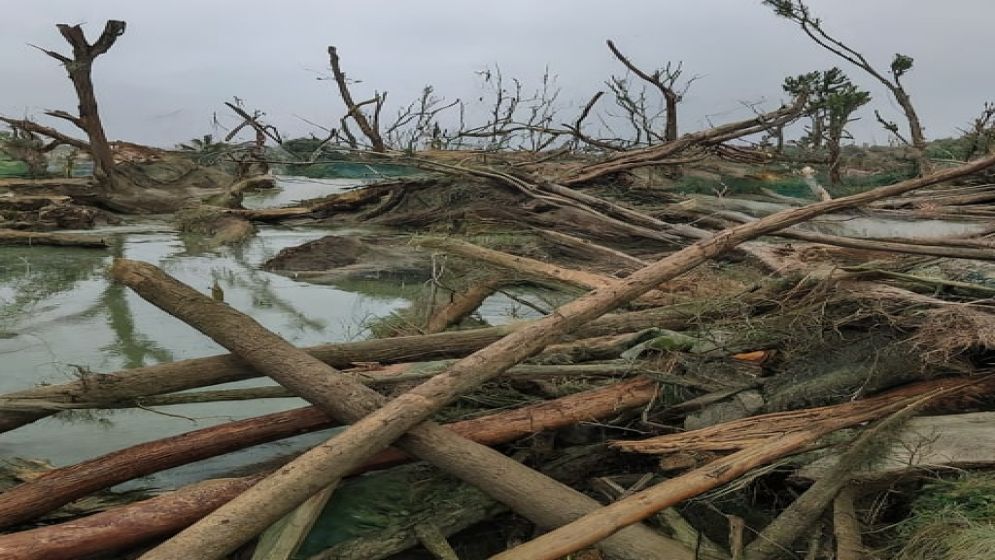
In the wake of Hurricane Katrina's devastation in 2005 in the US, a panel of experts on CNN made a striking assertion: any nation seeking to master resilience in the face of natural disasters should look to Bangladesh as a model.
The country's long and arduous history of grappling with cyclones, tidal surges, and floods has yielded a wealth of experiential knowledge that experts believe holds immense value for the whole world to adopt.
Once a nation synonymous with the devastating impact of cyclones, Bangladesh has undergone a remarkable transformation in its approach to disaster preparedness and climate change resilience.
This shift has not only significantly reduced the vulnerability of its people but has also positioned the country as a global leader in managing disaster risks and building coastal resilience.
A stark example of this progress is evident in the contrasting outcomes of two major cyclones: the Bhola Cyclone of 1970 and the far stronger Cyclone Sidr in 2007.
The Bhola Cyclone, a catastrophic event that claimed over 300,000 lives, served as a wake-up call for Bangladesh. It spurred a paradigm shift from reactive relief efforts to a proactive approach focused on disaster risk reduction.
Fast forward to 2007, when Cyclone Sidr, the most powerful cyclone to ever hit Bangladesh, made landfall. Despite its intensity, the death toll was less than 3,500 – a mere fraction of the lives lost in 1970.
This remarkable reduction in fatalities is a testament to the effectiveness of Bangladesh's comprehensive disaster risk management strategies.
The cyclones of 1970 and 1991, while inflicting immense suffering, ultimately catalyzed a profound transformation in Bangladesh's approach to natural disasters.
By prioritizing preparedness, early warning systems, and community engagement, the nation has not only saved countless lives but has also become a shining example of resilience in the face of climate change challenges.
Why Bangladesh is in the eye of the storm
Bangladesh's vulnerability to cyclones is primarily due to its geographical position on the Bay of Bengal.
The warm waters of this region fuel the formation and intensification of cyclones, making the country a frequent target, especially during the late spring and early summer months when sea surface temperatures peak.
The country's monsoon climate, characterized by shifting wind patterns, further exacerbates the risk by influencing the creation and movement of cyclones in the area.
Bangladesh's low-lying terrain and high population density also exacerbate the impact of cyclones.
The country's flat coastal areas, positioned near sea level, are easily inundated by storm surges generated by cyclones, resulting in widespread flooding and devastating consequences for life, property, and infrastructure.
The dense population further amplifies the impact, as limited resources for disaster preparedness and response hinder effective mitigation efforts, leading to increased casualties and damage.
Climate change and global warming have emerged as major influencers of cyclone activity in the region, exacerbating the vulnerability of Bangladesh.
Rising sea levels due to global warming escalate the risk of coastal flooding and storm surges, while warmer ocean temperatures intensify cyclones, making them more destructive.
Shifting atmospheric circulation patterns, driven by climate change, further impact the frequency, intensity, and trajectories of cyclones in the Bay of Bengal.
Human activities, including deforestation and land-use changes, also play a role in amplifying cyclone vulnerability.
Deforestation diminishes natural barriers like mangrove forests that help mitigate cyclone impacts.
Moreover, natural climate phenomena like the El Nino-Southern Oscillation, characterized by warmer sea surface temperatures in the equatorial Pacific, influence cyclone formation and tracks in the Bay of Bengal.
How Bangladesh achieved success in fighting cyclones?
Bangladesh's success in mitigating cyclone-related fatalities is attributed to its comprehensive risk reduction framework.
This encompasses the implementation of robust policies, institutions, and regulations like the Disaster Management Policy, the National Plan for Disaster Management, the Standing Orders on Disaster, and the Disaster Management Act.
The successive governments, regardless of their political agenda, actively engaged communities, establishing community-based early warning systems and constructing vital protective infrastructure.
A prime example of this infrastructure is the network of disaster shelters along the Bangladeshi coast, a crucial factor in minimizing cyclone-related deaths.
The World Bank-financed Multipurpose Disaster Shelter Project (MDSP) stands as one of the most extensive disaster shelter programs in the country, providing safe havens for vulnerable communities during extreme weather events.
Besides, enhanced cyclone monitoring and tracking capabilities have played a crucial role in Bangladesh's success in reducing cyclone-related fatalities.
In contrast to 1970, when the country had only two coastal radars with limited range, today's comprehensive network of weather stations, including coastal radars, ground-based stations, and advanced meteorological instruments, allows for real-time monitoring of cyclone development and trajectory in the Bay of Bengal.
This early warning system empowers authorities to make informed decisions and initiate timely evacuations, ultimately saving lives.
The multiplication of proper cyclone shelters is another important factor. In 1970, Bangladesh had a mere 44 cyclone shelters, but the devastation of the Bhola cyclone spurred a massive effort to bolster the country's disaster preparedness infrastructure.
Through a combination of government initiatives and international aid, the number of formal shelters skyrocketed to almost 4,000 by the mid-2000s.
Most of these shelters serve dual purposes, functioning as schools and community centers in normal times, ensuring their maintenance and maximizing their utility for the community.
Governments and development agencies meanwhile are working tirelessly to create awareness among people who are vulnerable to disasters.
The combination of all these factors have made disaster management a success in Bangladesh. The decreasing death tolls and devastations against the last few cyclones are a testament to that.