

Global experts urge Bangladesh to adopt tobacco harm reduction strategies

UNB
Publish: 28 May 2024, 05:08 PM
Dhaka,
May 28 (UNB)- In an effort to protect public health, stakeholders and
policymakers are advocating for the adoption of tobacco harm reduction (THR)
strategies based on scientific evidence that will support the government's
smoking cessation strategies.
In recent discussions
among national and international public health experts, policymakers, and other
subject matter experts, a consensus has emerged on the critical need for
Bangladesh to embrace a comprehensive Tobacco Harm Reduction (THR) strategy,
according to a press release.
These insights were
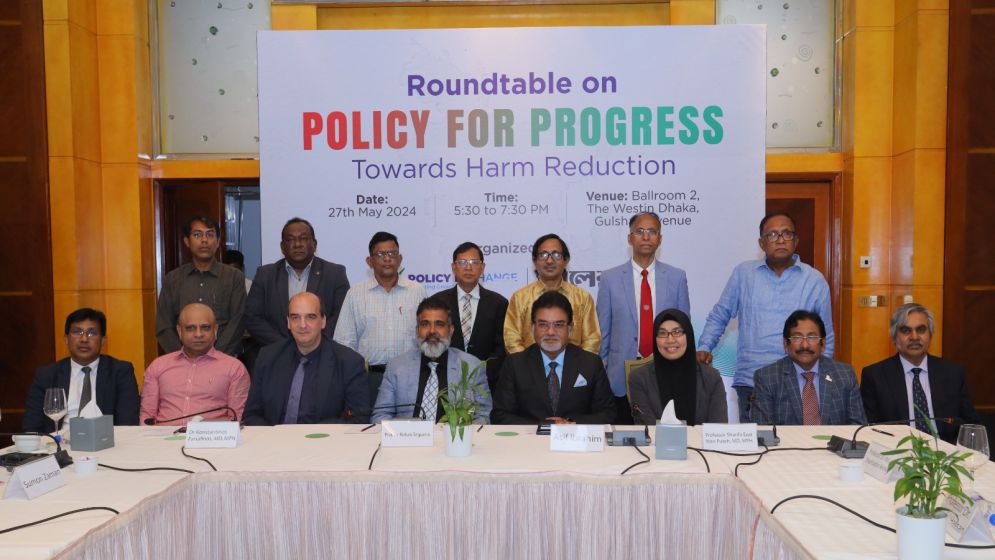
shared during the roundtable discussion on 'Policy for Progress: Towards Harm
Reduction,' organised by Kaler Kantho and Policy Exchange Bangladesh at a hotel
in the capital on Monday.
Speakers emphasised the
importance of implementing innovative strategies that will support adult
smokers to quit smoking and drive effective and sustainable changes in the
public health sector, it said.
According to the harm
reduction concept, complete cessation of smoking is an aspirational goal but
cannot be achieved overnight. Recognising this, transitioning gradually by
embracing reduced-risk alternatives emerges as a pragmatic and effective
method.
Supported by numerous
scientific studies, THR has garnered attention for its promising outcomes.
Countries like the UK and New Zealand stand as notable examples, demonstrating
significant reductions in health risks through the adoption of THR strategies.
Sweden is close to becoming the first smoke free country in the world by
implementing the THR strategies.
Cardiologist and
Research Fellow of the University of Patras (Greece) Konstantinos Farsalinos
stressed the importance of incorporating vapour products and other cessation
tools to mitigate the harm caused by smoking. He said that, "vaping is an
effective method of quitting smoking which presents alternatives with minimised
risks."
He emphasized,
"Taking research-based pragmatic decisions regarding revolutionary
technologies like vaping products would pave the way to ensure the safety of
public health."
Former Vice Chancellor
of Bangladesh Agriculture University Professor Dr. Lutful Hassan said,
"Quitting an old habit is not easy. Especially, one cannot quit smoking
overnight. In this regard, smokers can stop smoking gradually by adopting THR
strategy."
He also said, "THR
is very important for Bangladesh. Policy makers should consider it."
According to the
speakers, vaping can significantly contribute in the safety of public health.
It also has immense potential to emerge as a new source of revenue. Adopting
THR in the mainstream policy-making and devising proper regulatory framework
would benefit the country on many fronts.
Former member of
National Board of Revenue (NBR) Abdul Mannan Shikder said, "If the smoking
rate is reduced, the medical expenses due to smoking will also be reduced.
Besides, it is possible to increase the revenue due to the implementation of
THR strategy." He further stressed, "THR should be adopted with
proper regulations. And all the stakeholders need to be addressed in this
regard."
According to the
speakers, practical steps are necessary in formulating economic and social
policies to maintain the ongoing progress of the country and face future
challenges. Tobacco harm reduction products should be adopted instead of banned
through appropriate regulatory frameworks. The right set of regulations will
target only adult smokers while serving as a deterrent to youth appeal. The
adoption of a Tobacco Harm Reduction strategy in Bangladesh will represent a
pragmatic and compassionate approach to addressing public health challenges.
With strong endorsements from global health leaders and a clear roadmap for
implementation, Bangladesh has the opportunity to lead the way in tobacco harm
reduction, ultimately saving lives and enhancing the well-being of its
population.
Advisor of Policy
Exchange Bangladesh Asif Ibrahim said, "To reduce smoking, countries like
UK, New Zealand and Sweden adopt pragmatic plans. They prioritized scientific research
and took rational steps. These countries have already experienced positive
outcomes. Bangladesh should consider these examples to develop the public
health landscape. Especially, Ministry of Health other important ministries
should consider THR in policy making.
END/UNB/M/MB