

Are we prepared enough for another year of deadly dengue outbreak?

Nazmul Islam
Publish: 29 May 2024, 03:04 PM
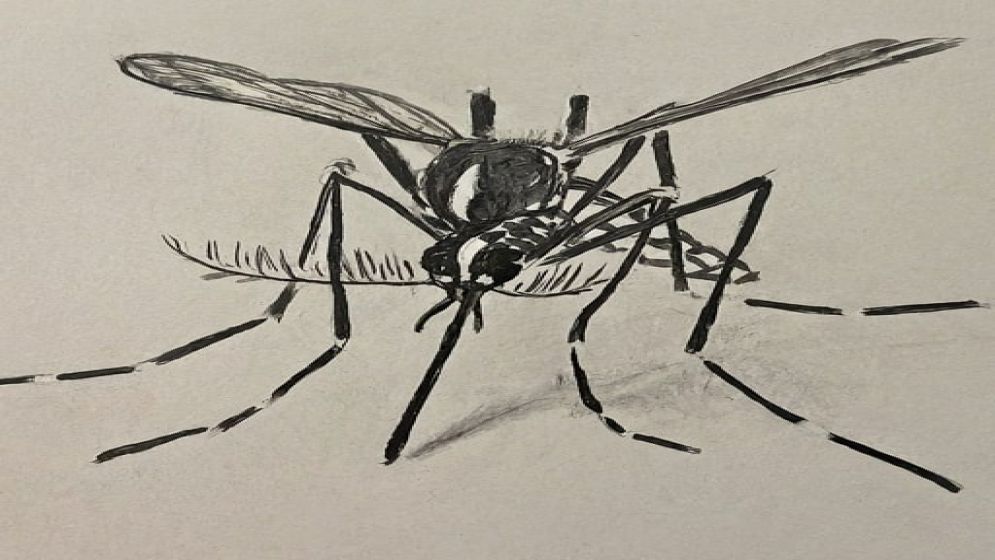
Bangladesh braces for another year of deadly dengue outbreak as the disease, once confined to the monsoon season, has now become a year-round menace.
A concerning surge in cases following the arrival of summer has experts sounding the alarm, warning that this year could witness the worst outbreak in the nation's history.
Their concern isn’t unfounded as 2024 outpaces the previous year's devastating outbreak. In 2023, the country grappled with a record-breaking 321,179 dengue cases and 1,705 deaths.
Now, between January 1 and May 25 of this year, the number of reported cases has already reached a staggering 3,123, more than double the caseload during the same period in 2023.
Worryingly, the death toll has also surged, with 23 fatalities recorded between January and April, again exceeding the figures from the previous year.
Health Minister Samanta Lal Sen has already issued a directive to hospitals, urging them to prepare for a potential influx of patients.
Recognizing the gravity of the situation, the minister has also emphasized the crucial role of public participation in combating the spread of the disease.
The Aedes mosquito, the primary carrier of the dengue virus, thrives in stagnant water, which is abundant during the rainy season. However, changing weather patterns and rapid urbanization have created breeding grounds for these mosquitoes even during the drier months.
Dr. Mohammad Mushtuq Husain, a prominent public health expert, has expressed grave concerns over the escalating dengue outbreak, citing a lack of significant progress in preventive measures despite the devastating experience of last year.
"We are still relying on traditional methods for prevention, mosquito eradication, and medical care, with no visible improvements or accountability," Dr. Husain told Bangla Outlook.
"Government agencies are engaged in a blame game rather than coordinated action. Without a unified and proactive approach, we may not be able to avert a full-blown dengue crisis this time."
Why are dengue cases increasing?
Experts say the country is experiencing a surge in mosquito populations due to a combination of unusually high rainfall, soaring temperatures, and oppressive humidity.
The extreme weather conditions have created ideal breeding grounds for mosquitoes, leading to an explosion in their numbers across the country.
Besides, dengue fever has become a global health crisis now, with cases skyrocketing in recent years. The World Health Organization (WHO) reveals a startling statistic: half the world's population, a staggering 3.9 billion people, is at risk of infection.
This mosquito-borne disease has hit Asia particularly hard, accounting for 70% of all cases worldwide.
The alarming rise in dengue infections is evident in the numbers: in 2000, there were half a million reported cases, while in 2022, that number soared to 4.2 million—nearly an eight-fold increase in just over two decades.
Bangladesh has long grappled with recurring dengue outbreaks over the past two decades. However, the current surge has taken an alarming turn, defying historical patterns.
Not only did cases begin to spike earlier than the usual June-October monsoon season, but the disease has also broken free of its traditional stronghold in Dhaka and Chattogram, spreading rapidly to other regions.
Kabirul Bashar, a leading medical entomologist at Jahangirnagar University and the sole scientific expert on Bangladesh's National Anti-Dengue Committee, warns that the traditional dengue season has become a relic of the past.
In an interview with Bangla Outlook, he highlighted a significant shift in the disease's pattern: while cases typically subsided by September, last year witnessed a peak in October with a staggering 86 deaths, compared to 22 the previous year.
"We sounded the alarm last year, emphasizing that dengue is no longer solely associated with the monsoon season. It has transformed into a year-round threat," Bashar cautioned.
He attributes this alarming trend to climate change, which is disrupting temperature, rainfall, and other natural phenomena, creating favorable conditions for dengue-carrying mosquitoes to thrive throughout the year.
“Now, we see almost monsoon-like consistent rain throughout October and early November. It changes the breeding and life cycle of the Aedes mosquito populations,” he said, referring to the type of mosquito that carries dengue.
Are authorities concerned prepared enough?
Last July, Dhaka's city councils took a decisive step by imposing fines on building owners who failed to control mosquito breeding grounds on their premises. The local government minister went a step further, warning that construction projects would face a halt if dengue larvae were found on site for the third time.
Now, the incumbent local government minister Tajul Islam claimed the government has been taking action since the beginning of the year to prevent dengue. He told the media recently that an increased number of drives are already in place to eliminate mosquito breeding grounds.
Dhaka North City Corporation Mayor Atiqul Islam meanwhile told city dwellers to refrain from discarding waste between buildings and to plant trees in vacant areas instead, to maintain a healthy environment.
He recently told a public event that cameras have been put in place to deter people from disposing of waste in canals. Atiq also threatened to take legal action if Aedes mosquito larvae were found in any house or office under DNCC.
"If we find larvae, you will be prosecuted, jailed and fined," he said while launching a month-long mosquito extermination campaign last week.
Sheikh Daud Adnan, director of the Communicable Disease Control Program at the DGHS, assured that hospitals are ready for dengue patients. "We've directed doctors at local levels to avoid sending patients to the capital unless it's essential," he told Bangla Outlook.