

A contractionary budget on cards but will it tackle the rising inflation?

Faisal Mahmud
Publish: 06 Jun 2024, 03:17 PM
It's common for new governments to criticize the economic performance of their predecessors, especially when they belong to opposing parties. This often serves as a tactic to appease voters and deflect blame while they work to stabilize the economy.
However, in Bangladesh, Finance Minister AH Mahmood Ali doesn't have this luxury, as his party, the Awami League, has been in power for four consecutive terms.
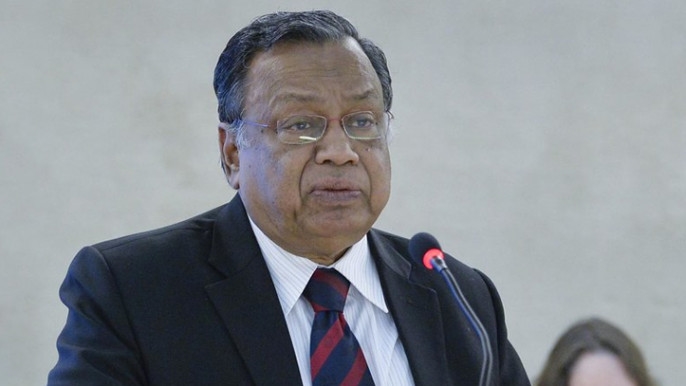
Having taken over from AHM Mustafa Kamal, Ali, 81, now faces the difficult task of presenting the 2024-25 budget amidst unprecedented economic challenges today.
This situation is “unprecedented” because the
economy is in its worst state in the Awami League's decades-long rule.
The economic momentum that once propelled Bangladesh as a top performer in Asia for a decade has lost its footing. A triple threat of crises now pervades every aspect of the economy.
Inflation relentlessly strains consumers, the volatile exchange rate negatively impacts everyone, and foreign exchange reserves continue to dwindle at an alarming rate of half a billion dollars each month.
To tackle all these, Ali has outlined his key priorities, focusing on restoring macroeconomic stability by stabilizing the foreign exchange rate and reserves, curbing import-induced inflation, reaching revenue targets, and settling subsidy arrears in the energy and fertilizer sectors.
Additional challenges identified include gradually moving away from three years of austerity and prioritizing essential projects over less-critical ones to ensure timely completion.
A contractionary budget
But these multifaceted pressures on the economy and subsequent planned measures are predictably having an impact on the budget–unlike previous years, the budget size is not increasing significantly.
In the past, the budget size used to increase by more than 10% from one year to the next, but this time it is being increased by less than 5%. The IMF had also recommended keeping the budget small due to limited financial resources.
A contractionary budget makes all the sense as for two consecutive years, fiscal policy has been unsuccessful in addressing the economy's underlying issues. Today’s budget however offers the new finance minister a chance to unveil a transformative vision.
One of his fiscal objectives is to achieve a
smaller budget deficit of 4.6% of GDP, deviating from the long-held 5% deficit
limit. Some economists argue that this new target is still too high and could
jeopardize macroeconomic stability, as over half of the deficit financing will
rely on domestic borrowing.
This could clash with monetary policy goals of curbing domestic credit growth or severely impede private credit by driving up interest rates. Experts suggest a deficit cap of 3% of GDP, at least for the uncertain fiscal year 2024-25, to alleviate the economic burden.
Sadiq Ahmed, vice-chairman of the Policy Research Institute, advocates for a budget strategy focused on significantly reducing the fiscal deficit to curb aggregate demand.
To achieve this, Ahmed suggests implementing a comprehensive strategy that includes raising tax revenues through effective reforms and enhancing the profitability of state-owned enterprises through improved corporate governance.
He also wants the government to cut down unnecessary subsidies, and prioritize spending on essential sectors such as education, health, and social protection.
Tackling inflation: The main challenge
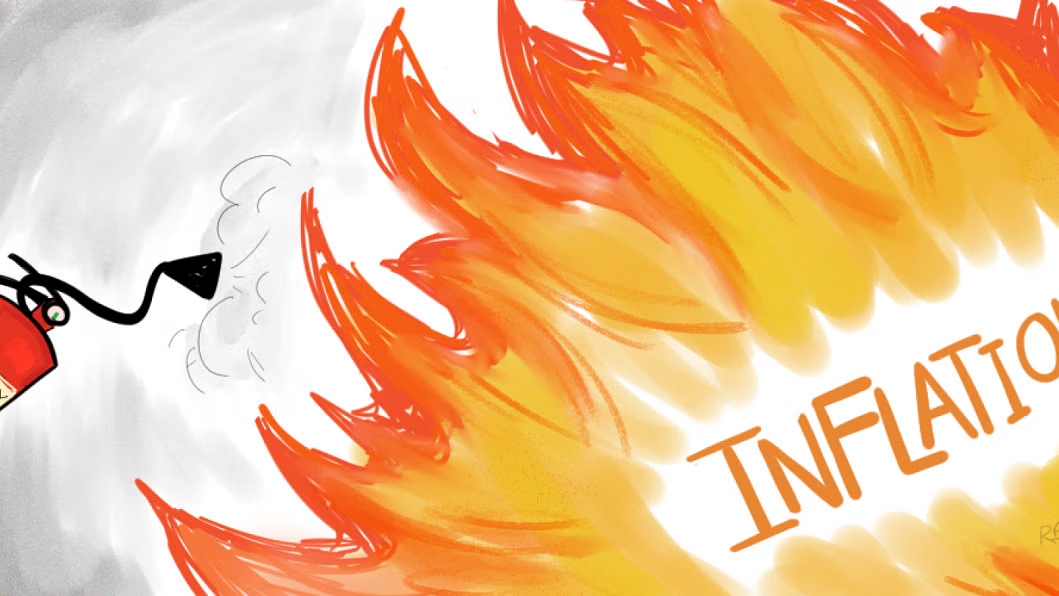
The primary challenge for the government will be to address the escalating inflation rates. The decrease in reserves, coupled with the ongoing dollar crisis, has exacerbated inflationary pressures.
Despite the government's goal of maintaining inflation within 6% for the current fiscal year, it has surpassed 9% since March of last year.
Ahsan H Mansur of PRI highlights inflation as the main economic issue and acknowledges the government's efforts to address it. He emphasizes the need to reduce domestic borrowing to alleviate inflationary pressures.

The problem is, as revenue falls short, the
government's reliance on bank borrowing has skyrocketed, reaching over Tk
65,000 crore in the July-April period of the current fiscal year – a twelvefold
increase from the previous year.
At the same time, the banking sector is going through multiple difficulties, including a significant increase in bad loans and stressed assets, coupled with the weak financial health of some banks.
By the end of 2023, defaulted loans in the banking sector reached Tk 145,633 crore, marking a substantial rise of 64.12% compared to Tk 88,734 crore at the end of 2020.
“If the government continues this domestic borrowing, then it will not be able to curb inflationary pressures,” Mansur told Bangla Outlook, “And without tackling inflationary pressures, a contractionary budget will not yield its desired result.”
Economist Zahid Hussain, former World Bank lead economist in Dhaka, echoes the concern about inflation and advises against projects that require purchasing dollars from the market, as they would further increase demand and pressure.
Hussain says that a major factor contributing to escalating costs and a mounting external debt burden is the persistent inability to complete projects on time.
Interest payments on foreign loans have already surpassed the entire fiscal year's budget allocation within ten months, indicating a staggering 102% increase compared to the same period last year.
Now, in the upcoming fiscal year, the challenge will be even bigger as the government will face a heightened burden of interest payments, leading to an expected surge of over 20% in the allocation for servicing domestic and foreign loans.
“The government's intensified local borrowing to bridge the fiscal deficit has driven the yield on treasury bonds and bills to a peak,” Hussain said, “While this presents an attractive opportunity for investors, it also raises concerns.”