

Youth-led dialogue at IUB calls for stronger local climate action ahead of COP30

Staff Reporter
Publish: 21 Oct 2025, 09:12 PM
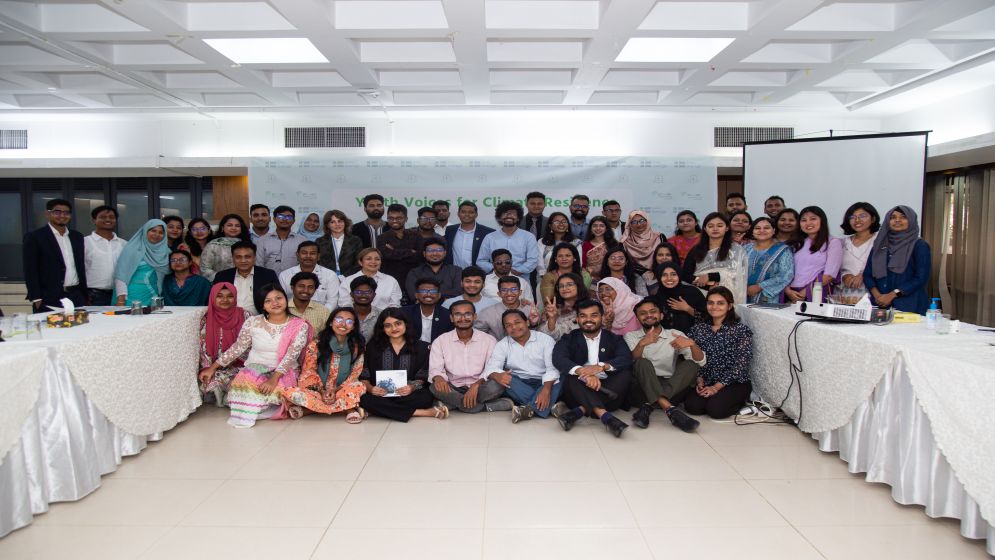
“Not every youth needs to go to COP; the real work is happening here in Bangladesh,” said Nayoka Martinez-Bäckström, First Secretary and Deputy Head of Development Cooperation at the Embassy of Sweden, while addressing a youth-led policy dialogue on climate resilience at Independent University, Bangladesh (IUB) on Saturday (19 October 2025).
The event, titled “Youth Voices for Climate Resilience 2025,” was organized by the CAP-RES Project (Capacity Strengthening of Multi-actors to Limit Climate Change Impacts and Enhance Resilience) under the International Centre for Climate Change and Development (ICCCAD), IUB, with support from the Embassy of Sweden.
The dialogue brought together youth leaders, government officials, development partners, and media representatives to explore how young people can drive locally led adaptation and influence national and global climate policies ahead of COP30 in Brazil.
In her remarks, Martinez-Bäckström commended ICCCAD’s Youth Fellowship initiative, describing it as “a flagship model of inclusive climate leadership.”
Encouraging participants to continue their advocacy, she added, “I hope to see all of you again as mentors, advocates, and leaders in your own right.”
Earlier, Prof. Dr. Hafizur Rahman, ICCCAD’s Focal Person, urged youth to take ownership of Bangladesh’s climate future.
“Bangladesh has become a leader in climate advocacy, and much of that credit goes to the young changemakers,” he said. “This is not just a seminar or workshop; it is a call to action. I look forward to the day when another Dr Saleemul Huq (OBE) rises from among you.”
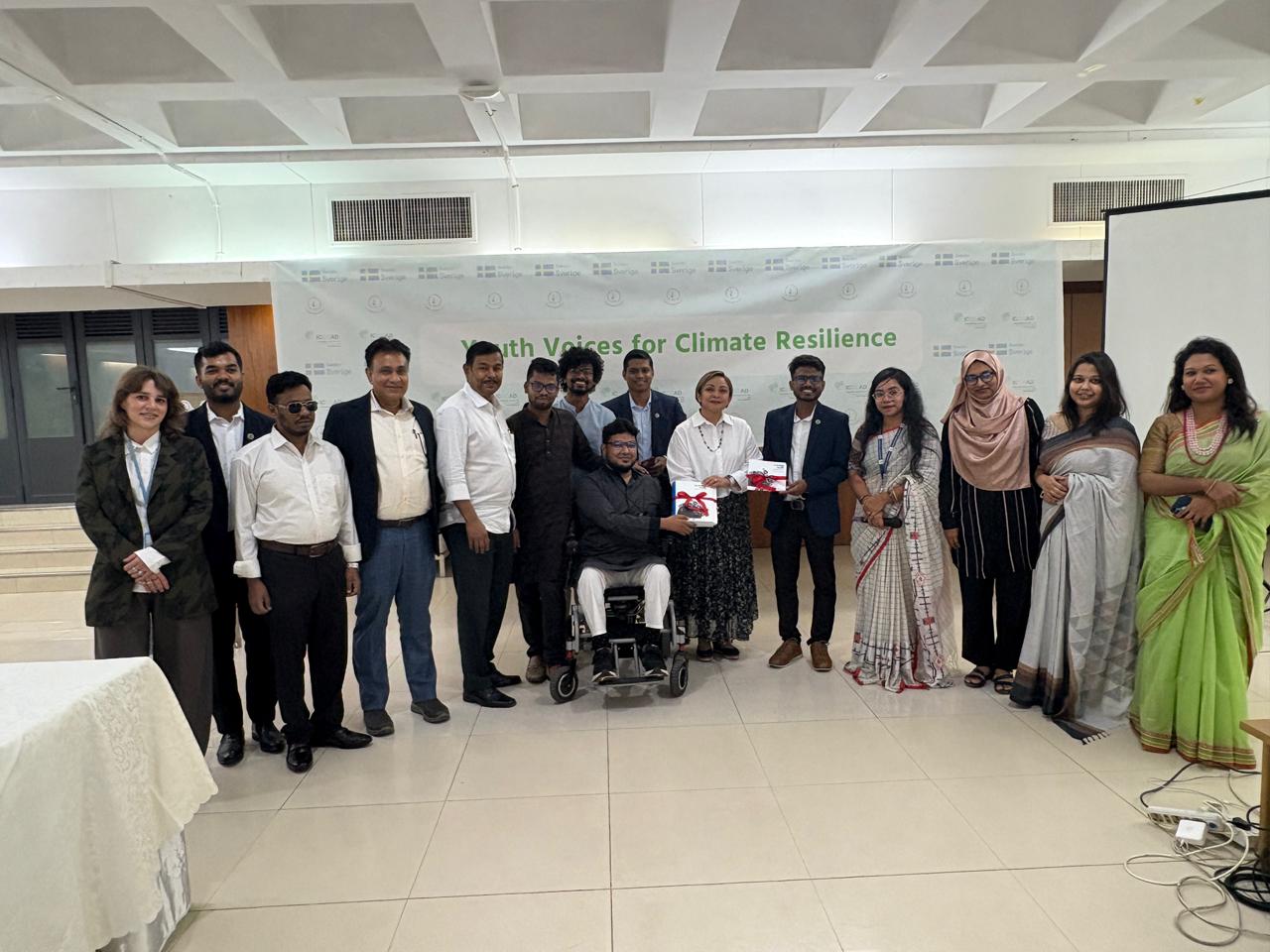
Representing the Ministry of Disaster
Management and Relief, Deputy Secretary Sanzida Yesmin highlighted the social
and emotional dimensions of climate change.
“Salinity intrusion can lead to infertility, and that has social and emotional impacts that go beyond health,” she said, while praising ICCCAD’s child-friendly climate education materials.
She called for stronger collaboration between youth groups and local administrations, emphasizing, “Resilience begins at home, with informed communities.”
Dr. Shah Abdul Saad, Deputy Secretary at the Economic Relations Division (ERD) of the Ministry of Finance, discussed the economic aspects of climate adaptation.
“We must align mitigation with a just transition approach,” he said, noting that young people are among the most affected by climate impacts on education, health, and livelihoods. He also emphasized the need to mobilize domestic resources for sustainable adaptation financing.
The panel discussion featured prominent voices including Valentina Spinedi, Climate Specialist at UNICEF; Farzana Faruk Jhumu, Member of the UN Youth Advisory Group on Climate Change; Nuzhat Jabin, Country Director of Christian Aid Bangladesh; Sanzida Yesmin; Kazi Amdadul Hoque, Senior Director of Friendship; and Shah Rafayat Chowdhury, Co-founder of Footsteps Bangladesh.
Speakers underscored the urgency of climate action, equitable finance, and inclusive adaptation strategies. “Climate change is not just a discussion; it is a lived experience,” said UNICEF’s Valentina Spinedi, noting UNICEF’s partnership with the government to include youth voices in NDC 3.0.
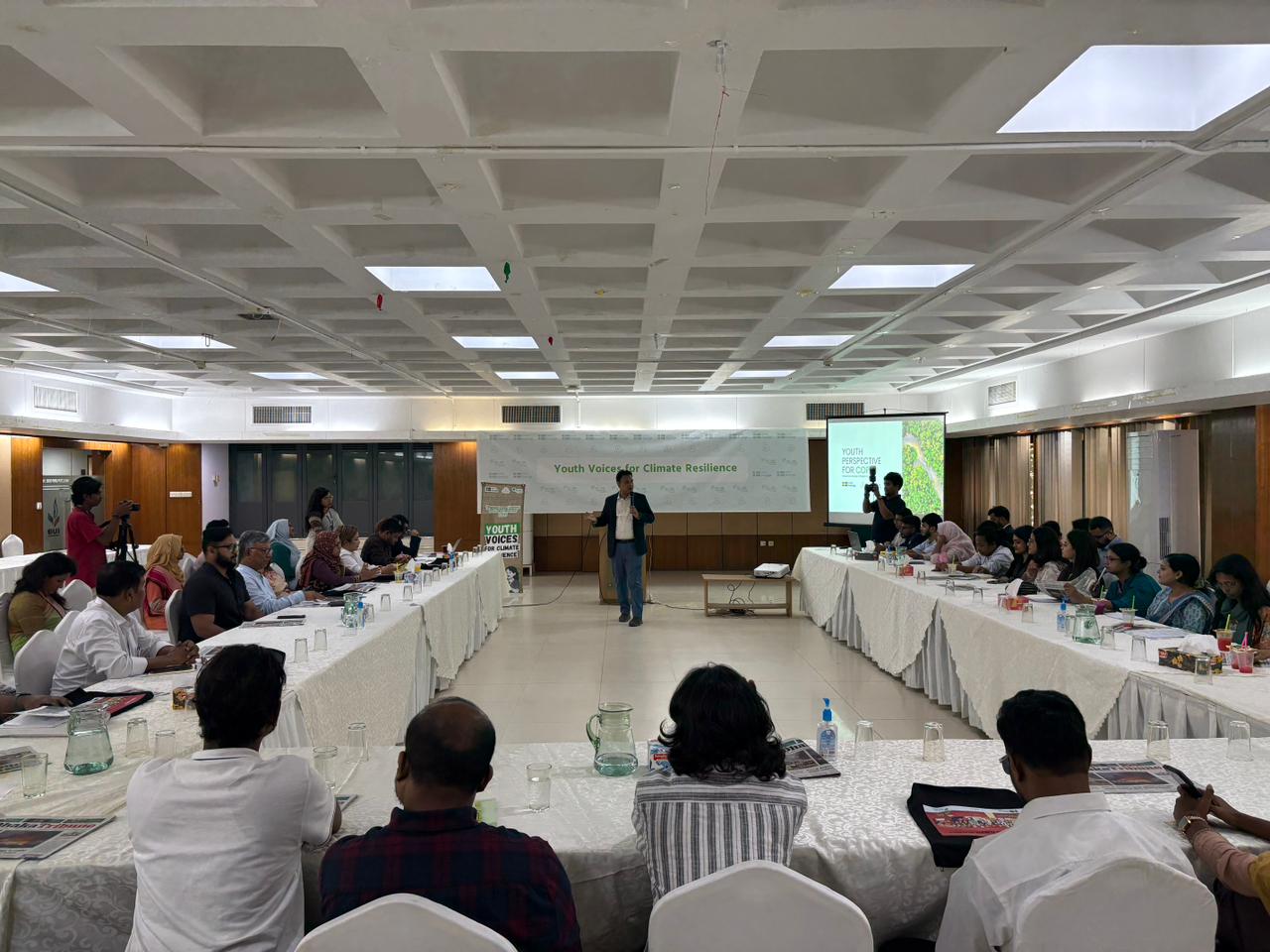
Shohanur Rahman, Founder of YouthNet
Global, added, “Mitigation is not a target; it is a deadline. We need three
times the adaptation funding we had in 2022.”
Subir Kumar Saha of the Centre for Disability in Development (CDD) stressed that “true inclusion must go beyond token presence and become a system-wide commitment,” while Christian Aid’s Nuzhat Jabin urged that “participation must be converted into influence.”
Friendship’s Kazi Amdadul Hoque questioned the effectiveness of climate financing, pointing out that “only about ten percent of funds reach the grassroots.”
During youth presentations, ICCCAD Youth Fellows 2025, Md Rehanuz Zaman and Md Al Imran Khan Rabby, shared insights from their field research in coastal regions.
They emphasized the need for accessible data, stronger financial mechanisms, and greater accountability in climate policy.
“Young people in last-mile communities are still not equipped with the tools or platforms to represent themselves,” said Rehan, while Imran highlighted the urgency of operationalizing the Loss and Damage Fund for Bangladesh.
—