

Experts call for legal reforms to ensure universal birth and death registration by 2030

Staff Reporter
Publish: 06 Nov 2025, 05:00 PM
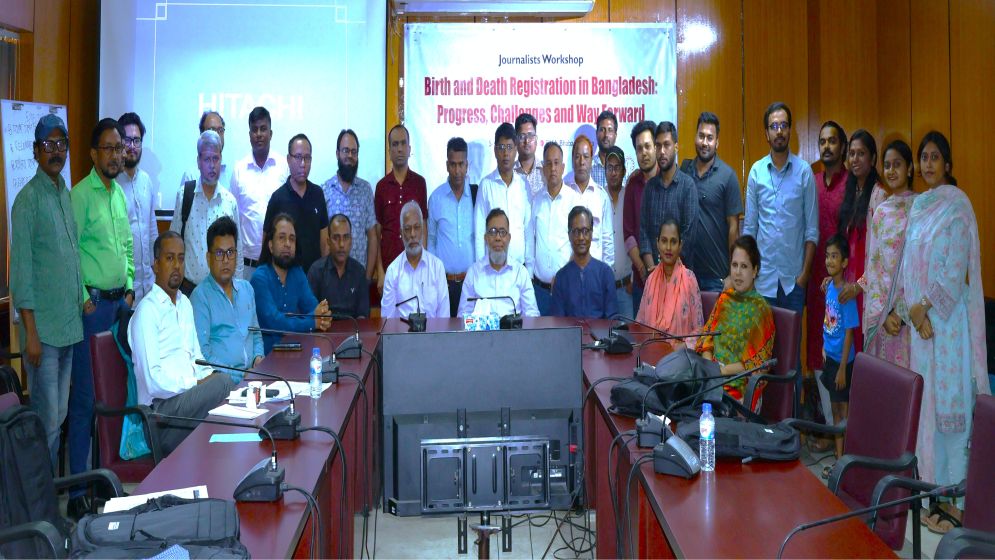
The Government of Bangladesh has
reaffirmed its commitment to achieving universal birth and death registration
by 2030.
However, experts and journalists have
warned that limitations in the existing law and its weak enforcement remain
major obstacles to meeting this goal.
These concerns were raised at a two-day
workshop titled “Birth and Death Registration in Bangladesh: Progress,
Challenges, and Way Forward,” held on November 5–6 at the Bangladesh Medical
Association (BMA) Bhaban in Dhaka.
The event was organized by PROGGA
(Knowledge for Progress) with support from the Global Health Advocacy Incubator
(GHAI) and attended by 30 journalists representing print, television, and
online media.
Speakers at the workshop highlighted that
only 50 percent of births and 47 percent of deaths in Bangladesh are currently
registered — rates significantly below the global averages of 77 percent and 74
percent, respectively.
They emphasized that birth and death
registration are essential for ensuring fundamental rights such as access to
education, healthcare, inheritance, voting, and social protection.
Participants noted that the absence of registration fuels social vulnerabilities, including child labor, child marriage, and statelessness. “Registration is not just a statistical process; it is the foundation for equitable national planning and good governance,” one discussant observed.
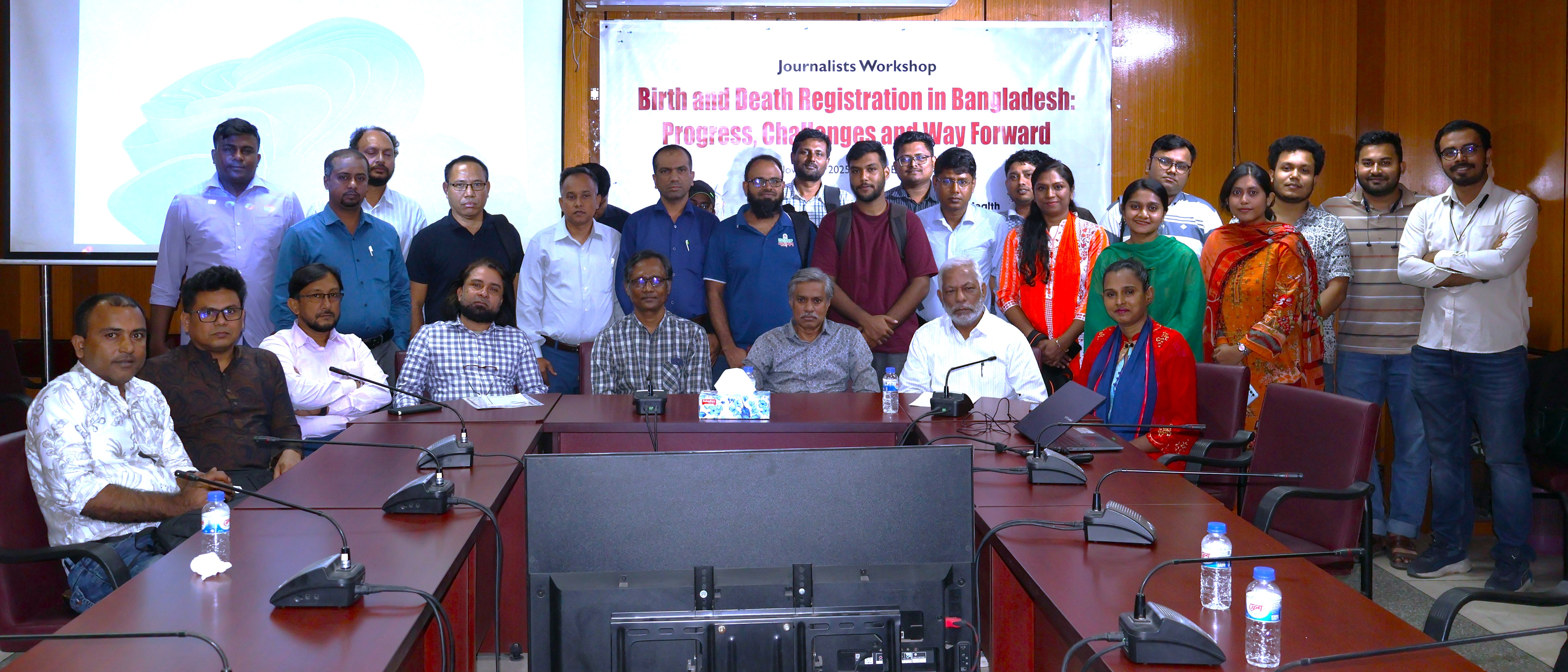
Under the Birth and Death Registration
Act, 2004, families are responsible for reporting births and deaths, while
healthcare institutions play only an optional role.
However, with around 67 percent of
children born in healthcare facilities, experts argued that hospitals must be
made legally responsible for registering all births and deaths — a measure
already adopted successfully in several Asia-Pacific countries.
They urged the government to amend the
2004 Act to align with international best practices and to accelerate progress
toward the Civil Registration and Vital Statistics (CRVS) Decade targets and
Sustainable Development Goal (SDG) 16.9, which calls for providing legal
identity for all by 2030.
Muhammad Ruhul Quddus, Bangladesh Country
Lead of GHAI, said, “We are committed to ensuring universal birth and death
registration by 2030.
To achieve this, we must reform the law
and ensure its effective implementation.”
Md. Nazrul Islam, Country Coordinator of
Vital Strategies, emphasized the need to raise public awareness and strengthen
administrative systems.
“Awareness about the importance of birth
and death registration must increase. We also need to build registrar capacity,
improve technology, and enhance intersectoral coordination,” he said.
Other discussants included Md. Moyeen
Uddin, Country Coordinator, Vital Strategies; Kawsar Rahman, Chief Reporter,
Janakantha; and ABM Zubair, Executive Director of PROGGA. Md. Hasan Shahriar,
Head of Programs, and Mashiat Abedin, Coordinator at PROGGA, delivered thematic
presentations during the sessions.
—