

‘She Was History Itself’: Alal Hails Khaleda Zia as a Living Legend of Courage and Nationhood

Staff Reporter
Publish: 03 Jan 2026, 08:35 PM
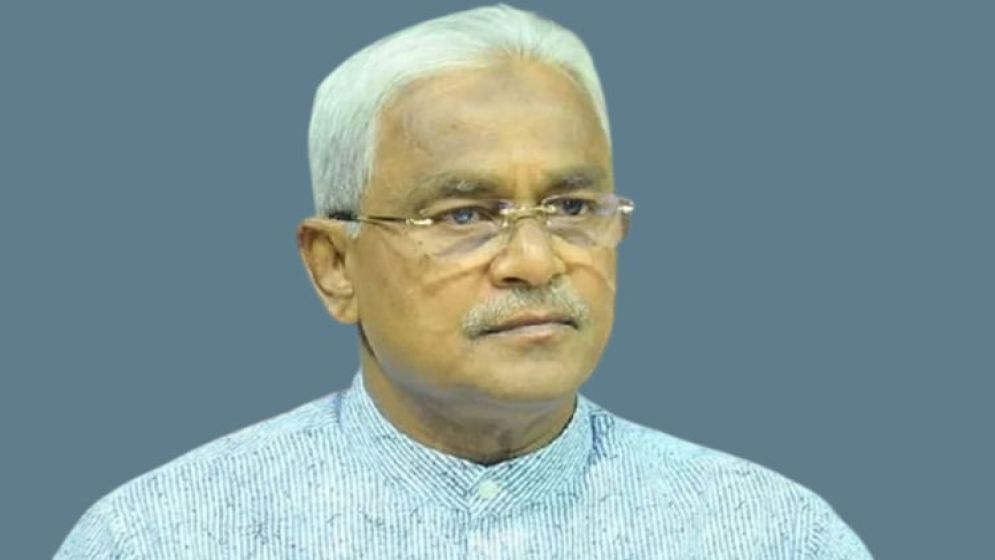
Advocate Syed Moazzem Hossain Alal, an adviser to BNP Chairperson Khaleda Zia, on Thursday described the late former prime minister as far more than a political leader, calling her “history itself, time eternal, and a living legend” whose life embodied inspiration, strength and courage for Bengali women.
He was speaking at a discussion meeting organised by officials and employees of the Directorate of Primary Education to pray for the salvation of Khaleda Zia’s departed soul. Khaleda Zia, Bangladesh’s first woman prime minister and longtime leader of the Bangladesh Nationalist Party, died recently after years of illness and political confinement.
Addressing the gathering, Alal said Khaleda Zia’s legacy could not be confined to party politics alone. “She was a symbol of courage and resilience for every Bengali woman,” he said, adding that her absence would continue to remind the nation of her enduring contributions, particularly in the field of primary education.
Alal reiterated a long-held belief often associated with Khaleda Zia’s political vision: that educating women leads to educated families, and educated families, in turn, build an educated nation. He said Khaleda Zia’s role as a pioneer of women’s education would be remembered for generations, especially her emphasis on strengthening primary education as a foundation for national development.
He also said the impact of Khaleda Zia’s death was not limited to Bangladesh alone, arguing that it had reverberated across regional politics. According to him, the flurry of international diplomatic activity following her death demonstrated the broad political significance Khaleda Zia and her family continued to hold, even though the BNP has not been in power for years.
Referring to recent political engagements, Alal said that despite being immersed in grief, BNP’s acting chairman Tarique Rahman had met a delegation from Sri Lanka, a move he described as carrying an important political message in the current regional and international context.
Alal paid particular tribute to what he described as personal sacrifice and loyalty within Khaleda Zia’s family and inner circle. He singled out Fatima, noting that while many people may eventually be forgotten, such sacrifices would not be. He said she had voluntarily endured imprisonment, house arrest and prolonged hospital stays, remaining beside Khaleda Zia until her final days.
He further said the lifelong loyalty shown by Khaleda Zia’s staff and associates was rare in Bangladesh’s political history. Even those she had appointed more than a decade ago, he said, never left what he called her “protective shadow.”
The former Jubo Dal president also reflected on the international media coverage of Khaleda Zia’s death, saying it created the impression that the world had briefly come to a standstill. He recalled Khaleda Zia’s oft-repeated assertion that she had no address outside Bangladesh, adding that “God ultimately accepted that plea.”
Despite the availability of foreign air ambulance arrangements, Alal said, Khaleda Zia chose to receive treatment and ultimately to die on Bangladeshi soil. “At every stage of her life, she chose Bangladesh,” he said.
Speaking about her funeral, Alal said the janaza appeared to represent the entire nation. Alongside the main funeral in Dhaka, absentee funeral prayers were held in different parts of the country, reflecting the depth of public sentiment, he added.
Alal also recalled Khaleda Zia’s video message to the nation on August 7 following the fall of what he described as a fascist order. He said the message contained no provocative language and no call for revenge. Instead, she spoke of peace, law and justice—an approach he described as clear evidence of her inclusive political philosophy.
Concluding his remarks, Alal said figures like Khaleda Zia were born only once in a century. “If we can carry even a small part of her character into our own lives,” he said, “then this memorial gathering will have achieved its purpose.”
___