

Will India choose a political appointee over a career diplomat as its next High Commissioner to Bangladesh?

Staff Reporter
Publish: 30 Mar 2026, 10:27 PM
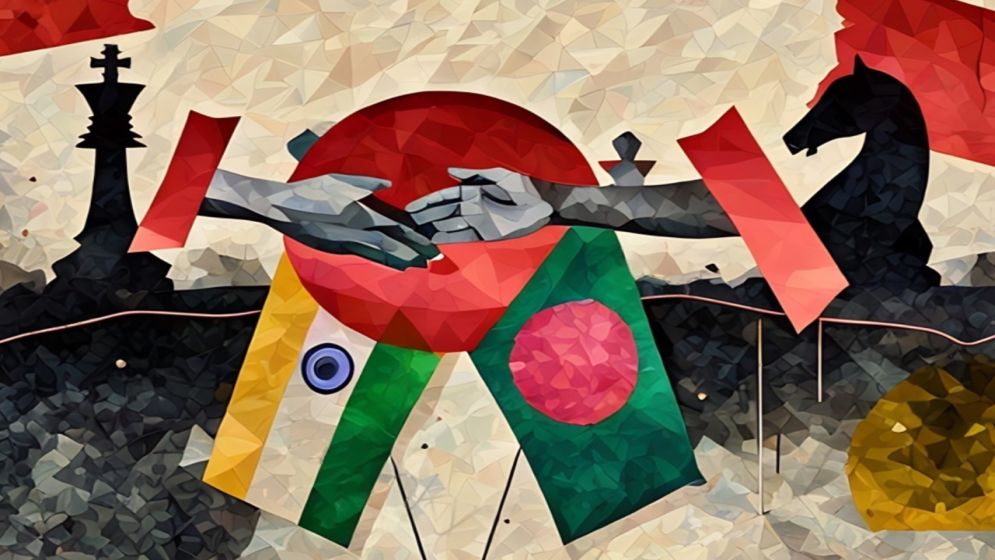
With Pranay Kumar Verma nearing the end of his tenure in Dhaka, the Indian government is weighing a departure from precedent by considering not just career diplomats but also political or administrative figures for the post of high commissioner to Bangladesh.
There is speculation within Indian journalistic and bureaucratic circles that the Narendra Modi government may consider Arif Mohammed Khan—a former Union minister and until recently the Governor of Bihar—for the Dhaka posting.
At the same time, some sources point to parallel discussions around appointing a Bengali-speaking envoy, seen as advantageous, particularly someone familiar with Bangladesh and its cultural context.
The current HC Verma, a 1994-batch Indian Foreign Service officer, took charge in 2022, succeeding Vikram Doraiswami. He previously served as ambassador to Vietnam and as Director General of the East Asia division in the Ministry of External Affairs.
The choice of a new High Commissioner comes at a time of political transition in Bangladesh, including the exit of Sheikh Hasina, the interim arrangement under Muhammad Yunus, and the subsequent rise of Tarique Rahman following the 2026 elections.
During Verma’s tenure, ties saw phases of strain, including diplomatic tensions and reciprocal summoning of envoys, even as both sides attempted to stabilise engagement.
India has a long precedent of appointing non-career envoys in key capitals, and in the past, considered politicians or bureaucrats for major diplomatic assignments.
There was a time when senior political figures and administrators were routinely appointed to key diplomatic posts. Between 1986 and 2001, India’s ambassadors to the United States included P. K. Kaul, Karan Singh, Abid Hussain, Siddhartha Shankar Ray and Naresh Chandra—a mix of bureaucrats, politicians and domain experts.
Similarly, between 1985 and 1997, India’s High Commission in London was led for most of the period by non-career appointees, including P. C. Alexander, Kuldip Nayar and L. M. Singhvi, accounting for ten of those twelve years. The only career diplomat to serve in that stretch was M. K. Rasgotra.
India’s high commissioner to Bangladesh however has historically been drawn from the IFS, starting with Subimal Dutt, the first envoy after Bangladesh’s independence, and continuing through successive appointments of senior career diplomats.
—