

Measles outbreak in Bangladesh exposes deaths panic and the danger of misinformation

Staff Reporter
Publish: 31 Mar 2026, 01:30 AM
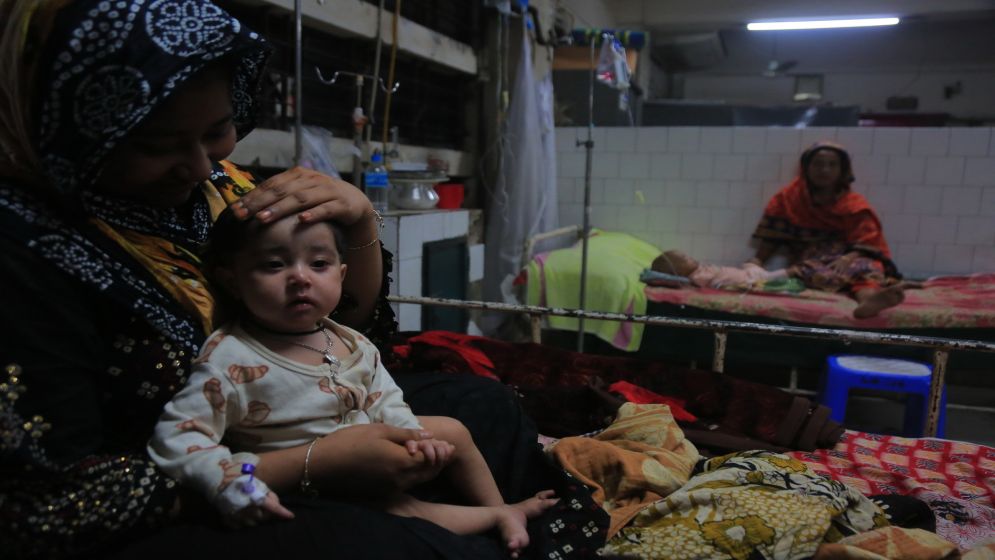
Bangladesh’s ongoing measles outbreak has killed at least 38 children, with some estimates suggesting the toll may have crossed 40 in recent days, as infections surge across Dhaka and multiple districts.
The number of cases has risen sharply—from just 51 in January to over 500 in March, with a positivity rate jumping to 54%, a dramatic spike from the usual below 4%.
Hospitals in Dhaka, Mymensingh, and Rajshahi are overwhelmed, reporting dozens of deaths in a single month alone.
Yet, amid this real public health emergency, a parallel crisis of misinformation has taken hold.
Claims that Bangladesh faced a blanket vaccine shortage or that immunisation programmes had stopped entirely during the period of the interim government have spread widely, often amplified by sections of the media and political actors relying on incomplete or “half-baked” information.
The facts are more nuanced. Vaccination never stopped. Coverage remained relatively high—around or above 90% in recent years—though it dipped due to disruptions.
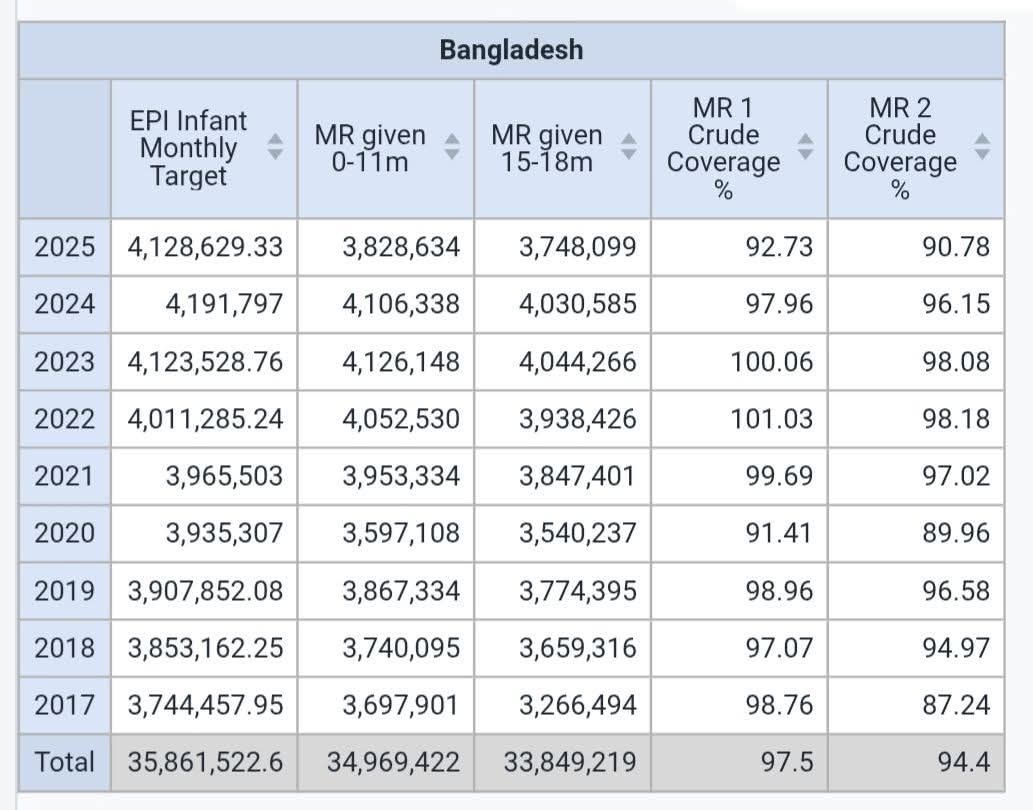
The problem was not the absence of vaccines but breakdowns in delivery. Field-level disruptions, including staff protest, funding gaps after the lapse of health programme cycles, and logistical failures, reduced outreach and routine immunisation in critical periods.
Even official narratives have added to the confusion. Statements claiming that measles vaccination had not taken place for years directly contradict available administrative and programme data.
Meanwhile, some reports framed the crisis solely as a “vaccine shortage,” ignoring operational failures and epidemiological realities.
Critically, a large share of infections—and deaths—are among infants under 9 months, who are not yet eligible for routine vaccination.
In some hospitals, up to 70% of cases fall in this group, highlighting a biological vulnerability rather than a programme failure.
Globally, measles outbreaks are known to follow even small drops in coverage, as the virus quickly exploits gaps in immunity. Bangladesh is now experiencing exactly that pattern—coverage gaps, says analysts.
–