

Bangladesh pushes ‘Silicon River’ vision with Korea semiconductor partnerships

Staff Reporter
Publish: 13 May 2026, 05:40 PM
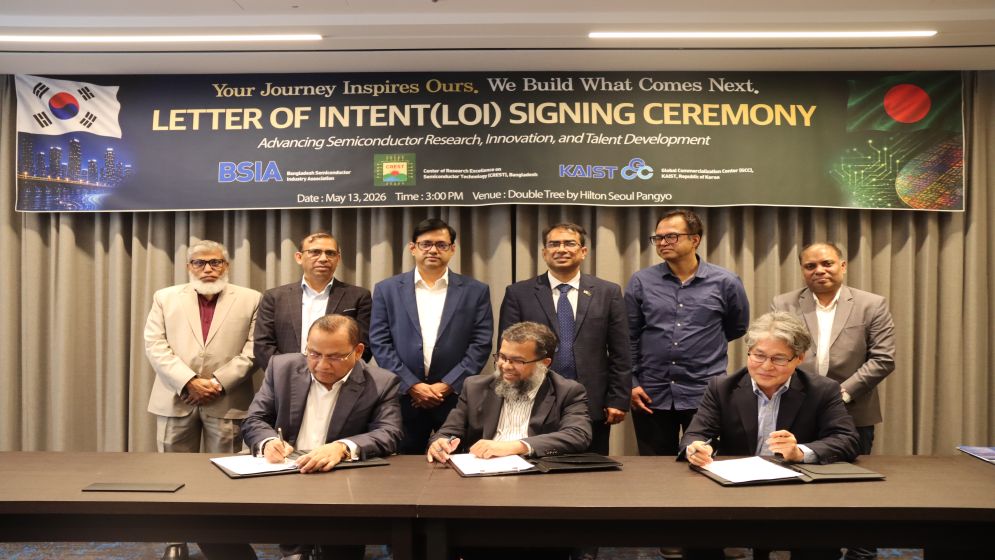
Bangladesh took another significant step toward building its global semiconductor ambitions as the Bangladesh Semiconductor Industry Association (BSIA) deepened strategic ties with leading South Korean technology and research institutions during the latest phase of its South Korea Semiconductor Roadshow.
The day’s engagements focused on advanced semiconductor packaging, research commercialization, AI-driven systems, talent development, and cross-border industry collaboration…all central to Bangladesh’s long-term “Silicon River” strategy aimed at positioning the country as an emerging deep-tech and semiconductor innovation hub.
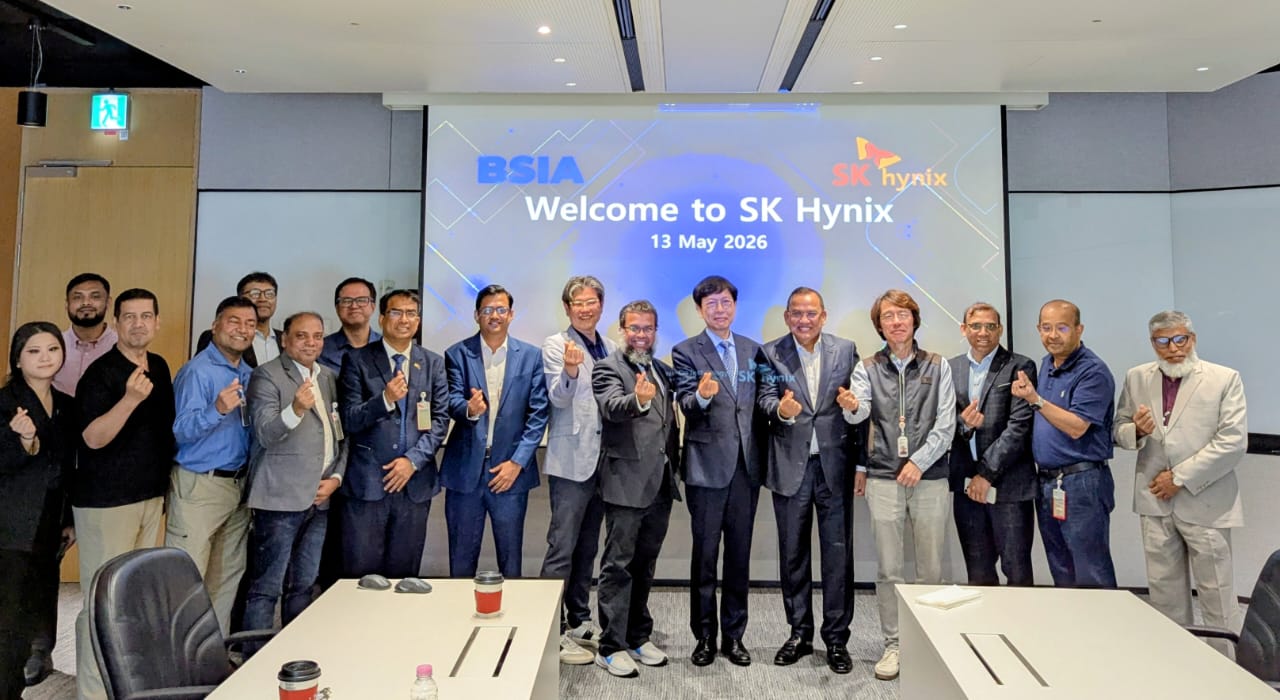
The BSIA delegation began the day with an exclusive visit to advanced semiconductor packaging facilities operated by SK hynix, gaining firsthand insight into next-generation memory integration technologies, heterogeneous integration systems, and AI-era packaging workflows.
The delegation later held high-level discussions with senior SK hynix leadership, including President Dr Charles Ahn and the company’s Vice President of Packaging Technology, exploring potential future collaboration opportunities linked to Bangladesh’s growing semiconductor ecosystem.
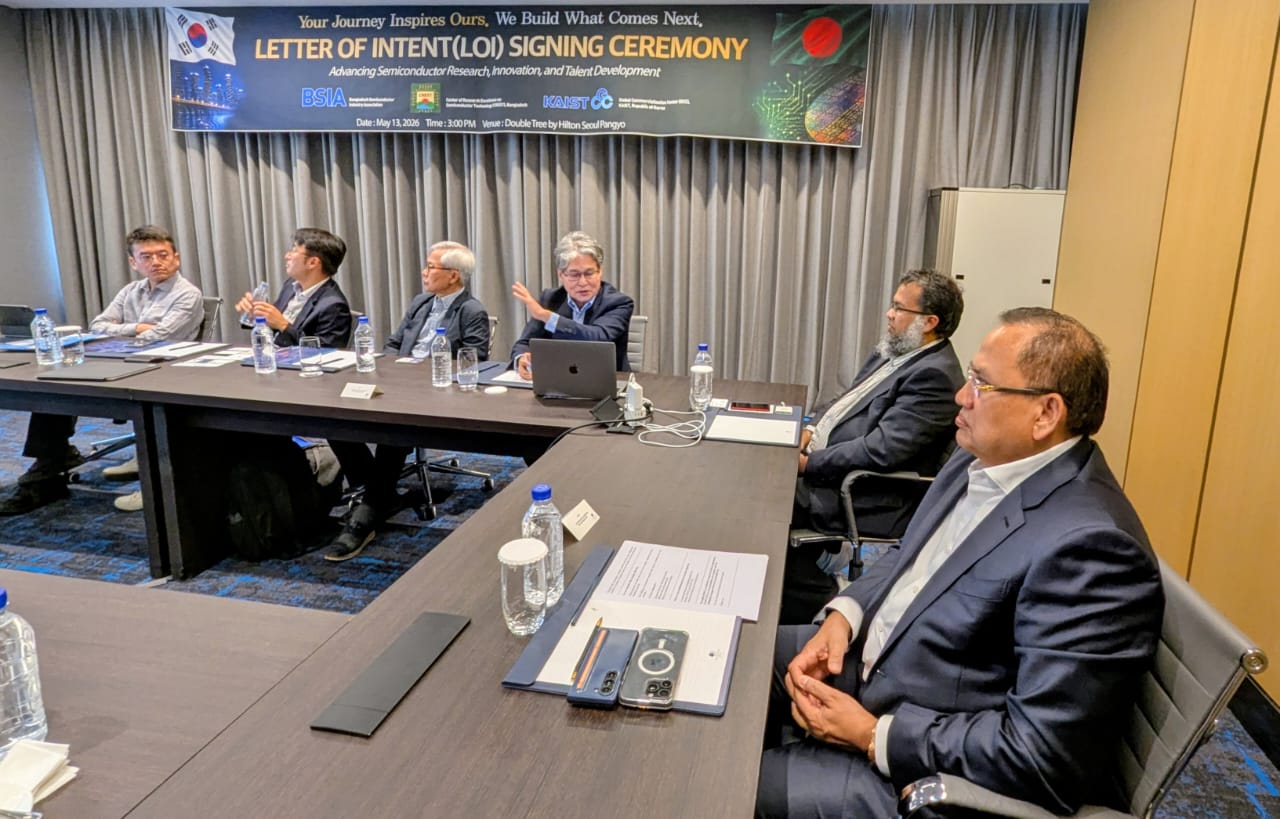
During the meeting, Muhammad Mustafa
Hussain of Purdue University presented Bangladesh’s emerging semiconductor
roadmap, emphasizing that the country’s strategy is centered not merely on
supply-chain participation, but on innovation-led growth driven by globally
competitive products, AI-powered systems, and advanced engineering capabilities.
He stressed that long-term semiconductor value is ultimately created through meaningful technologies and globally adopted innovation ecosystems rather than manufacturing alone.
SK hynix executives reportedly welcomed the presentation positively and indicated the company would internally review possible future engagement models with Bangladesh’s evolving semiconductor sector.
Throughout the engagements, BSIA President M A Jabbar highlighted the importance of building an integrated ecosystem connecting research, commercialization, skilled workforce development, industry participation, and international collaboration.
Later in the day, the delegation visited
Hana Micron, one of South Korea’s major outsourced semiconductor assembly and
test (OSAT) companies, to discuss cooperation in advanced packaging
technologies and workforce development initiatives.
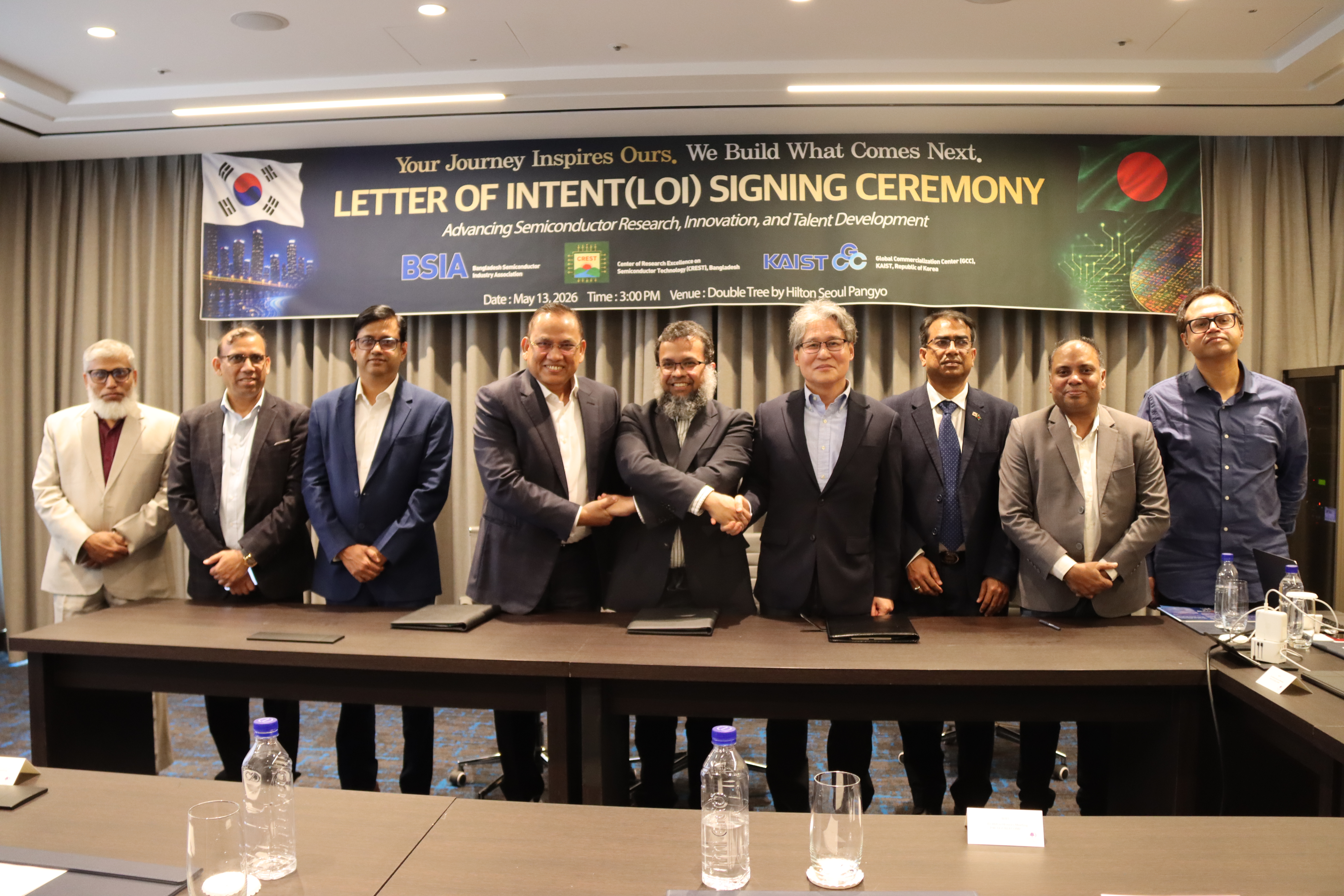
A major milestone of the roadshow came with the signing of a Letter of Intent (LOI) between the KAIST Global Commercialization Center, CREST, and BSIA.
The agreement establishes a collaboration framework spanning semiconductor research, startup ecosystem development, AI semiconductor systems, commercialization pathways, advanced packaging technologies, and industry-academia integration between Bangladesh and South Korea.
Speaking at the signing ceremony, Jabbar described the partnership as “a carefully designed alignment between research, commercialization, and ecosystem integration,” noting that sustainable semiconductor ecosystems depend on strong connections between innovation and practical deployment.
Professor Hussain also highlighted
CREST’s rapidly expanding international partnerships, noting that within six
months of its launch, the organization has already established collaborations
with institutions including National University of Singapore, the Taiwan
Institute of Semiconductor Research, King Abdullah University of Science and
Technology, and now KAIST.
Alongside the institutional meetings, Bangladeshi semiconductor design firms engaged in technical and business discussions with Korean companies PineS and Synic Solution on semiconductor design services, MEMS technologies, foundry support, sensor systems, and future engineering partnerships.
BSIA member companies participating in the roadshow include Dynamic Solution Innovators (DSi), iTest Bangladesh Ltd., Neural Semiconductor Ltd., Prime Silicon Technology Limited, Siliconova Ltd., and Ulkasemi Private Limited.
BSIA said the South Korea Roadshow reflects Bangladesh’s broader strategy to establish a globally connected semiconductor and deep-tech ecosystem through innovation, advanced packaging, commercialization, talent development, and sustained international cooperation.
—