

AB Party alleges rise in extortion, demands business-friendly environment

Staff Reporter
Publish: 25 May 2026, 09:59 PM
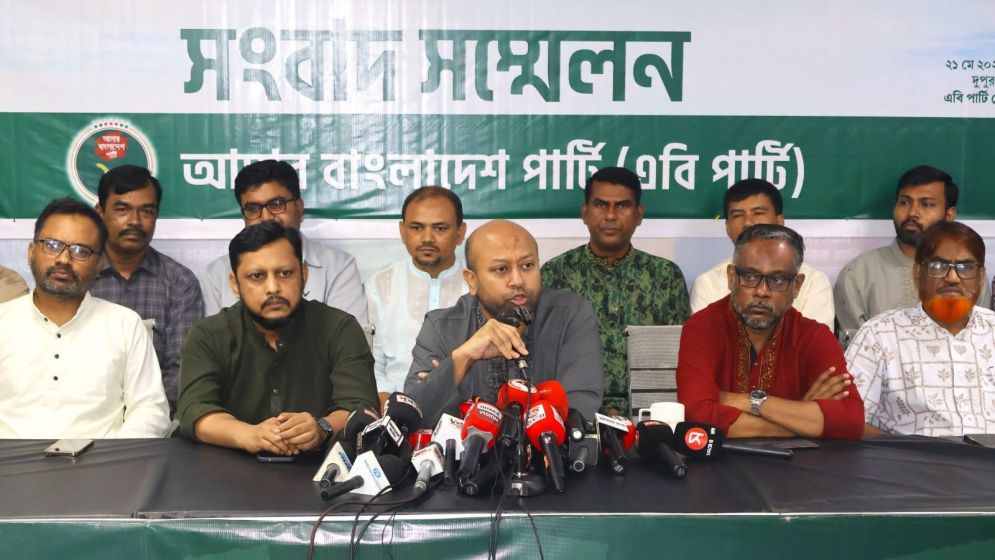
The Amar Bangladesh Party (AB Party) on Thursday accused politically connected groups of expanding extortion networks across major industrial zones and called for an “extortion-free, business-friendly environment” free from political influence.
At a press conference held at the party’s central office in Dhaka, AB Party General Secretary Barrister Asaduzzaman Fuad said extortion, illegal occupation and control over garment waste businesses had reached “alarming levels” in industrial areas including Savar, Ashulia, Gazipur, Narsingdi, Narayanganj and Chattogram.
“Power has changed, but the culture of extortion has not,” the party said in a statement issued during the briefing.
Fuad alleged that businessmen refusing to pay extortion money were being threatened with cases linked to the July Uprising of 2024. He claimed influential quarters connected to the ruling establishment were involved in controlling the activities despite attempts to suppress media coverage.
He said no business-friendly economy could be built under a client-patron system where extortion remained embedded in political structures.
According to him, political parties must first free themselves from violence, criminal activities and extortion if democratic reform is to succeed.
Referring to tensions surrounding Shah Ali Mazar in Mirpur, which oversees around 400 nearby shops, Fuaad said public attention had been diverted toward religious narratives while economic interests behind the conflict received little scrutiny.
He also warned that the state’s failure to ensure justice was pushing ordinary people toward taking the law into their own hands.
The AB Party leader further criticized the government’s handling of law and order following the killing of a child named Ramisa in Mirpur and urged authorities to prioritize public security over constitutional debates.
Fuad also alleged that extortion was occurring in the name of issuing cards to street vendors and warned that attempts to control the media and state institutions could lead to another mass uprising.
___