

Renewable energy must get top budget priority to secure Bangladesh’s energy future: Experts

Staff Reporter
Publish: 04 Jun 2026, 07:48 PM
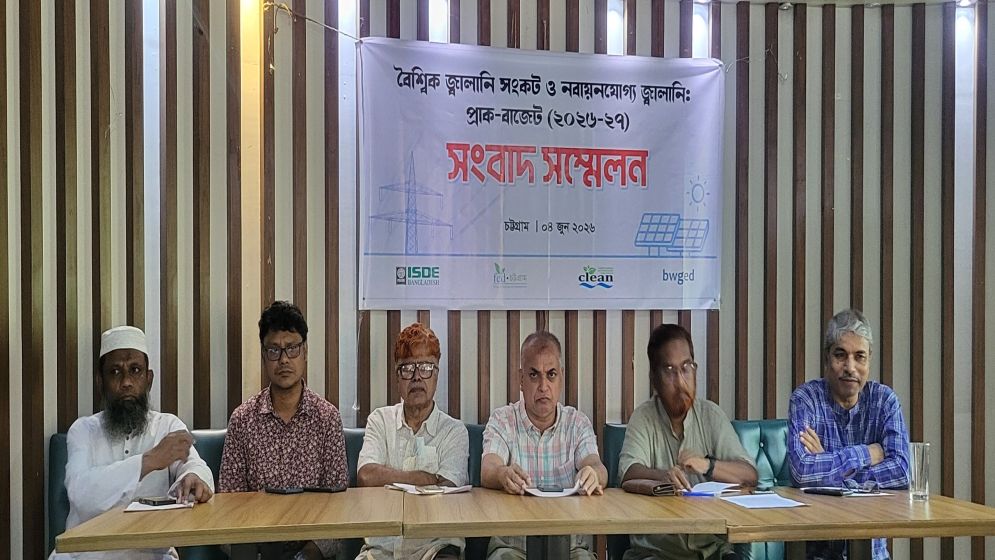
Renewable energy must be given the highest priority in Bangladesh’s 2026–27 national budget to reduce dependence on costly fuel imports, strengthen energy security, and shield the economy from global energy market volatility, energy and environmental experts said at a pre-budget press conference in Chattogram on Thursday.
The event, titled “Global Energy Crisis and Renewable Energy: Pre-Budget (2026–27) Press Conference,” was organized by CLEAN, ISDE Bangladesh, and the Bangladesh Working Group on Ecology and Development (BWGED).
Speakers warned that Bangladesh’s continued reliance on imported fossil fuels is increasing electricity generation costs, subsidy burdens, and exposure to global geopolitical and market shocks.
“Bangladesh has no alternative to renewable energy if it wants to ensure long-term energy security and effectively address climate change,” said Professor Dr. Khaled Misbahuzzaman, president of Poribesh Protibesh Forum-Chattogram and a professor at the University of Chittagong.
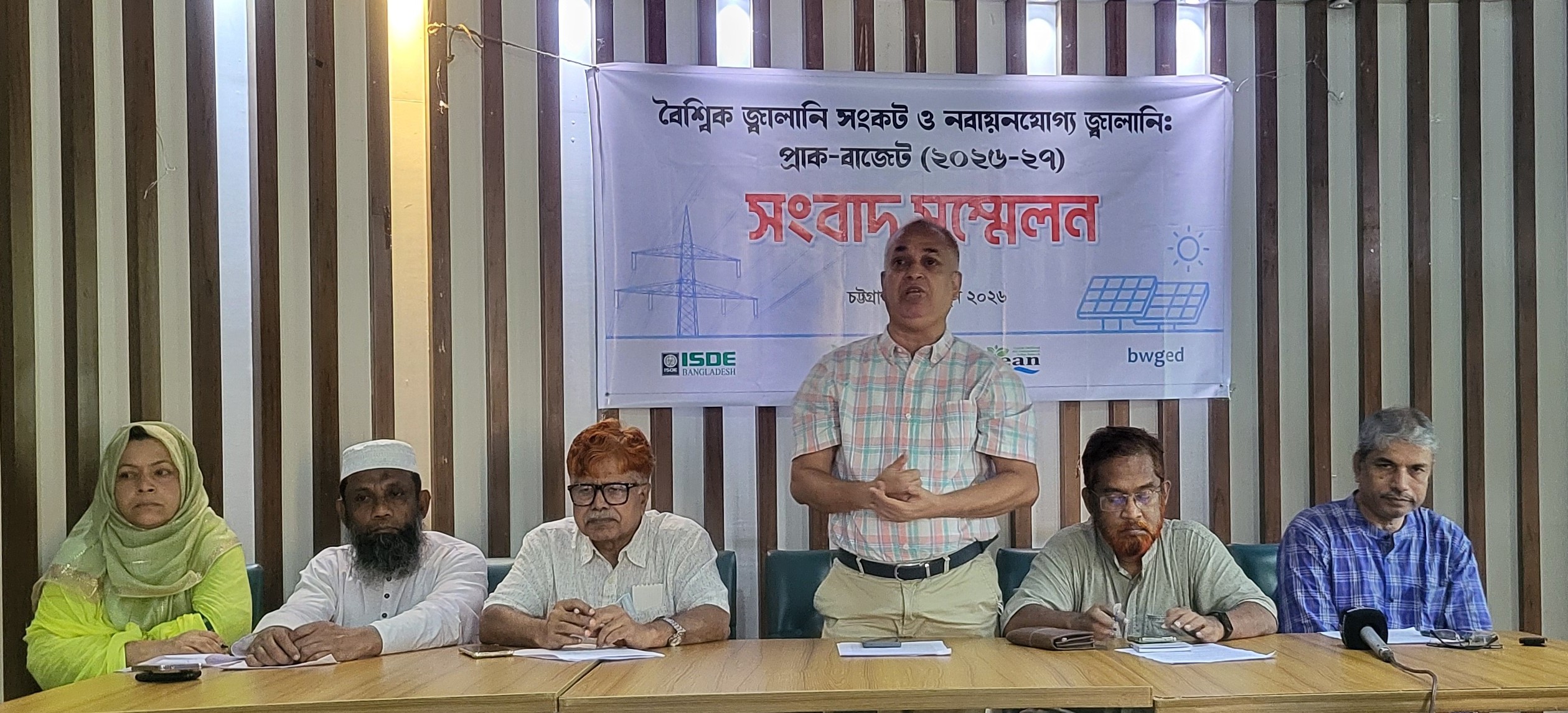
He
called for increased budgetary support for renewable energy research,
innovation, and technology development.
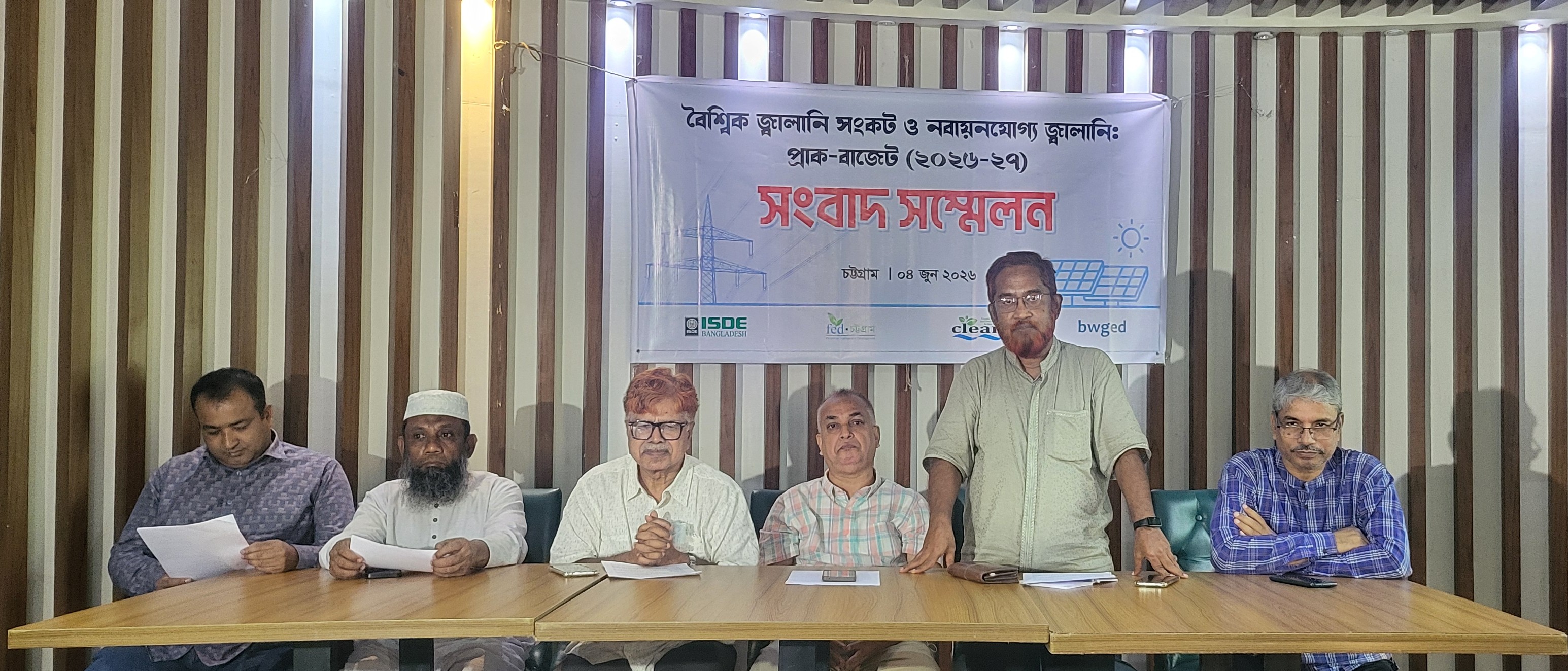
S.M. Nazer Hossain, vice president of the Consumers Association of Bangladesh (CAB) and executive director of ISDE Bangladesh, said weaknesses in power-sector planning and import-dependent policies have left consumers bearing the burden of high electricity costs.
“Investment in renewable energy must increase, while structural problems in the Rural Electrification Board (REB) and Palli Bidyut Samities (PBSs) need urgent reform to ensure reliable electricity supply, particularly in rural areas,” he said.
The speakers also highlighted persistent disparities in electricity services between urban and rural areas. Despite nationwide electrification efforts, many rural communities continue to experience prolonged outages, even in areas connected to the national grid, they said.
According
to the participants, Bangladesh remains heavily dependent on gas, oil, and coal
for electricity generation, making the economy vulnerable to fluctuations in
international fuel prices. Capacity payments, fuel import bills, and subsidy
costs are also placing growing pressure on public finances.
They argued that expanding renewable energy technologies—including rooftop solar, solar irrigation, agrivoltaics, floating solar systems, net metering, and community-owned energy projects—could improve energy security, reduce foreign currency expenditures, create jobs, and support environmental protection.
The press conference unveiled an 11-point set of recommendations for the upcoming budget, including increased allocations for renewable energy, tax and duty reductions on solar equipment, expanded green financing, wider net-metering facilities, greater use of solar power in agriculture, modernization of the national grid, reform of REB and PBSs, and the creation of a renewable energy research fund.
The speakers urged the government to place renewable energy at the center of national development planning, arguing that doing so is critical to ensuring economic stability, energy security, and a climate-resilient future.
—