

‘Padma Barrage will become another costly blunder’: Experts, activists urge project review

Staff Reporter
Publish: 06 Jun 2026, 07:13 PM
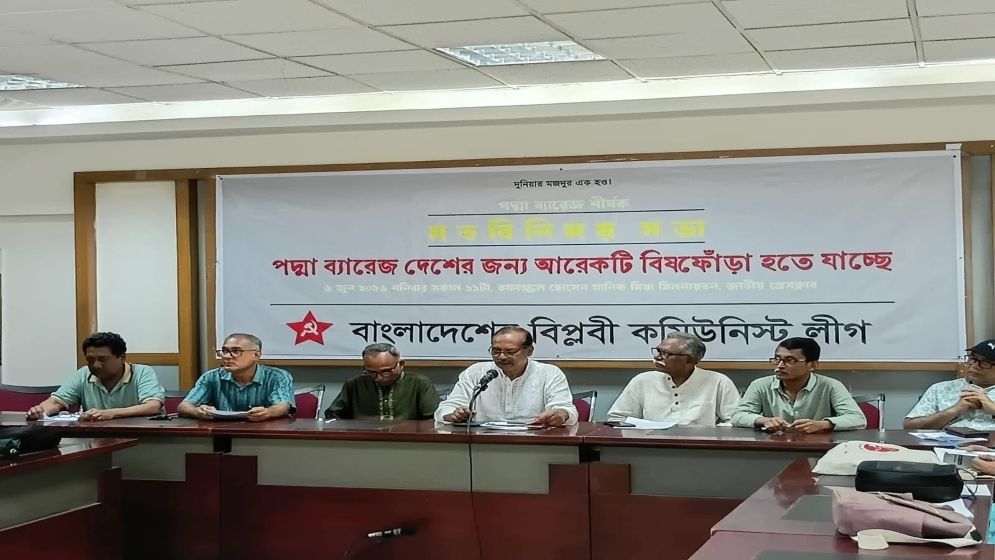
Economists, environmentalists, political leaders and water experts on Saturday raised strong objections to the proposed Padma Barrage project, warning that it could become “another burden” for the country unless subjected to a comprehensive review and public scrutiny.
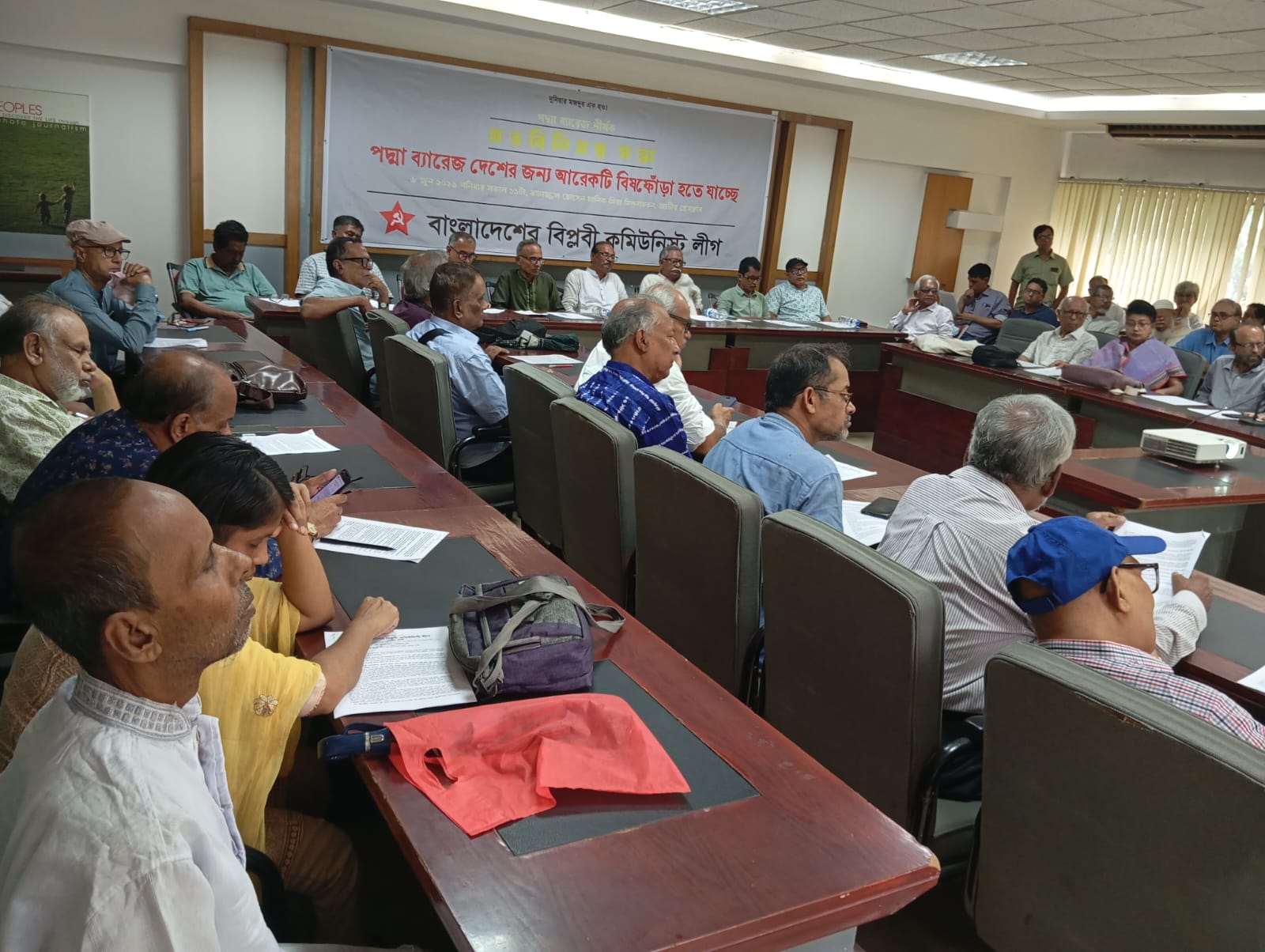
The concerns were voiced at an exchange meeting titled “Padma Barrage Is Becoming Another Boil on the Nation”, organized by the Revolutionary Communist League of Bangladesh at the National Press Club in Dhaka.
The meeting, chaired by the party’s Secretariat member Tushar Kanti Das, brought together a diverse group of speakers, including CPB Presidium Member Mujahidul Islam Selim, economist and rights activist Anu Muhammad, BASAD leader Rajekuzzaman Ratan, Teesta Protection Committee President Faridul Islam Farid, agriculturist Harun Or Rashid and several academics, political leaders and cultural activists.
A recorded statement from US-based water expert Dr. Md. Khalequzzaman was also presented.
Addressing the gathering, Anu Muhammad criticized what he described as Bangladesh’s long-standing top-down approach to water management projects. He argued that the philosophy behind major river-control infrastructure dates back to the 1954 Krug Mission and has continued through subsequent initiatives, including the Flood Action Plan (FAP) and the Delta Plan 2100.
According to him, major projects are often undertaken without meaningful public participation, while feasibility studies remain inaccessible to ordinary citizens because they are published in English and not widely disclosed.
He alleged that governments rarely conduct critical evaluations of previous projects before launching new ones.
Anu
Muhammad called for all documents related to the Padma and Teesta barrage
projects, as well as major international agreements, to be made publicly
available in Bangla. “No project or agreement should be approved without
informing the people,” he said.
Mujahidul Islam Selim described the Padma Barrage project as contrary to national interests and argued that transboundary rivers should be managed through basin-wide cooperation among countries sharing the same river systems.
Instead of constructing dams and barrages, he advocated policies focused on coexistence with natural river dynamics, including floods and seasonal water flows. Selim called for the immediate suspension of the Padma Barrage project pending a comprehensive review.
Agriculturist Harun Or Rashid questioned the government's projected benefits from the project, noting that 90 to 95 percent of agricultural land along both banks of the Padma is already irrigated. He said more than 1.5 million shallow tube wells currently provide irrigation, largely through farmers’ own initiatives rather than government intervention.
Meanwhile, Teesta Protection Committee President Faridul Islam Farid criticized the quality and accountability of feasibility studies, claiming they often fail to reflect field realities. Referring to the Teesta experience, he said upstream and downstream dams had reduced the river’s navigability and altered its natural characteristics.
He warned that the proposed Padma Barrage would similarly fail to deliver the promised benefits and called for a reassessment of the project before any final decision is made.
—