

Australian parliamentarians request UN to exclude Bangladeshi troops from UN Peacekeeping missions

Publish: 23 Jan 2024, 04:39 PM
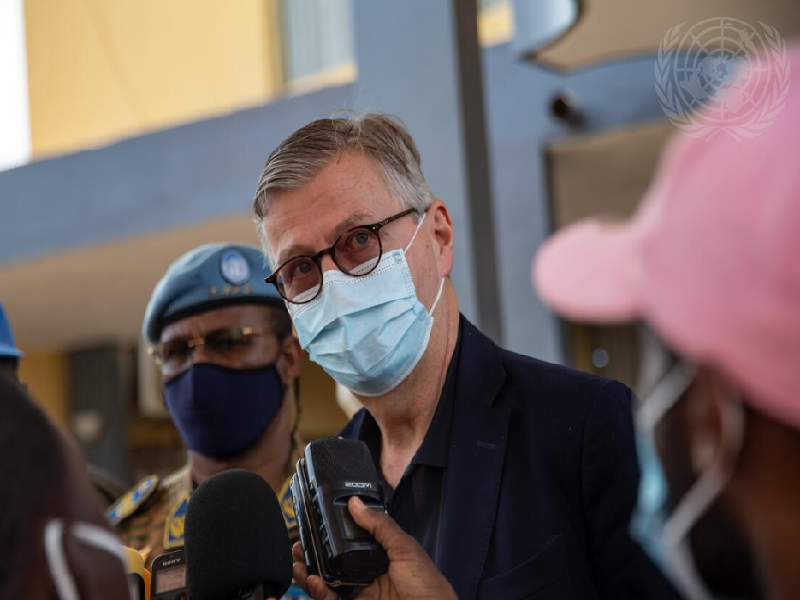
Jean-Pierre Lacroix (centre), Under-Secretary-General for Peace Operations
More than a dozen Australian Senators and Members of Parliament wrote a letter to the United Nations (UN) Under-Secretary-General Jean-Pierre Lacroix urging the UN to stop Bangladesh’s participation in the UN Peacekeeping missions. The letter dated January 16, 2024 was the latest development of the international community’s condemnation of widespread allegations of extrajudicial killings, human rights violations, and pervasive suppression of the political opposition.
In the letter, the Australian parliamentarians urge the United Nations "to take swift and immediate action to address the ongoing human rights crisis in Bangladesh. We stand with the citizens of Bangladesh and those sections of the international community who condemn the continuing violations of human rights occurring in Bangladesh. Arbitrary detention, torture, enforced disappearances and extrajudicial killings are some of the shocking crimes Bangladehis are being subjected to. The security forces of Bangladesh, including the Rapid Action Battalion (RAB) and Detective Branch police (DB), are involved in these human rights violations. There were at least 2757 cases of extrajudicial killings committed by Bangladeshi law enforcement agencies between 2008 to 2021. This report by Human Rights Watch and this report also by HRW provide information about these crimes."
Expressing concerns about Bangladesh’s law enforcement agencies that frequently resort to violence, the letter noted, "Bangladesh is one of the largest contributors to UN peacekeeping missions. Currently, more than 6500 personnel from Bangladesh's armed forces and police — including RAB and DB police — are deployed on UN peacekeeping missions in different countries. While we recognise the commendable commitment of Bangladesh to peacekeeping efforts, it deeply troubles us that individuals implicated in severe human rights violations in Bangladesh continue to be rewarded with international deployments under the UN banner. In particular, we are concerned that individuals who have served with RAB and DB police are being sent on UN missions, despite consistent and credible evidence of abuses including extrajudicial killings, torture, and enforced disappearances by members of this unit since its creation in 2004."
The letter pointed to evidence of human rights violations, it stated, “In November, 2023, United Nations former High Commissioner for Human Rights Michelle Bachelet noted that “[a]llegations of torture and ill-treatment by the Rapid Action Battalion have been a long-standing concern.” Meenakshi Ganguly, South Asia director of HRW, said that there is a great risk the troops responsible for grave human rights violations in Bangladesh would be rewarded with a UN deployment."
"While the authorities in Bangladesh deny that government forces were involved in any human rights abuses, it should be noted that in December 2021 the US administration imposed human rights-related sanctions on the RAB and six of its former and then-serving officers, saying they were responsible for hundreds of enforced disappearances and extrajudicial killings", it added.
The senators and members of parliaments were "concerned by the allegations of abuse of power by senior members of the ruling party in Bangladesh resulting in shocking human rights violations suffered by ordinary citizens, community activists, union leaders, and opposition political party members. These crimes have been documented by Amnesty International and by the US Department of State in its report on Bangladesh."
They "strongly believe that the UN's peacekeeping efforts should not include personnel from forces that have exhibited a track record of human rights abuses. Inclusion of such individuals not only undermines the credibility of the UN, but also poses a direct threat to the safety and security of the communities that peacekeeping operations are designed to protect." Referring to the statement of the committee, HRW’s Ugarte said, “The U.N. should require Bangladeshi officers to disclose previous deployments with RAB, then automatically bar anyone affiliated with RAB from U.N. peacekeeping.
The parliamentarians "believe that the exclusion of Bangladeshi military officials from UN peacekeeping deployments would not only send a clear message to the international community about the UN's commitment to upholding human rights but also act as a powerful deterrent to future human rights abuses within Bangladesh. The exclusion from participation serves as a necessary step in safeguarding the credibility and effectiveness of UN peacekeeping missions. If Bangladesh is to maintain its role as the top contributor of peacekeeping troops it should appropriately apply the UN human rights screening policy, which requires governments, alongside the UN to ensure their nationals serving with the UN have not violated human rights law.”
The letter appealed to "the UN to take meaningful steps to safeguard its reputation as a beacon of human rights and justice, and to demonstrate its unwavering commitment to ensuring that peacekeeping missions are carried out by personnel who uphold the highest standards of professionalism and respect for human rights.”
The letter was signed by Senator Jordon Steele-John who is Australian Greens Spokesperson for Foreign Affairs. The other signatories to the letter are Senator David Shoebridge, Senator Jordon Steele-John, Adam Bandt MP, Senator Larissa Waters, Senator Nick McKim, Senator Janet Rice, Senator Barbara Pocock, Elizabeth Watson-Brown MP, Stephen Bates MP, Senator Mehreen Faruqi, Senator Peter Whish-Wilson, Senator Dorinda Cox, Senator Penny Allman-Payne, Max Chandler-Mather MP, Senator Sarah Hanson-Young, The senators and MPs are from Green Party Australia.