

Sand-laden bulkheads become deadly menace on Bangladesh rivers

Nazmul Islam
Publish: 24 Mar 2024, 07:50 AM
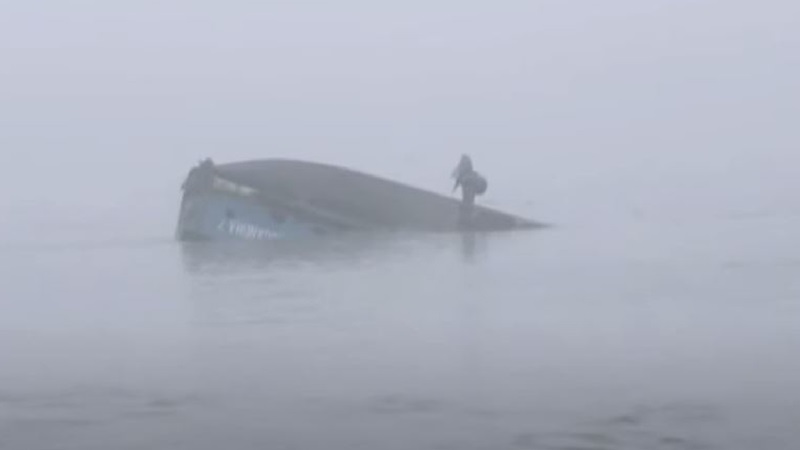
Maria Bhuiyah was shaking while recalling the harrowing accident that happened just a few hours ago. The 16-year old was in a small trawler in Meghna river with her uncle, wife and their two young children.
“It was a relaxing trip in the afternoon on the river. We were about to reach the jetty. All of sudden, a sand-laden cargo vessel appeared from nowhere and hit our boat,” Maria said, “I was able to swim ashore but all other family members drowned in front of my eyes.”
Divers from Fire Service and Civil Defence (FSCD) recovered the bodies of Maria’s aunt and one of her cousins, but the search continues for her uncle, a police constable, and her other cousin.
They are among six people still missing after a sand-laden cargo vessel, often called a "bulkhead," collided with a passenger trawler carrying 21 people at dawn on Saturday.
The tragic accidents claimed the lives of at least three people so far. The remaining passengers managed to swim ashore.
This collision between passenger boats and bulkheads is nothing new as in the past five years, at least 15 such accidents took place in different rivers across Bangladesh, claiming nearly hundred lives, says the data of Bangladesh Inland Water Transport Authority (BIWTA).
Just this January, State Minister for Shipping Khalid Mahmud Chowdhury raised serious safety concerns about bulkheads. He compared them to the notorious "locally-made three-wheelers" that plague Bangladesh's roads, known for their frequent accidents.
Culprits behind repeated collisions
Despite boasting a vast network of river routes stretching over 24,000 kilometers, Bangladesh grapples with maritime safety concerns. Waterways remain a traditional and cost-effective mode of transportation, but increasing accidents raise questions about whether the country's maritime transport system has kept pace with growth.
According to the records of the Shipping Department of Bangladesh, more than 550 passenger ships capsized between 1991 and 2020, killing over 3,600 people and leaving nearly 500 people missing.
Talking with Bangla Outlook, Mohammad Shahid Mia, president of the advocacy group The National Committee to Protect Shipping, Roads and Railways, expressed deep disappointment.
"For far too long, we've demanded stricter regulations on registering and monitoring bulkheads on our rivers," Mia said. "It feels like our pleas have fallen on deaf ears. Just six months ago, a similar tragedy unfolded when a bulkhead struck a passenger boat, claiming six lives on the Meghna River. Back then, assurances were made to address the issue, but sadly, nothing has changed.”
Experts warn that reckless driving on waterways is a recipe for disaster, leading to numerous deaths and injuries every year in Bangladesh. They point to a combination of factors behind these tragedies: unskilled captains, poorly maintained vessels, and a lack of proper management in the water transport sector.
Data from the Accident Research Institute (ARI) at BUET paints a grim picture. Over the past one and half decade, there have been a staggering 264 river accidents, resulting in the deaths of 1,430 people and injuries to 135.
Collisions are the leading cause, accounting for a shocking 58% of all crashes (around 154 incidents). Other contributing factors include overloading and instability (31 accidents), storms (24), hull breaches (17), strong currents (11), and various other reasons (27).
No check on unregistered and unfit vessels
“Unregistered and unfit vessels are a major culprit behind maritime accidents,” Dr Hadiuzzaman, director of ARI, told Bangla Outlook.
“Especially, these bulkheads," Dr. Hadiuzzaman said, "are essentially the 'Nosimon' and 'Korimon' of the rivers,” referring to the infamous, poorly-designed three-wheeler vehicles notorious for causing road accidents. “Bulkheads often lack proper navigation systems, making them a significant collision risk,” he added.
According to a 2023 report by the Parliamentary Standing Committee on the Ministry of Shipping, even though the official records show only 15,000 registered vessels, the true number is estimated to be at least 85,000, including various types of boats.
Alarmingly, the report said, bulkheads, known for their safety hazards, account for at least 6,000 of the estimated 70,000 unregistered vessels.
The report further exposed a gap in safety inspections. Out of the 15,000 registered boats, only 8,000 undergo mandatory annual fitness tests. This means a staggering 7,000 vessels, deemed potentially unfit, are operating freely.
The report also raised serious concerns about the inaction of relevant authorities like the Department of Shipping (DoS) and the Bangladesh Inland Water Transport Authority (BIWTA) who, despite being aware of the situation, fail to take steps against these unregistered and potentially unsafe vessels.
BIWTA chairman Arif Ahmed Mostafa acknowledges that illegal sand-laden bulkheads are a major cause of collisions, especially at night. He assures the public that BIWTA is “actively working to address this issue by implementing stricter monitoring and regulations.”
Dr. Zobair Ibn Awal, a Naval Architecture and Marine Engineering Professor at BUET with 13 years of research on maritime accidents, offers a different perspective. He argues that simply assigning blame after collisions won't solve the problem.
"It's not about a blame game," Dr. Awal emphasizes. "Focusing on who to blame creates a situation where people will justify their actions. Instead, we need to examine the systemic issues that contribute to these accidents."
Dr. Awal proposes a more proactive approach. When a collision occurs, authorities should prioritize understanding the root cause from the driver's perspective. “By analyzing these reasons, the system can be improved to prevent similar incidents in the future,” he said.