

“Hope dies last in War”: A tale of forgotten western front of 1971 war

Faisal Mahmud
Publish: 26 Mar 2024, 07:32 AM
A downpour drenched Dhaka as I encountered Supryio Sen, the renowned Indian filmmaker, on the third floor of Aziz Super Market. One of his films was being screened at the Bangladesh Short Film Forum's auditorium.
I approached him at the auditorium door, and before I could begin my questions, he surprised me with one of his own: "Haven't you seen the full film?"
Caught off guard, I admitted, "I watched the most part, and it was captivating. However, I have a deadline looming, so I skipped the last bit.” It was around 7 pm.
"Ah, journalists," he chuckled, "always pressed for time." He then added, "You wouldn't believe it, but I used to be one myself."
Though unaware of this, I offered an improvised response, "Your films certainly possess a journalistic quality in their portrayal of reality.”
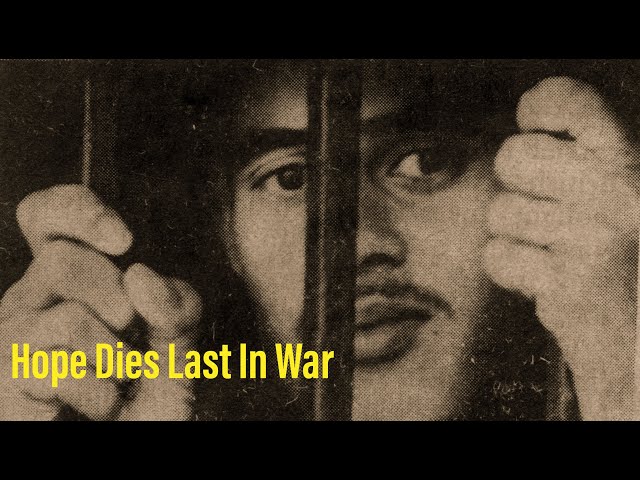
The film "Hope Dies Last in War," being screened inside, indeed resonated with his journalistic skills. It explored the story of 54 Indian soldiers captured as prisoners of war (POWs) during the 1971 Indo-Pakistani War or more popularly known as Bangladesh liberation war.
Sen told me, "While your liberation war unfolded in the east, a full-fledged war raged on the western front. In fact, India declared war on Pakistan on December 3rd, 1971.”
Frankly, many Bangladeshis, myself included, were very ill informed about the western frontier of this war.
Sen too wasn’t that aware and told me that his awareness about the western front of war was sparked in 2004 when he read a newspaper article about the unwavering wait of Mrs. Damayanti Tambay, wife of Flt Lt V V Tambay, an Indian POW from the 1971 war.
“On December 5th, 2004, I met her at the Ambala cantonment, the very place her husband took off from 33 years prior."
Sen then shared a heartfelt reflection, "I inquired how she found the strength to wait for so long. Even Winnie Mandela's wait for Nelson Mandela wasn't as prolonged.”
"It's the unconditional and unwavering love I have for him that has driven me on this seemingly endless journey," she replied. Her words resonated deeply with Sen. "That was the moment I knew I had to share this remarkable story of love with the world," Sen said.
Reason behind the title
Filmmaker Sen explained that his film "Hope Dies Last in War" primarily focuses on the enduring hope held by families of missing Indian soldiers for their return.
Over 200 Indian soldiers were repatriated from Pakistan after the 1971 war. However, the expected final train carrying remaining soldiers never arrived. While Pakistan declared no further POWs remained in their custody, the Indian government advised families to accept the possibility of their loved ones' deaths and receive compensation.
"This offer was unacceptable to the families," Sen stated. "For them, life became a constant struggle between hope and despair. Some parents passed away waiting, some wives remarried, and some children, overcome by hopelessness, chose to end their lives."
Despite these hardships, some families persevered through immense challenges. "Perhaps," Sen reflected, "as long as there is love, hope remains. And in war, hope is the last thing to die."
Sen’s film aimed to showcase their stories: their unwavering wait at borders, their persistent petitions, and their unwavering refusal to give up.
It employs a unique blend of fictional and documentary elements, utilizing both wide shots and intimate close-ups to portray the stories of families seeking their loved ones. Each family member becomes a central protagonist in their own right, their emotional testimonies leaving a lasting impact.
"We heard of our missing soldiers being announced as 'captured alive' on Pakistani radio," declares the brother of a missing soldier. "We believe they're alive due to persistent reports from various sources."
A daughter adds, "One soldier smuggled a letter home, mentioning 20 comrades sharing his cell. Time magazine even published photos of two others."
While watching, I figured out that among these individuals, Damayanti Tambay emerged as the most powerful symbol of the families' unwavering pursuit of truth. A former national badminton champion in India, she spent only a year with her husband, Lt. V.V. Tambay, before his deployment. The film recounts, "We drove to the Ambala Cantonment on December 5, 1971, for his last flight. After that, I never saw or heard from him again."
Her eyes welling up with cherished memories, her past athletic achievements pale in comparison. She has lived the life of a single woman ever since.
"When I asked her about her resilience," Sen tole me, "She replied that it was her unwavering love that propelled her on this endless journey. As long as love endures, so does hope, and in war, hope is the last casualty.”
Accolades for the film
"Hope Dies Last in War" earned critical acclaim, securing the Best Documentary Award at the 55th National Film Awards in 2007. The National Academy lauded the film for "its sensitive yet probing exploration of the experiences of prisoners in foreign lands."
They further commended the film for its "complex tapestry of diverse voices" and its "endeavor to find hope amidst a struggle against despair."
Saikat Ray, the film's editor, received the National Award for best editing in the documentary and short-film category. His work was praised for "creatively blending elements of past and present, and seamlessly weaving images that evoke genuine emotions." The film premiered in 2007.
Ranjan Palit's cinematographer also garnered recognition, winning the IDPA (Indian Documentary Producers Association) gold award.
While receiving the award, director Sen summarized the film succinctly, stating, "It is a poignant story of human rights violations, drawing upon the testimonies of parents, spouses, siblings, children, and grandchildren.”
The film delves into their pain, helplessness, dejection, and ultimately, their reconciliation, hope, and dreams amidst the backdrop of a war-torn Indian subcontinent.”