


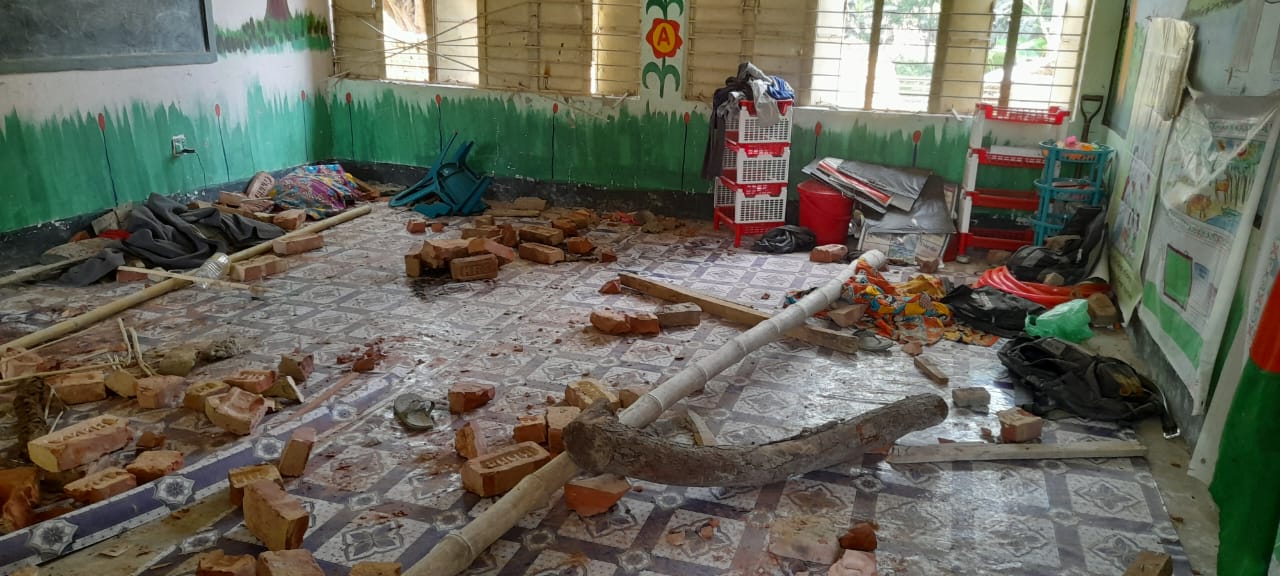
A distressing incident in Faridpur has heightened concerns about potential communal unrest in the country. A fire erupted at a temple in the Madhukhali Panchpalli area of the district. Several workers were engaged in the construction of toilets at the Panchapally Government Primary School adjacent to the temple. Two brothers, Ashraful and Arshadul, lost their lives when an agitated mob attacked them, suspecting their involvement in the fire.
Communal violence has repeatedly plagued the subcontinent, with evidence often pointing to local or national political agendas driving such conflicts. External influences may also be at play. The timing of this incident, occurring on the eve of India's elections, suggests that it may not be entirely coincidental.
The Awami League has once again secured power through an election deemed unacceptable, disregarding both domestic and foreign pressures. It's evident that the Awami League managed to achieve this with the backing of the Indian government, a powerful neighbor in the region. Now is the time to reciprocate the support to India's Hindutva government.
Inciting communal strife in Bangladesh could serve the purpose, reinforcing the narrative of 'Hindu Khatre Mein Hai' (Hindus are in danger), thus potentially bolstering support for Hindutva among Indian voters. Meanwhile, the Awami League, positioning themselves as protectors of the country's Hindu population, may resort to the familiar rhetoric, claiming they had no alternative but to act in response.
The Awami League has a history of repeating such actions. Moreover, in the political game, the party often uses Hindus as pawns to maintain favor with India, thereby putting Bangladeshi Hindus at risk. Sadly, it's the impoverished and vulnerable Hindus who bear the brunt of this danger. The affluent and influential within the community typically remain unscathed, exploiting the plight of their fellow co-religionists. This pattern bears resemblance to the exploitation of vulnerable Jewish individuals by wealthy counterparts, akin to occurrences before and during World War II.
Certain Islamist parties and even supporters of nationalist parties may attempt to sensationalize the Faridpur incident as the killing of Muslims by Hindus. Hindu leaders may also seek to exploit the situation by suggesting that the BJP stands to benefit. If Bangladeshi citizens, already burdened by economic hardships, disillusioned by misgovernance, and resentful of India's political meddling, can be swayed towards anti-Hindu sentiments, both the BJP and the Awami League may see it as advantageous.
If communal riots are sparked amidst deprivation of basic necessities like food, clothing, and voting rights, the nation risks being torn apart along sectarian lines. The Awami League has maintained its grip on power for fifteen years through a combination of fear of militancy and stoking conflicts between the spirit of the liberation war and religious sentiments. Once again, they may seek to exploit turbulent circumstances to further their own agenda. Their history in this regard is notably consistent.
We needn't succumb to this pitfall. As I compose this article, I can recollect the name of the president of Dhaka University Chhatra Dal, Ganesh Chandra Roy Sahas. Additionally, I recall Nipun Ray's lengthy address delivered to party members at the BNP convention in Golapbagh last year.
Bangladesh is home to Muslims and Hindus alike. It belongs to Bengalis, Chakmas, Santals, and all its citizens. We must unite to combat the spread of Hindu nationalism.