

Bangladesh’s reform moment was right there…and we are letting it slipping away

Zia Hassan
Publish: 27 May 2025, 10:59 PM
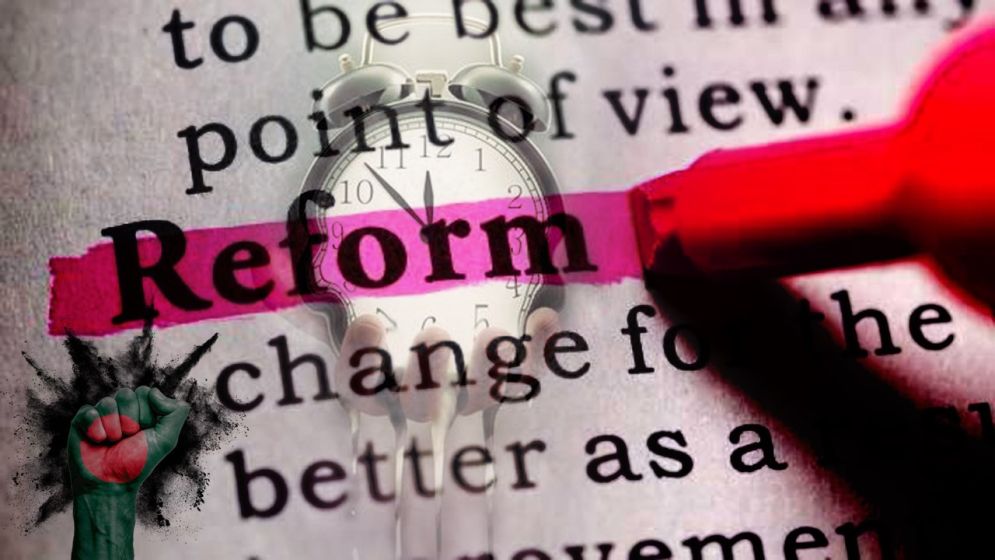
I still find it hard to talk about. The sheer waste–the squandering–of a generational opportunity to reform the Bangladeshi state after Sheikh Hasina’s fall. It’s enough to bring a person to tears.
We were standing at the edge of a historic rupture, and yet those who seized the moment mistook viral popularity for vision. They marched to slogans, not strategies.
When I arrived in Bangladesh after the uprising, I came with one purpose: to talk about reform. Not in the abstract, but in practical, departmental terms. I met with activists, student leaders, and government insiders.
I laid out a methodology that could have transformed ministries bloated by corruption and strangled by legacy bureaucracy. But the pride of revolution is a potent drug. Drunk on the high of hashtags and hero worship, those at the helm wouldn’t hear a word of it.
It’s the tragedy of power: when it arrives suddenly, it makes even the sharpest minds go deaf.
I’ve held my tongue until now, not wanting to undercut a fragile transition. But the time for politeness has passed. Reform is still possible–but only if we stop treating the word like it’s code for “stall elections.”
I’ve had that suspicion myself. Still, if we’re honest, real reform is not a delaying tactic. It’s a plan. A budget. A team. It’s power restructured–not hoarded.
What I proposed wasn’t radical. Every ministry would form a reform committee. Each one would audit the laws and policies that serve no one but the bureaucrats who enforce them. They’d examine which departments work, which don’t, and whether their missions reflect the needs of the Bangladeshi people–which, plainly, they do not.
They’d scrap the dead weight and build what’s needed from scratch.
This isn't a theory. It’s been done, or at
least drafted. Development agencies have poured hundreds of crores of taka into
reform frameworks. Ministries are sitting on mountains of donor-funded reform
documentation. What’s missing is simple: execution.
A lost opportunity
I envisioned something different–a standing technical team within every ministry, division, and agency, empowered to act. It would be staffed with academics, policy experts, frontline service users, retired bureaucrats, and yes–even representatives from BNP, Jamaat, the AB Party, Ganosamhati Andolan, and others.
And crucially, the ministry’s vendors–the very people who know the anatomy of corruption because they’ve operated within it.
You can’t reform what you don’t understand. And you can't understand a ministry from the high seat of a student union office.
But that didn’t happen.
The path was clear: a technical committee could have been empowered to identify every bureaucratic obstacle–every outdated law, every corrupt system siphoning billions in public funds–and replace them with functioning, transparent mechanisms.
With public legitimacy behind it, even judges were made to resign within 24 hours. The momentum was real.
Had we seized that moment, the entire overhaul of governance could have been achieved in six months. Whatever remained would have been carried forward inevitably, because once real reform begins, it gathers force.
No bureaucrat would have dared resist a process backed by that kind of public mandate.
Instead, we got a patchwork of so-called coordinators scattered across ministries and departments–individuals with neither the mandate nor the expertise to engineer systemic change.
You’ve read about their failures in the newspapers. When this government’s term ends, the headlines will tell even darker tales of corruption and decay.
I returned to Bangladesh in August, full of conviction and a detailed plan. I met officials, advisors, student leaders. Many knew my work; some even shared tea and warm words. But when it came to listening–to genuinely engaging with a more empirically sound, more efficient, more transformative alternative–not one took the leap.
The current reform model being pursued isn’t just ineffective; it’s fundamentally flawed. Yes, some change may come of it, but we have lost the chance for something far more powerful: a comprehensive, ministry-led reform process that would have operationalized change–not just promised it.
It was possible. It was doable. Watching that
slip away is heartbreaking.
Is there a silver lining?
Still, all is not lost. If the government acts now, this original reform plan can still be implemented. It does not have to be politicized or tied to elections. Reform, done right, stands on its own legitimacy.
But time is running out.
Power has a corrosive effect–not just in its obvious abuses, but in its quieter, more insidious symptoms: arrogance and detachment.
The moment leaders settle into power, they begin to lose touch with the urgency and clarity that brought them there. They cling to position, shun dissent, and label thoughtful critique as betrayal.
This isn't unique to any one administration. Sheikh Hasina’s government is as susceptible to these blind spots as the well-intentioned transitional regime once led by Professor Yunus. And unless something fundamentally changes, the next government will suffer the same fate.
Let me be clear: I am not opposing the reform efforts currently underway. My colleagues and I continue to offer our time, intellect, and networks in full support. But the path we’ve taken comes at a heartbreaking opportunity cost.
The tragedy isn’t just what has gone wrong–it’s what could have gone right. We had, at our fingertips, a chance to leap forward, to build a government rooted in expertise, humility, and reason.
But self-importance won out. Expert advice was dismissed. Common sense was cast aside.
We will never truly know what might have been achieved had those in power chosen wisdom over ego. And that–not the lack of reform itself, but the willful squandering of transformative potential–is the real catastrophe.
So much promise, so casually wasted. It’s not just sad. It’s shameful.
—
Zia Hassan is a writer and analyst