

The collapse of meaning in Bangladeshi politics

Mikail Hossain
Publish: 15 Sep 2025, 11:31 AM
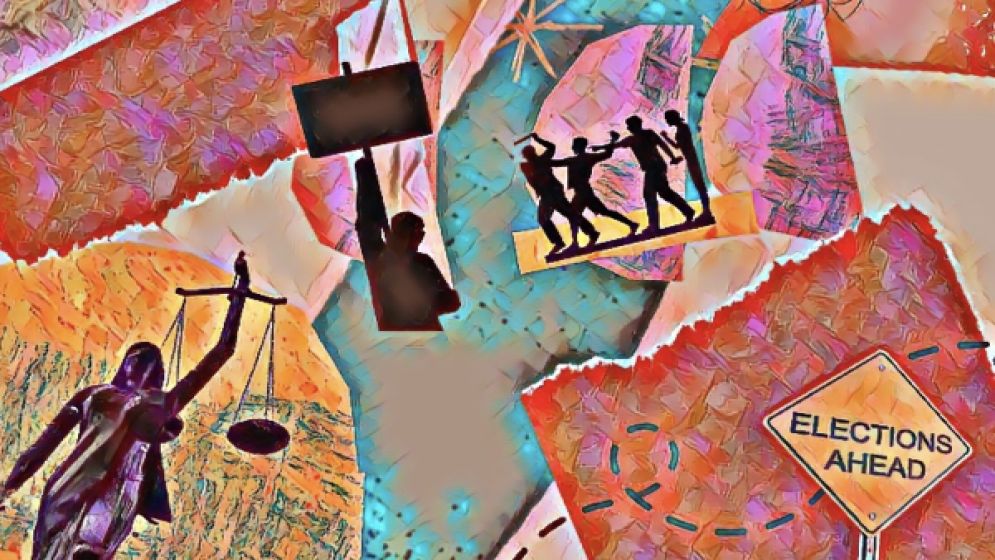
In Greek mythology, there is a story known as Ondine’s Curse.
Ondine, a water nymph, gives up her immortality to live as a mortal with the man she loves. But when she discovers his betrayal, her rage takes a chilling form and she curses him so that his body loses its unconscious ability to breathe.
From that moment, every breath must be deliberate, every inhalation a conscious act. He cannot sleep, cannot rest, condemned to a life where awareness itself becomes torment.
Medicine later borrowed this myth for a very real and rare condition–Central Hypoventilation Syndrome. Here, patients lose the brain’s automatic command to breathe, often after encephalitis or a tumor damages the respiratory center.
Their lungs are fine, but they can no longer inhale unconsciously. They must think their way through every breath or rely on mechanical ventilation. What mythology once cast as divine punishment is, in reality, a cruel neurological fate.
But the idea of awareness as suffering did not remain confined to myth or medicine. It was once turned into a weapon of war.
During the Spanish Civil War, Alphonse Laurencic, a French artist aligned with the Republican and Anarchist forces, was tasked with designing prisons for Franco’s fascists. He turned to modernist theories of dissonance, inspired by Bauhaus architecture and Kandinsky’s chaotic colors, to create cells that would not break bones but unravel minds.
The rooms were only 3 by 6 feet. Sleeping platforms tilted at a 20-degree angle, allowing rest only in fleeting spurts before the body slid off. Floors were lined with uneven bricks, making it impossible to walk straight.
Walls were painted in violently clashing colors. There was no whipping and no scars. The torture was subtler and more insidious: a deliberate stripping away of the familiar, forcing prisoners into perpetual disorientation.
Laurencic’s designs turned existence itself into an exercise in conscious survival. Every movement, every attempt to rest or orient oneself required relentless effort.
In essence, these cells functioned like Ondine’s Curse–transforming the most basic human reflexes into a burden of constant vigilance.
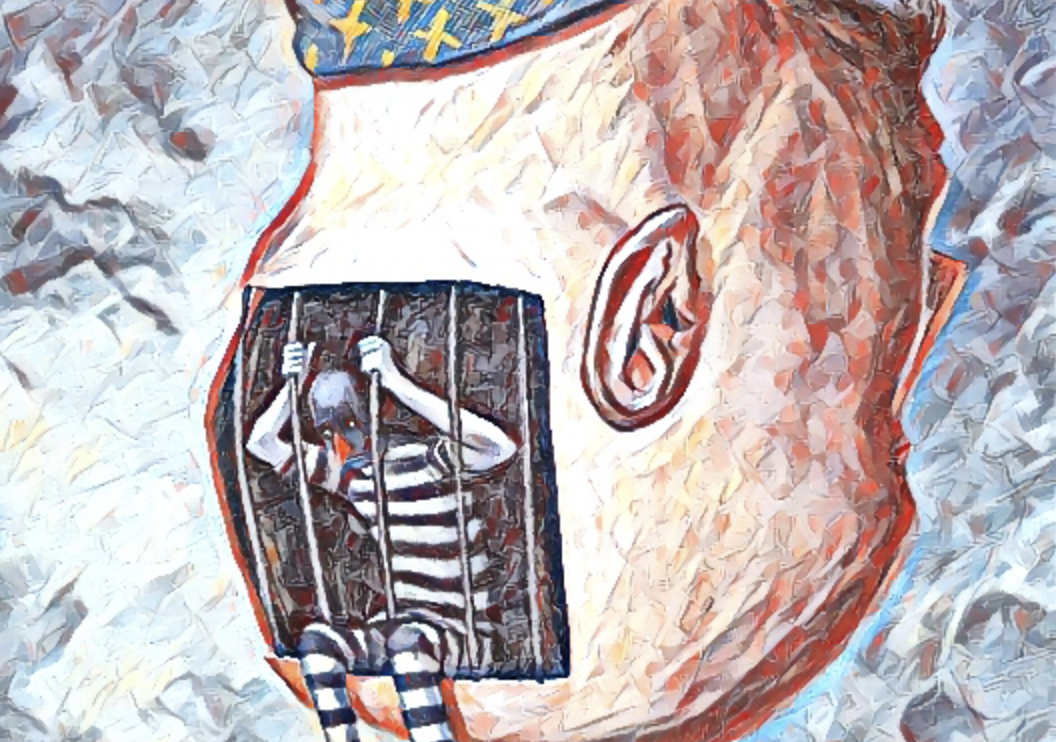
A subtle form of captivity
The anthropologist David Graeber once used the phrase “interpretive labor” to describe a subtle but crushing form of captivity. It is the relentless work of trying to decipher what others want, think, or feel–an endless exercise in calculation.
He pointed to women in patriarchal households, whose lives are often consumed by anticipating the moods and desires of the men around them. But the burden is not confined to private life.
Modern workplaces impose the same psychic tax: junior employees constantly reading between the lines of emails, parsing the cryptic cues of superiors, or tiptoeing around domineering colleagues.
The Apple TV series Severance captured this claustrophobic treadmill with eerie precision.
Interpretation, in a seminar room, can be exhilarating. But when it becomes the organizing principle of one’s entire existence, it mutates into something closer to torture. Perpetual critical awareness can corrode the very possibility of rest.
That is what worries me about the intellectual climate in Bangladesh today. A fashionable “celebration of unreason,” dressed up in fragments of critical theory, has seeped from academia into politics.
A self-styled neo-intelligentsia now translates abstract terms into raw political prescriptions.
And because politics here is never theoretical–because it presses on daily life–this hyper-critical discourse doesn’t expand imagination; it narrows it, leaving behind a kind of vertigo.
In recent months, I’ve felt that dizziness acutely. I’ve read commentaries that treat mob violence in Nepal as a model worth emulating. I’ve seen essays that claim a dinner at the Westin could magically transfer politics from the rich to the poor.
I’ve watched as calls to ban shrines are couched in the language of “epistemic responsibility.” These are celebrated as intellectual breakthroughs. And the effect is not liberation but a forced awareness, an interpretive labor imposed on anyone trying to keep up.

Engaged in trivial and symbolism
Meanwhile, the interim government offers its own surreal theater.
Instead of systemic reform or a serious reckoning with the Awami League, it preoccupies itself with the trivial and the symbolic–protecting red crabs in Saint Martin’s, exporting Hilsa to India, or making grand declarations about transforming Maheshkhali into Singapore.
It is all motion without direction, noise without coherence. And so the atmosphere thickens: a society condemned, like Ondine’s cursed husband, to breathe only through conscious effort.
And then there is the old playbook–the Cold War style of politics, CIA versus KGB, complete with secret associations, elaborate ruses, and parties formed not to govern but simply to tilt the scales for another. It is politics as intrigue, designed to bewilder rather than to clarify.
Living through it feels less like inhabiting a democracy than like being trapped in one of Laurencic’s disorienting prison cells.
It feels as though Ondine’s curse has settled over us: every moment requires conscious effort to interpret shifting positionalities, shifting alliances, shifting power. Nothing can be taken for granted.
Every breath, every thought, must be deliberate. Under this relentless strain, “sense” itself seems to have slipped out of our political vocabulary.
That is the deeper danger. The sense-making system of society–the shared frameworks that allow people to locate themselves in public life–appears to be breaking down. And when that collapses, the consequences are not abstract.
We have seen this before. In Germany’s Weimar years, the erosion of a common reality bred apathy and disengagement, which in turn created the perfect soil for far-right resurgence.
The pattern is chillingly familiar: as exhaustion with over-interpretation deepens, people retreat from politics altogether. And in that vacuum, the traditionalist far right reenters, offering the comfort of simplicity, the balm of nostalgia, the promise of order against confusion.
In a moment when the political landscape feels like endless dissonance, their call can sound like harmony.
—
Mikail Hossain is a writer and analyst