

Why a National Task Force is Bangladesh’s first step toward ending the cycle of denial

Barrister Tajriyaan Akram Hussain, Dr. Muhammad Asadullah, Nousheen Sharmila Ritu and Md. Harun-Or Rashid
Publish: 04 Dec 2025, 05:11 PM
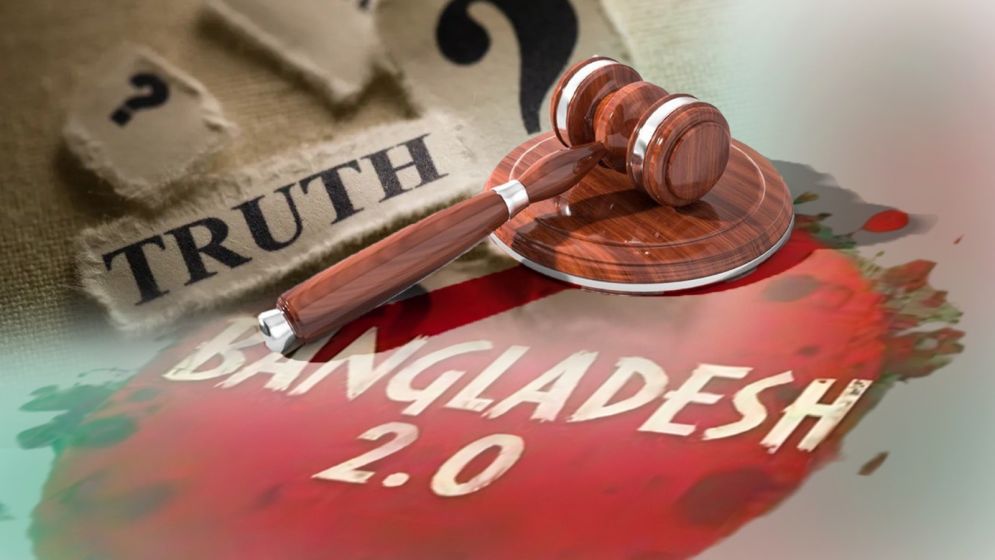
Bangladesh stands at a moment that will define its moral future.
For more than sixteen years, thousands of citizens lived under the shadow of enforced disappearances, extrajudicial killings, systematic harassment, and the suffocation of basic freedoms.
These were essentially intimate ruptures in ordinary lives—children who never saw their fathers again and families who waited by prison gates. It forced whole communities and as a matter of fact the whole nation to learn to speak in whispers.
The collapse of the previous regime in August 2024, and the popular uprising that followed, offered a glimpse of something long deferred—the possibility that Bangladesh might finally confront the truth of what it endured.
Yet that hope comes with a warning.
If the country once again looks away, if it chooses political convenience over collective honesty, it risks stitching the darkest parts of its recent history into its future.
That warning echoed loudly in early September 2025, when the United Nations Office of the High Commissioner for Human Rights held closed-door consultations with senior leaders of the Bangladesh Nationalist Party, Jamaat-e-Islami, and the National Citizen Party.
Led by Huma Khan, OHCHR’s Head of Mission in Dhaka, the meetings urged political parties to inscribe transitional justice into their manifestos. They urged it as a concrete national commitment instead of just a symbolic gesture.
These recommendations did not arrive from some distant Geneva desk. They were distilled from a year-long process rooted deeply in Bangladesh’s own civic landscape, following an OHCHR fact-finding report.
Victims, survivors, families, July movement activists, rights defenders, and civil society leaders contributed through interviews, focus groups, and a final national consultation on August 7, 2025.
The resulting document handed to political parties carried the weight of lived histories.

True message without any veneer
And the true message that it wanted to portray is unmistakable. Bangladesh must center truth and healing on a national scale.
The most plausible first step is the formation of an inclusive National Task Force—one that draws from every corner of Bangladeshi society—to lead a structured, participatory process.
Without such broad representation, any framework for justice or reparations will look like another elite project, not a collective reckoning.
For many survivors, justice does begin with acknowledgement. They want their stories heard—fully and faithfully. And of course without any fear.
They want the state to recognize the years stolen from them, the families broken, the futures altered. They want to know that their suffering belongs to the nation’s official memory.
That is why Bangladesh must start with truth-telling—open, protected dialogues in every region, before institutions and tribunals are even designed. Because without the voices of those who lived through torture or fabricated charges, any justice mechanism would be little more than an administrative exercise.
For Bangladesh to heal truely, the country must listen first. Only then can it rebuild on something firmer than denial.
But truth-telling, on its own, cannot repair a nation. It must be matched with a system of reparations that is standardized and rooted in acknowledgment rather than charity.
Families of the disappeared, the July martyrs, and the countless ordinary protesters who risked everything deserve more than symbolic gestures or one-time payments.
They deserve a commitment to rehabilitation—mental health services that are accessible and destigmatized, long-term support for dependents, and public recognition of what they endured.
Memorials, archives, and digital repositories are instruments of national memory, ensuring that the stories of those who resisted repression are preserved and taught, not buried under the next political cycle.
Accountability must be the next pillar. Institutions like the International Crimes Tribunal cannot function as political appendages; they must be equipped with full independence, resources, and procedural safeguards.
The credibility of the entire process hinges on trials that meet the highest standards of fairness—scrupulous investigations, protection against fabricated charges, and a justice system that refuses to repeat the abuses it seeks to correct.
Transitional justice cannot become a partisan weapon. If it does, it will collapse under the weight of its own contradictions.
The burden of responsibility
The interim government carries an extraordinary responsibility at this juncture.
With major political parties signaling their willingness to engage in a truth-and-healing agenda, the government has the authority—and the obligation—to launch the National Task Force before elections reshape the political landscape.
Doing so would insulate the process from partisan volatility and signal to victims that their voices will not be pushed aside once again.
Since Sheikh Hasina’s ouster, scholars, human rights organizations, and activists have sustained public conversation through research, advocacy, and relentless civic engagement.
Their efforts have kept the wounds visible. But the country has reached the point where conversation must yield to action. The September consultations with party leaders revealed at least one rare point of consensus: across ideological lines, there is recognition that the past cannot remain unaddressed.
What is needed now is political courage—the willingness to convert acknowledgment into policy, hesitation into momentum.
Bangladesh owes this to its victims. The decades after 1971 already demonstrated the cost of postponing justice—collective trauma that metastasized into political cynicism and recurring cycles of abuse.
To repeat that mistake would be unforgivable.
If the crimes and violations of the last sixteen years are once again left to fade into silence, the nation may not get another opportunity to heal. Justice delayed is justice denied—and the delay has already been far too long.
A National Task Force for Truth and Healing is thus an ethical mandate. It must be inclusive and anchored in the lived experiences of those who suffered most.
Only then can Bangladesh restore dignity, rebuild trust between citizens and the state, and chart a future in which justice is not a political slogan but a national guarantee.
—
Barrister Tajriyaan Akram Hussain is an associate at Mahbub & Company and an advocate at the District and Sessions Judge Court in Dhaka.
Dr Muhammad Asadullah is an associate professor in the Department of Justice Studies at the University of Regina in Canada.
Nousheen Sharmila Ritu is executive director of UK-based think tank Bangladesh 2.0 Initiative.
Md. Harun-Or Rashid is an adjunct professor and PhD candidate at the Kent State University.